Showing posts with label recommendations. Show all posts

The Holy Trinity of One-Shot Films [Recommendation List]

I am coming back to blog updates fresh from finishing my work on the Haruki Murakami editorial. This week, however, rather than posting a standard review or editorial, I decided to take a trip back down memory lane and compose a good old recommendation list. To be specific, I was flicking through letterboxd reviews under some of my fave films and one of the random comments about “the holy trinity of one-shot films” caught my attention. What is the holy trinity of one-shot films when it comes to Japanese movies? Here are my suggestions:
 
One Cut of the Dead (2017)
Synopsis: Takayuki Higurashi (Takayuki Hamatsu) is an experienced commercial director, but he does not have groundbreaking projects on his record. He is approached with an offer of making a live zombie film that will be used as a launch feature for a TV horror channel. Takayuki assembles the cast and crew, but he does not have much faith in the picture. While shooting at an abandoned factory, it turns out that the real zombie apocalypse just broke out. The cast and crew have to fight for their lives, whereas Takayuki keeps on shooting in order to realise his masterpiece.
     Please take the synopsis above with a grain of salt. One Cut of the Dead is so much more than just a tongue-in-cheek survival flick with comedy elements. The first 36 minutes of the film is an excellent parody of the genre, but also a brilliant showcase of filmmaking technique. (The entire first act was shot in one take) Allegedly, the crew had to redo this sequence six times in order to get it right.
 
     After the outstanding introduction, the viewers are presented with the lives of Takayuki and other crewmembers about a month before the shooting. The second act actually blurs the lines between reality and fiction. The “making” of One Cut of the Dead becomes a meta-commentary on filmmaking, joining the line of such classic "movies about movies" as Ed Wood (1994), Bowfinger (1999) and The Disaster Artist (2017).
     The motif which grabbed my heart the most was the one focusing on Takayuki and his family. It is a joy watching their interactions and how they all jump at the One Cut of the Dead project. This is where the third act kicks in, which can be best described as a companion piece to Welcome Back, Mr. McDonald (1997). In a way, both movies are about failed productions which become masterpieces by pure coincidence.
 
Beyond the Infinite Two Minutes (2021)
Synopsis: Kato (Kazunari Tosa) is the owner of a small café. His apartment is actually located one storey above the café. After a whole day of working, he returns to his flat only to discover that on his computer monitor there is an image of himself. Kato realises that his PC monitor shows what will happen two minutes in the future. What is more interesting, another screen downstairs in his café shows the past of two minutes ago. Kato and his friends place the two mysterious devices opposite each other, which creates an infinite loop, allowing them to see into the future beyond the limit of two minutes. Obviously, this uncanny situation is going to lead to many hilarious situations, moments of danger as well as paradoxes...
     Beyond the Infinite Two Minutes starts off like a typical, peaceful slice-of-life drama, but do not let the appearances fool you. During the first 5 minutes of the film, it becomes apparent that this is a spiritual successor of One Cut of the Dead (2017), in terms of both the execution and a wild storyline.
 
     The first half of the picture really goes at lengths to meticulously explain to viewers what on earth is happening on the screen. It goes without saying that the screenwriter was really into hard science and fantasy, which translated into movie language really well. Basically, the filmmaking team took the concept of Droste effect and gave it a time-travel spin. The only other movie I think of in which this idea was used is Escape from the Planet of the Apes (1971).
     Think of Beyond the Infinite Two Minutes as the light-hearted, comprehensible, and low-budget version of Christopher Nolan’s Tenet (2020) which compensates the lack of IMAX visuals with witty dialogue, heart-warming characters, and a touch of romance. The premise of the film is not so much meddling with time as in Back to the Future (1985) but more like blurring the boundaries between cause and effect as in Predestination (2014).
     From the technical standpoint, I really have to praise the crew not only because of the fact that they went with one continuous shot method, but also because they shot the entire movie on a smartphone! Short making-of compilation during the end credits really shows hard work and passion of the makers.
 
Airport 2013
Synopsis: Chigusa Okouchi (Yuko Takeuchi) is a ground staff officer at a small Matsumoto airport which mainly handles local airlines. Nevertheless, an airplane bound for Tokyo forcefully lands in Matsumoto due to bad weather over Haneda airport. Until the meteorological conditions clear up, Okouchi has to take care of passengers who wait to resume their journey. In the course of her assignment, Okouchi will unravel lots of family secrets and conspiracies that will lead to many hilarious incidents.
     My only wish is that I could have discovered this gem of a movie much earlier. Koki Mitani does not present a disaster scenario as in Airport 1970 or a happy-go-lucky take on how airlines operate as in Happy Flight (2008). Rather than that, the viewers are presented with a day in the life of a diligent ground staff worker who carries tough responsibilities on her shoulders.
 
    Initially, you may think that Okouchi has to deal with a family of degenerates, but all of them are vibrant personalities who turn out to be extremely likable in the end. Okouchi’s interactions with each character are so amazing and the dialogue is so witty!
     If you want to experience a heart-warming and motivational story exploring tough day at work and difficult family relations, then Airport 2013 is the sure-fire choice for you. You can never go wrong with Koki Mitani and his storytelling style. In addition, the movie is a marvelous showcase of Yuko Takeuchi’s talent. It’s such a shame that this great actress is no longer with us.
     All things considered, this was my recommendation list. I hope that you will pick up some of the suggestions. If so, don’t hesitate to share your opinion on the films in the comments. Thank you for reading.
«Enjoyed this post? Never miss out on future posts by following us»

[Final Recommendation] 5 Taiwanese Movies for the Isolation Period

Is the coronavirus situation getting you down? Do you find it difficult to spend days within the confines of your household? Try to pass the time with some Asian movies! On this blog, I’m going to provide my personal movie recommendation for the isolation period. So, gently sit back, and let’s go through the 5 Taiwanese productions that can ease your stay at home:
5. The Wedding Banquet (1993)
      Synopsis: Meet Wai-Tung Gao (Winston Chao). He is a prosperous businessman with an American citizenship. His Taiwanese parents, Mr and Mrs Gao (Sihung Lung and Gua Ah-leh), are fruitlessly urging Wai-Tung to get married. The problem is that Wai-Tung is living together with his friend Simon (Mitchell Lichtenstein) as a gay couple and he’s afraid to tell the parents. In the meantime, Wai-Tung’s tenant, Wei-Wei (May Chin), finds herself out of a job and in need of a green card. Simon comes up with an idea to accommodate all parties: Wai-Tung will have a sham marriage with Wei-Wei. In this way, she will get to stay in the U.S. and the parents will let Wai-Tung off the hook. What can possibly go wrong?
     Opinion: The Wedding Banquet is not so much a comedy of mistakes than a careful observation of family relations. In an almost documentary-like fashion, Ang Lee presents us with the wedding party that is the ultimate culmination of Wai-Tung and Wei-Wei’s fraud as well as Mr and Mrs Gao’s long-time dream. Although this is just fiction, we find ourselves cheering for all the characters to find a proper solution to their problems (which they do, in a way). This movie is not about gender politics but a genuine, unpronounced love between family members which provides a room for reconciliation between Eastern and Western values.
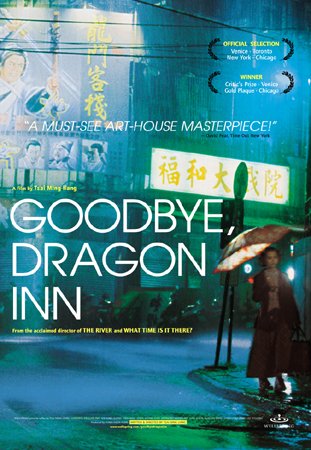
4. Goodbye, Dragon Inn (2003)
    Synopsis: 90 minutes from the lives of people who are at the theatre watching Taiwanese wuxia classic “Dragon Inn” (1967).
     Opinion: I know that this description is a bit tight, but that’s what happens in the entire movie. With the usage of long shots and very little dialogue, director Tsai Ming Liang examines the relationship between the spectators and the silver screen.
3. Pushing Hands (1991)
     Synopsis: Mr Chu (Sihung Lung) is a Tai Chi master who arrived from Taiwan in order to live in the U.S. together with his son Alex (Bo Z. Wang) and his family. While educating his grandson Jeremy (Haan Lee), Mr Chu is unable to communicate with Alex’s wife, Marta (Deb Snyder), who is an aspiring writer and desires peace and quiet at home. Mr Chu finds it increasingly difficult to live within Western culture, but he seeks solace in contact with Mrs Chen (Wang Lai), a cooking instructor at a Chinese Community Centre. The family drama escalates to such a degree that Mr Chu leaves the house in order to find luck on his own on the streets of New York.
     Opinion: If you like slow but engaging slice of life story then this movie is very much for you. Although the movie lasts 100 minutes, it touches upon many issues which are important even today like the generational gap, tradition vs. progress or stoicism consumed by urban hustle and bustle. Pushing Hands is a perfect choice for a quiet family evening.
2. Eat Drink Man Woman (1994)
     Synopsis: Mr Chu (Sihung Lung) is a widower and a master Chinese chef living in Taipei together with his three unmarried daughters: Chu Jia-Chien (Chien-lien Wu), an execute working in an airline industry; Chu Jia-Jen (Kuei-Mei Yang), a school teacher who has issues with relationships and seeks consolation in Christianity; Chu Jia-Ning (Yu-Wen Wang), a college student who accidentally gets involved with her friend’s ex-boyfriend. The family lives through everyday existence while ritually eating every night large portions of elaborate dishes prepared by Chu.
     Opinion: In Eat Drink Man Woman, Ang Lee beautifully dissects the fabric of modern-day family in the face of rapid globalisation and fading tradition. As in the case of The Wedding Banquet, the viewer finds himself rooting for all the characters, but the outcome is very much an unexpected one. I safely recommend Eat Drink Man Woman to anyone looking for a peaceful two-hour story set in Taiwan.
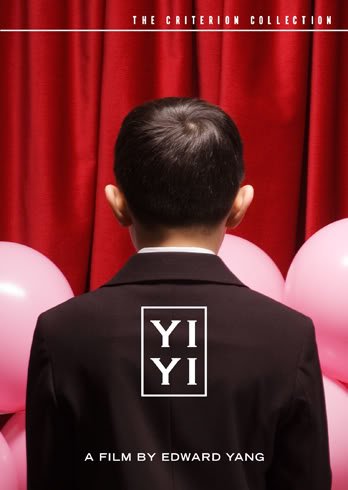
1. Yi Yi (2000)
     Synopsis: The movie presented the daily existence of the Jiang family in Taipei. The story focuses in particular on three characters: the middle-aged father NJ (Wu Nien-jen), the young son Yang-Yang (Jonathan Chang), and the teenage daughter, Ting-Ting (Kelly Lee). Through such events as weddings, baby showers, and funerals, we discover the intricacies of human life.
     Opinion: Edward Yang’s final masterpiece. Do not hesitate and immerse yourselves in the mesmerising reality of Taipei for three hours. A compelling story and vivid characters will make you remember this movie for years.

This is the end of my recommendation series. I hope that you will pick up some of the suggestions. If so, don’t hesitate to share your opinion on the films in the comments! Thank you for reading.

[Recommendation] 5 South Korean Movies for the Isolation Period

Last time: [Recommendation] 5 Hong Kong Movies for the Isolation Period
Is the coronavirus situation getting you down? Do you find it difficult to spend days within the confines of your household? Try to pass the time with some Asian movies! On this blog, throughout this week, I’m going to provide my personal movie recommendation for the isolation period. So, gently sit back, and let’s go through the 5 South Korean productions that can ease your stay at home:
5. Tunnel (2016)
     Synopsis: Lee Jung-soo (Ha Jung-woo) is a successful car seller who is on his way to work. Taking a gas at the station takes a little bit longer, an elderly employee gives him two bottles of water; finally, Lee Jung-soo resumes his journey. He drives into a newly built tunnel leading from Seoul to Hada. All of a sudden, the whole construction collapses right in front of his eyes as he’s still driving through it. From this point on, the rescue team led by Captain Dae-kyung (Oh Dal-su) steps in in order to save Lee Jung-soo, who is trapped inside his car under the slide of dirt and concrete. However, due to a series of horrendous mistakes and political pressures, the government actually considers aborting the rescue operation. This is unbearable not only to trapped Lee Jung-soo, but also to his wife, Se-hyun (Bae Doona).
     Opinion: After seeing the title, I was prepared for a rehashed remake of a not-so-memorable disaster flick with Sylvester Stallone. Thankfully, as soon as the film started, I realised my mistake. As expected from Korean productions, even a disaster film like Tunnel is not all about epic action and larger-than-life heroes. In fact, it is about careful insight into human drama and objective examination of an extreme situation. Yet, don’t feel disappointed! There is action and it neatly blends together with the story. Highly recommended to anyone who is into one man’s survival drama. Although the film lasts slightly over two hours, it does not feel that much. A very well executed story that makes Tunnel a fine entry in the disaster genre.
4. Montage (2013)
     Synopsis: Detective Cheong-ho (Kim Sang-kyung) is still struggling with an unsolved kidnapping case which happened 15 years ago. Unexpectedly, the detective picks up a new lead only five days prior to the expiration of the case’s statute of limitations. Surprisingly, somebody left a flower at the crime scene. Even though Cheong-ho locates the man in question, the suspect manages to escape and it is already too late to prosecute him for his crimes. Detective quits the force, but soon after, he is called again as it turns out that another kidnapping occurred with exactly the same methods used as in Cheong-ho’s old case. Is it possible that the same kidnapper is active once again?
     Opinion: I can’t remember the last time since I’ve seen such a clever thriller. Of course, it’s done very much in the Hollywood style, but it does not suffer from the accumulation of insane plot twists and mind-bending revelations. From the opening scene, director (and writer) Jeong Keun-seob leaves the viewers completely in the dark (similarly to the mother behind the wheel with a bag on her head) as the central sequence of the story sets in motion a chain of convoluted events leading up to the kidnapper’s identity. All in all, Montage is a solid entertainment that will certainly keep you engaged in one sitting.
3. The Good, The Bad, The Weird (2008)
     Synopsis: Manchuria, year 1939. A professional hitman called Park Chang-yi [the Bad] (Lee Byung-hun) is hired to retrieve a map from a Japanese official who is travelling by train. However, before he gets his chance to do so after stopping the train, the map has already been stolen from the official by a thief known as Yoon Tae-goo [the Weird] (Song Kang-ho). What is more, Park Do-won [the Good] (Jung Woo-sung), an excellent marksman and a bounty hunter, appears on the scene to hunt down Park Chang-yi. The three men get entangled in a bloody pursuit after the map that allegedly leads to riches buried in the desert by the Qing Dynasty. In addition, it is also sought by the Manchurian bandits and the Japanese Imperial Army. Who will find the treasure and stay alive? Sit back and watch this spaghetti western made in Korea.
     Opinion: You are in for an experience which can be described as the kick-ass mash-up of Sergio Leone, Mad Max, and Indiana Jones. From the very first action sequence we get sucked into the action as Song Kang-ho’s character is rushing through the train carriages and the bullets are flying in all directions. The movie relies heavily on the style of spaghetti western, but it is not afraid to stray away from the inspiring genre in order to achieve other means. Rather than ripping off the classic with Clint Eastwood, Eli Wallach, and Lee Van Cleef, it pays homage to its father picture and other movies by blending intense camera work with upbeat music, practical effects, massive shootouts, blood, and explosions.
2. Memories of Murder (2003)
     Synopsis: The film depicts the case of the so-called Hwaseong serial murders that took place between 1986 and 1991, Korea’s first serial murder in history. In the story, we follow a local detective, Park Doo-man (Song Kang-ho), who hopelessly tries to solve the first murder. Unfortunately, methods and technology o the local law enforcement prove inefficient in catching the killer and, after wrongfully accusing a mentally handicapped boy of being a murder, a detective from Seoul, Seo Tae-yoon (Kim Sang-kyung), is assigned to the case. Initially, the two detectives clash with each other, but the arrival of Seo Tae-yoon really starts the investigation going. All clues lead to an inconspicuous factory worker who had moved to the town just before the first murder...
     Opinion: I recommend this film to anyone interested in the crime genre, yet ‘whodunit’ lovers may feel a bit disappointed. Memories of Murder goes for evoking distinct emotions of empathy, sadness, and rage, while also doing justice to the original source material. A flawless motion picture for a rainy night.
1. Parasite (2019)
 
     Synopsis: Kim Ki-taek (Song Kang-ho) is an unemployed driver who lives with his wife, Choong-sook (Jang Hye-jin), and their two children, son Ki-woo (Choi Woo-shik) and daughter Ki-jung (Park So-dam) in a rundown semi-basement apartment. The family has no prospects for a steady job and they resort to doing low-paid activities. All of a sudden, Min-hyuk (Park Seo-joon), Ki-woo’s friend, drops by and offers him to take over his job as an English tutor for a wealthy family, the Parks (Lee Sun-kyun and Cho Yeo-jeong). Ki-woo accepts and he ends up in a house of style and glamour. Gaining the Parks’ trust, Ki-taek’s family deceitfully takes over positions of the household’s other workers. Little do they know that this will lead to disastrous consequences.
     Opinion: The ultimate stay-at-home movie. I think it is best to watch it with your family and/or friends because the film keeps you guessing what will happen next. Parasite’s main assets are not the drastic shifts in tone, but the message it tries to communicate. This movie is not just about the haves and the have-nots. It’s about the deterioration of our society and we get to see that through the lens of Ki-taek and his family. To conclude, Parasite effectively discouraged me from trying to buy a fancy house with a big garden for myself..

Next time: 5 Taiwanese Movies for the Isolation Period. Stay tuned!

[Recommendation] 5 Hong Kong Movies for the Isolation Period

Last time: 5 Japanese Movies for the Isolation Period
Is the coronavirus situation getting you down? Do you find it difficult to spend days within the confines of your household? Try to pass the time with some Asian movies! On this blog, throughout this week, I’m going to provide my personal movie recommendation for the isolation period. So, gently sit back, and let’s go through the 5 Hong Kong productions that can ease your stay at home:
5. Police Story (1985)
 
     Synopsis: Police Inspector Chan Ka-kui (Jackie Chan) participates in an undercover operation led by the Royal Hong Kong Police and the aim of which is to arrest the drug lord Chu Tao (Chor Yuen). All of a sudden, the shootout begins and Ka-kui finds himself in pursuit of fleeing Chu Tao. The inspector manages to capture and arrest the criminal, but this is not enough. Ka-kui’s superiors plan to use Chu Tao’s secretary, Selina (Brigitte Lin) as a key witness in the upcoming trial. Eventually, Chu Tao is released on bail, yet he intends to have his revenge on Ka-Kui. As a result, the inspector is framed for murder. In order to clear his name, Ka-Kui cooperates with Selina and his girlfriend May (Maggie Cheung) in order to retrieve incriminating data on Chu Tao.
     Opinion: Get on that double-decker bus and let Jackie Chan show you how good old action set pieces were made back in the non-CGI days. Police Story is a classic cop movie that spawned 3 sequels, 1 spin-off, and 2 remakes; nevertheless, the original still has not aged a bit.
4. Kung Fu Hustle (2004)
     Synopsis: Shanghai, the 1930s. The city is ruled by mobster groups, the most powerful of which is the Axe Gang, led by Brother Sum (Danny Chan Kwok-kwan). Only in the poorest districts, where the mobsters have no influence, can ordinary people live peacefully. Sing (Stephen Chow) and Bone (Lam Chi-ling) are a pair of stooges who desperately want to make a name for themselves and join the Axe Gang. By a series of unfortunate events, Sing makes the Axe Gang declare a war on the inhabitants of the Pig Sty Alley, an apartment compound managed by the Landlady (Yuen Qiu) and the Landlord (Yuen Wah). When the gangsters are chased away by three retired kung fu masters, Brother Sum hires more and more sophisticated assassins so as to annihilate the Pig Sty Alley. In the meantime, Sing realises that he does not want to harm anyone. In the fight with the Beast (Bruce Leung Siu-lung), the greatest kung fu master, Sing’s chi flow is fixed and he can now fully use the Buddhist Palm style in order to save the day.
     Opinion: Kung Fu Hustle is such a well made comedy! Apart from standard Stephen Chow’s comic style (an idiot trying to talk his way out of heated situations), we get tons of references to other films (Matrix, Spiderman, The Blues Brothers, The Untouchables, The Shining, you name it), over-the-top CGI fights done in Looney Tunes fashion, and hilarious supporting characters. If you have a free afternoon and are looking for a decent comedy, then Kung Fu Hustle is the best choice. This movie is so great that even when you’re down, it will definitely uplift your spirits
3. Bullet in the Head (1990)
     Synopsis: The movie tells the story of three friends: Ben (Tony Leung Chiu-wai), Frank (Jacky Cheung), and Paul (Waise Lee), who regularly brawl with gang members in Hong Kong during the 1960s. Unfortunately, Frank accidentally kills one of the mobsters and the friends decide to flee Hong Kong. They go to Saigon, in order to work as smugglers in the ravaged by war Vietnam. However, things do not go as planned and the protagonists find themselves on the run, together with a hitman Luke (Simon Yam) and a nightclub singer Sally (Yolinda Yam), from the Vietcong soldiers. Eventually, Paul betrays his friends for a box of gold…
     Opinion: Bullet in the Head stands out of John Woo’s rich repertoire as not being just a standard bullet-ballet flick. It is neither as fast paced as A Better Tomorrow nor as spectacular as Hard Boiled. Nevertheless, the film’s primary asset is a human drama set against the background of a harrowing military conflict. John Woo’s reinvents the “bromance formula” known from his other films by turning it into a war epic similar to Francis Ford Coppola’s Apocalypse Now. To me, Bullet in the Head is John Woo’s magnum opus.
2. A Chinese Ghost Story (1987)
     Synopsis: Ning Choi-san (Leslie Cheung) is a debt collector who visits local Chinese towns. Unfortunately, he is also plagued by misfortune as his account book is destroyed, so he has no money to pay for shelter. As a result, he spends a night in a haunted temple outside of the town. He encounters there an enchantingly beautiful woman called Nip Siu-sin (Joey Wong). Little does he know that Siu-sin is a ghost who lures travellers so that the Tree Demoness (Lau Siu-ming), a 1000-year-old monster, can eat men inside out. Nevertheless, Ning Choi-san falls for the ghost and protects her from dangers. In turn, Siu-sin protects him from other flesh-eating ghosts. With the help of a Taoist monk, Yin Chik-ha (Wu Ma), Choi-san descends into the deepest levels of hell to save Siu-sin from the grasp of the Tree Demoness.
     Opinion: The supernatural tale about the bond between a mortal man and a demon’s servant that quickly became a cult classic. The story is eerie, yet not scary, while being dynamic and touching at the same time. I highly recommend this film to anyone who is interested in discovering the hallmarks of Hong Kong cinema. The movie is entertaining and enjoyable in terms of action set pieces, but also poetic in its inventive subtlety.
1. In the Mood for Love (2000)
     Synopsis: Hong Kong, the 1960s. Mrs Chan (Tony Leung Chiu-wai) and Mr Chow (Maggie Cheung) rent rooms in the adjacent apartments on the same day. They move in with their spouses who are extremely busy as each of them works abroad. Mrs Chan and Mr Chow often spent their lonely days in the neighbouring apartments, accidentally encountering each other from time to time. With the passage of days and weeks, they begin to suspect that their spouses are cheating on them with each other. Mrs Chan and Mr Chow share their suspicions with one another, but they do not dare confront the situation. In fact, the two try to understand how the romance was initiated and they grow closer together in the process, yet Mrs Chan and Mr Chow do not want their relation to transform into a typical love affair...
     Opinion: One of the best movies ever made. It is visually stunning, but the form does not overshadow the thought-provoking content. Highly recommended to anyone who would like to spend a thoughtful evening immersed in the painting-like world crafted by Wong Kar-wai. It leaves you thinking about such things as love, longing, nostalgia, and past.

Next time: 5 South Korean Movies for the Isolation Period. Stay tuned!