Showing posts with label taiwan. Show all posts

A Confucian Confusion (1994) [Film Review]

A Confucian Confusion; or, The Way of a Copywriter
     Don't you feel emotion is becoming dangerous nowadays? Emotion has only become an excuse. It can be faked. Take you, for example, your innocence, loveliness, tenderness, vivacity. They all can be faked. Think about it.
Recently, I found myself in a dire need for Edward Yang. Yi Yi (2000) is obviously a masterpiece and to date remains one of my all-time favourite movies, but I wanted to check out the director’s earlier works as well. My choice became A Confucian Confusion from 1994. I have been eyeing this particular motion picture for quite some time, but I was either not in the mood for it or too tired to pay attention to multiple storylines. Well, I finally watched it, so here are my thoughts on the film.
Release Info
Directed by: Edward Yang Starring: Suk Kwan Ni, Bosen Wang, Chen Shiang-chyi, Danny Dun
Language: Mandarin Original Title: 獨立時代 Runtime: 125 min
Synopsis
The story focuses on the misadventures of Molly (Suk Kwan Ni), a fast-paced yet moody businesswoman who is unhappy at work and also within a relationship. She is engaged to Akeem (Bosen Wang) who is a businessman doing international travels. Needless to say, he is hopelessly in love with Molly and incredibly jealous. Molly manoeuvres through her friends, former colleagues, and relatives, who are also in search of true meaning in life and true love. Will they be able to find both?
Taipei Nights
Description of the film on MyDramaList says that if Woody Allen were to direct a Taiwanese picture, then it would have looked like A Confucian Confusion. In my opinion, this statement is a bit far-fetched. Edward Yang, in his own, idiosyncratic auteur style, mercilessly dissects the social stratum of Taipei yuppies. The 1990s were a decade in which Taiwan was a rapidly growing economy; therefore, people became overwhelmed by rampant consumerism. What were the implications of that?
In A Confucian Confusion, Yang elaborates on the themes of fakeness and emptiness. It is always so easy to fake emotions or to pretend to be somebody else at work just to achieve a certain goal. What is more, the masses are interested only in the mainstream stuff, opting to cheer for a scummy artist rather than series writer. If Confucius himself got reincarnated and returned to Earth, people would tell him that he is a fake.
So this is the main modus operandi of the characters. They are deeply unhappy in modern society and desperately try to do something about it, to make the right choice. Here Yang's allegory about choosing either autocratic rule or democracy is important. To be honest, I very much enjoyed all the interactions and conflicts presented in the film. Yang presented the whole thing as if the audience performed the function of bystanders who witness flashes of events concerning ordinary people. My favourite subplot was the one focusing on Qiqi and her boyfriend.
With regard to performances, I obviously enjoyed Suk Kwan Ni as the main lead, but I also greatly liked seeing Chen Shiang-chyi and Danny Dun in the supporting roles. Interestingly, there are small parts done by veteran actresses: the late Chen Limei who played Molly’s sister and Elaine Jin who portrayed the Auntie.
Recommendations
If you are in the mood for a satirical (nearly Shakespearean, indeed) comedy flick from Edward Yang that rides to the ground the unlikable (yet deeply existentialist) business people from Taipei, then I recommend A Confucian Confusion. It is indeed a hidden treasure from director Edward Yang.
Overall score: 7/10
«Enjoyed this post? Never miss out on future posts by following us»

Taipei Story (1985) [Film Review]

Taipei Story; or, The Journey of Souls
     Look at these buildings. It's getting harder for me to tell... which ones I designed and which ones I didn't. They all look the same. Whether I'm involved or not seems less and less important.
The late director Edward Yang is, arguably, best known for his final motion picture Yi Yi (2000) but his older works also deserve attention. In 1985, he made his third feature film Taipei Story which is hailed by critics as the paragon of New Wave cinema. Starring a fellow director Hou Hsiao Hsien and a popular singer Tsai Chin in the leading roles, the movie presents a slice-of-life story about two people searching for happiness in a big city.
Release Info
Directed by: Edward Yang Starring: Tsai Chin, Hou Hsiao Hsien
Language: Mandarin, Hokkien Original Title: 青梅竹馬 Runtime: 120 min
Synopsis
Chin (Tsai Chin) is a manager’s assistant at a construction company. Due to the takeover of the business by another corporation, she loses the job. She lives at an apartment complex together with her sister and childhood love, Lung (Hou Hsiao Hsien). He is a former baseball player who remembers the good old days. Lung intends to move to the United States and start a business there, but he still has feelings for his former girlfriend who lives in Japan. On top of that, Chin and Lung are plagued by family problems as Chin’s father falls in debt. Will the two ever form a
long-term relationship?
Quiet and Restless
In Taipei Story, Edward Yang masterfully paints an image of westernized Taiwan from the 1980s. This is no longer a world of traditional values and hierarchical society. Americanization creeps into every aspect of life. At one moment you can find yourself watching aesthetically-pleasing Japanese commercials, and soon after, you suddenly dance at a nightclub to the beats of Footloose song.
Indeed, Yang positions the protagonists against the backdrop of a metropolis full of neons. How they can move on with their lives, when there’s always something holding them back? I think that the most striking scene of the film is the one in which Chin and some random guy play with a pencil on the top floor of an abandoned building. Even Haruki Murakami would not have been able to come up with such an image of two people killing time.
Although Chin tries to find her way in the abyss of urban cityscape, her boyfriend, Lung, is literally stuck in the past. He does not give a damn about the present or future consequences of his actions, he just acts, because (in view of what he experienced) it is a right thing to do (for instance, helping out Chin’s father or his baseball friend in need). Nevertheless, Yang condemns such longing for things long gone, and, as a result, Lung drifts further away from Chin.
The movie’s purpose is not to tell a story, but rather to make the viewer experience a feeling of spiritual emptiness. To be honest, I am amazed that the movie has yet been dissected into retrowave memes. It contains all the right tropes: VHS, Japan vibes, long shots of driving through a city, etc…
Recommendations
If you are in the mood for a poetic feast from Edward Yang himself, then I recommend Taipei Story. Personally, I think that it is best to watch this film back to back with Wong Kar-wai’s Chungking Express. Both movies complement each other stylistically.
Overall score: 8/10
«Enjoyed this post? Never miss out on future posts by following us»

The Very Last Day (2018) [Film Review]

The Very Last Day; or, Fatal Attraction
    You also wrote about your sister’s death, your grandfather’s disease, your best friend’s suicide. Should I go on? This is not inspiration, it’s called theft.
The Very Last Day is an indie Taiwanese drama from 2018 directed by Cédric Jouarie. The movie came to my notice, when the director contacted Asian Film Fans a month ago (you can read my interview with him here). Needless to say, what initially seemed to be low-key drama unexpectedly turned into a hardcore settling-the-score flick. This is my review of The Very Last Day.
Release Info
Directed by: Cédric Jouarie Starring: Wei-Yi Lin, Lawrence Ong, Heng-Yin Chou
Language: Mandarin Original Title: The Very Last Day Runtime: 122 min
 
Synopsis
Raymond (Lawrence Ong) is a prosperous fiction writer. On the surface, everything about his life seems perfect. The writer is wealthy and respected. He is also married and has a daughter (Meng-Hsueh Lee). However, Raymond’s relationship with his wife, Viola (Heng-Yin Chou), becomes increasingly tense. The wife accuses Raymond that he is stealing the experiences of other people and uses these as ideas for his books. Raymond finds consolation in a strange fan who introduced herself as Miss Melanie (Wei-Yi Lin). She suggests to Raymond that they should leave their problems behind and go on vacation to a remote village. The writer accepts the offer…
 
Memories That Remain
Director Cédric Jouarie stated that the production was based on his personal experiences. Indeed, The Very Last Day seems like a meta-story with a double twist that evokes such memorable motion pictures as Misery (1990), Audition (1999), and Hard Candy (2005). Nevertheless, I personally found certain scenes to resemble the style of the great Edward Yang. The action seems very slow in the first half of the film, but the speed picks up at the moment when the viewers’ expectations are subverted.
 
The Very Last Day is a hard viewing experience because the film focuses on a difficult topic. Nevertheless, its message in the age of MeToo movement is loud and clear. That is to say, no sexual predator should feel safe from punishment.
 
With regard to performances, all the actors clearly gave their best in front of a camera. The lead performers Wei-Yi Lin, Lawrence Ong, and Heng-Yin Chou were simply amazing in their roles. The director mentioned that they happened to be stage performers who had necessary stamina to endure up to six takes or even more. In addition, he explained the meaning behind the title which “expresses this idea that all it takes is one day, one moment, one event for your life to be changed forever.”
 
Of course, like any other work of fiction, this movie as well is open to interpretation. Nevertheless, I will not spoil the twists for you, but let’s just say that I viewed one of the characters as an entirely negative individual, in spite of all the ambiguities around this person.
 
Recommendations
If you have the time, then please check out The Very Last Day. It is highly recommended to anyone who wants to experience an unpredictable story with shocking moments. I wish that we could get more independent productions like this one.
Overall score: 9/10

[Final Recommendation] 5 Taiwanese Movies for the Isolation Period

Is the coronavirus situation getting you down? Do you find it difficult to spend days within the confines of your household? Try to pass the time with some Asian movies! On this blog, I’m going to provide my personal movie recommendation for the isolation period. So, gently sit back, and let’s go through the 5 Taiwanese productions that can ease your stay at home:
5. The Wedding Banquet (1993)
      Synopsis: Meet Wai-Tung Gao (Winston Chao). He is a prosperous businessman with an American citizenship. His Taiwanese parents, Mr and Mrs Gao (Sihung Lung and Gua Ah-leh), are fruitlessly urging Wai-Tung to get married. The problem is that Wai-Tung is living together with his friend Simon (Mitchell Lichtenstein) as a gay couple and he’s afraid to tell the parents. In the meantime, Wai-Tung’s tenant, Wei-Wei (May Chin), finds herself out of a job and in need of a green card. Simon comes up with an idea to accommodate all parties: Wai-Tung will have a sham marriage with Wei-Wei. In this way, she will get to stay in the U.S. and the parents will let Wai-Tung off the hook. What can possibly go wrong?
     Opinion: The Wedding Banquet is not so much a comedy of mistakes than a careful observation of family relations. In an almost documentary-like fashion, Ang Lee presents us with the wedding party that is the ultimate culmination of Wai-Tung and Wei-Wei’s fraud as well as Mr and Mrs Gao’s long-time dream. Although this is just fiction, we find ourselves cheering for all the characters to find a proper solution to their problems (which they do, in a way). This movie is not about gender politics but a genuine, unpronounced love between family members which provides a room for reconciliation between Eastern and Western values.
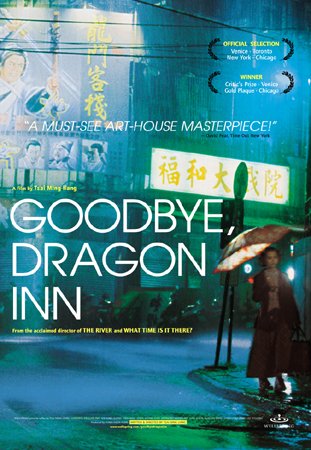
4. Goodbye, Dragon Inn (2003)
    Synopsis: 90 minutes from the lives of people who are at the theatre watching Taiwanese wuxia classic “Dragon Inn” (1967).
     Opinion: I know that this description is a bit tight, but that’s what happens in the entire movie. With the usage of long shots and very little dialogue, director Tsai Ming Liang examines the relationship between the spectators and the silver screen.
3. Pushing Hands (1991)
     Synopsis: Mr Chu (Sihung Lung) is a Tai Chi master who arrived from Taiwan in order to live in the U.S. together with his son Alex (Bo Z. Wang) and his family. While educating his grandson Jeremy (Haan Lee), Mr Chu is unable to communicate with Alex’s wife, Marta (Deb Snyder), who is an aspiring writer and desires peace and quiet at home. Mr Chu finds it increasingly difficult to live within Western culture, but he seeks solace in contact with Mrs Chen (Wang Lai), a cooking instructor at a Chinese Community Centre. The family drama escalates to such a degree that Mr Chu leaves the house in order to find luck on his own on the streets of New York.
     Opinion: If you like slow but engaging slice of life story then this movie is very much for you. Although the movie lasts 100 minutes, it touches upon many issues which are important even today like the generational gap, tradition vs. progress or stoicism consumed by urban hustle and bustle. Pushing Hands is a perfect choice for a quiet family evening.
2. Eat Drink Man Woman (1994)
     Synopsis: Mr Chu (Sihung Lung) is a widower and a master Chinese chef living in Taipei together with his three unmarried daughters: Chu Jia-Chien (Chien-lien Wu), an execute working in an airline industry; Chu Jia-Jen (Kuei-Mei Yang), a school teacher who has issues with relationships and seeks consolation in Christianity; Chu Jia-Ning (Yu-Wen Wang), a college student who accidentally gets involved with her friend’s ex-boyfriend. The family lives through everyday existence while ritually eating every night large portions of elaborate dishes prepared by Chu.
     Opinion: In Eat Drink Man Woman, Ang Lee beautifully dissects the fabric of modern-day family in the face of rapid globalisation and fading tradition. As in the case of The Wedding Banquet, the viewer finds himself rooting for all the characters, but the outcome is very much an unexpected one. I safely recommend Eat Drink Man Woman to anyone looking for a peaceful two-hour story set in Taiwan.
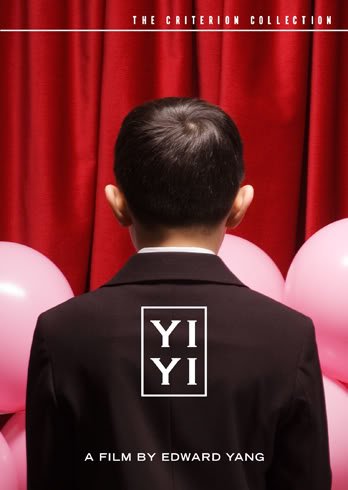
1. Yi Yi (2000)
     Synopsis: The movie presented the daily existence of the Jiang family in Taipei. The story focuses in particular on three characters: the middle-aged father NJ (Wu Nien-jen), the young son Yang-Yang (Jonathan Chang), and the teenage daughter, Ting-Ting (Kelly Lee). Through such events as weddings, baby showers, and funerals, we discover the intricacies of human life.
     Opinion: Edward Yang’s final masterpiece. Do not hesitate and immerse yourselves in the mesmerising reality of Taipei for three hours. A compelling story and vivid characters will make you remember this movie for years.

This is the end of my recommendation series. I hope that you will pick up some of the suggestions. If so, don’t hesitate to share your opinion on the films in the comments! Thank you for reading.

Eat Drink Man Woman (1994) [Film Review]

Eat Drink Man Woman; or, Family Desires
     Eat, drink, man, woman. Basic human desires. Can’t avoid them! All my life, every day, that’s all I’ve done. It pisses me off. Is that all there is to life?
Finishing my review series of “Father Knows Best” Trilogy, I am now turning to the final, and my personal favourite, movie of the set, Eat Drink Man Woman, shot entirely by Ang Lee on location in Taiwan.
Release Info
Directed by: Ang Lee Starring: Sihung Lung, Chien-lien Wu, Kuei-Mei Yang, Yu-Wen Wang
Language: Mandarin Original Title: 饮食男女 Runtime: 119 min
 
Synopsis
Mr Chu (Sihung Lung) is a widower and a master-chef living in Taipei together with his three unmarried daughters: Chu Jia-Chien (Chien-lien Wu), an executive working in an airline industry; Chu Jia-Jen (Kuei-Mei Yang), a school teacher who has issues with relationships and seeks consolation in Christianity; Chu Jia-Ning (Yu-Wen Wang), a college student who accidentally gets involved with her friend’s ex-boyfriend. The family lives through everyday existence while ritually eating every night large portions of elaborate dishes prepared by Chu.
 
A Confucian Father and Modern Children
Even though Eat Drink Man Woman refers to the Chinese idiom about human desires and provides exactly what the title says, I would not call it a “food picture”. This is not the film about the celebration of eating like, for example, Juzo Itami’s Tampopo (1985), but rather, it’s about the food playing the role of a communicator between distanced family members. In all three films of the trilogy, there are Ang Lee’s autobiographical elements and the issue of father-child conflict is the most predominant here. Mr Chu by no means is a bad father, but he is very traditional and rigid in his relations; yet, similarly to his daughters, he too has some desires which he wants to fulfil.
 
With regard to the three daughters, they all are very colourful characters who undergo a certain degree of change as the story moves on. Although they vary in age, the daughters become more independent in life due to men they encounter. Thankfully, it’s not all about the liberating power of sex, but a true connection which expresses itself as either love or friendship, all that with food placed in the background.
 
In Eat Drink Man Woman, Ang Lee beautifully dissects the fabric of modern-day family in the face of rapid globalisation and fading tradition. As in the case of The Wedding Banquet, the viewer finds himself rooting for all the characters but the outcome is very much an unexpected one. The third act of the film is especially important in this regard because the house grows to be the central figure of the story which stands in-between of Mr Chu and Chu Jia-Chien.
 
Speaking about performances, Sihung Lung is just brilliant as the father. If it hadn’t been for him, the whole trilogy would have looked totally different. The performances of Chien-lien Wu, Kuei-Mei Yang, and Yu-Wen Wang are also wonderful. In addition, it’s great to see Winston Chao and Gua Ah-leh (both from The Wedding Banquet) in the supporting roles. Also, Jong Lin’s cinematography and a memorable music score by Mader deserve praise.
 
Recommendations
I safely recommend Eat Drink Man Woman to anyone looking for a peaceful two-hour story set in Taiwan. In my opinion, this is a spiritual companion piece to Edward Yang’s Yi Yi (2000). To think that Ang Lee’s career was launched by a random Taiwanese screenplay contest still boggles my mind. This guy is a marvellous director and I love his three earliest films the most. He really should come back to Taiwan and make one more Asian slice-of-life movie. In the meantime, we should all enjoy the "Father Knows Best" Trilogy.
Overall score: 10/10