Showing posts with label revenge. Show all posts

Pure Japanese (2022) [Film Review]

Pure Japanese; or, Bilateral Frenzy
     Raised right paws beckon fortune, raised left paws beckon people. Both paws raised means beckoning both.
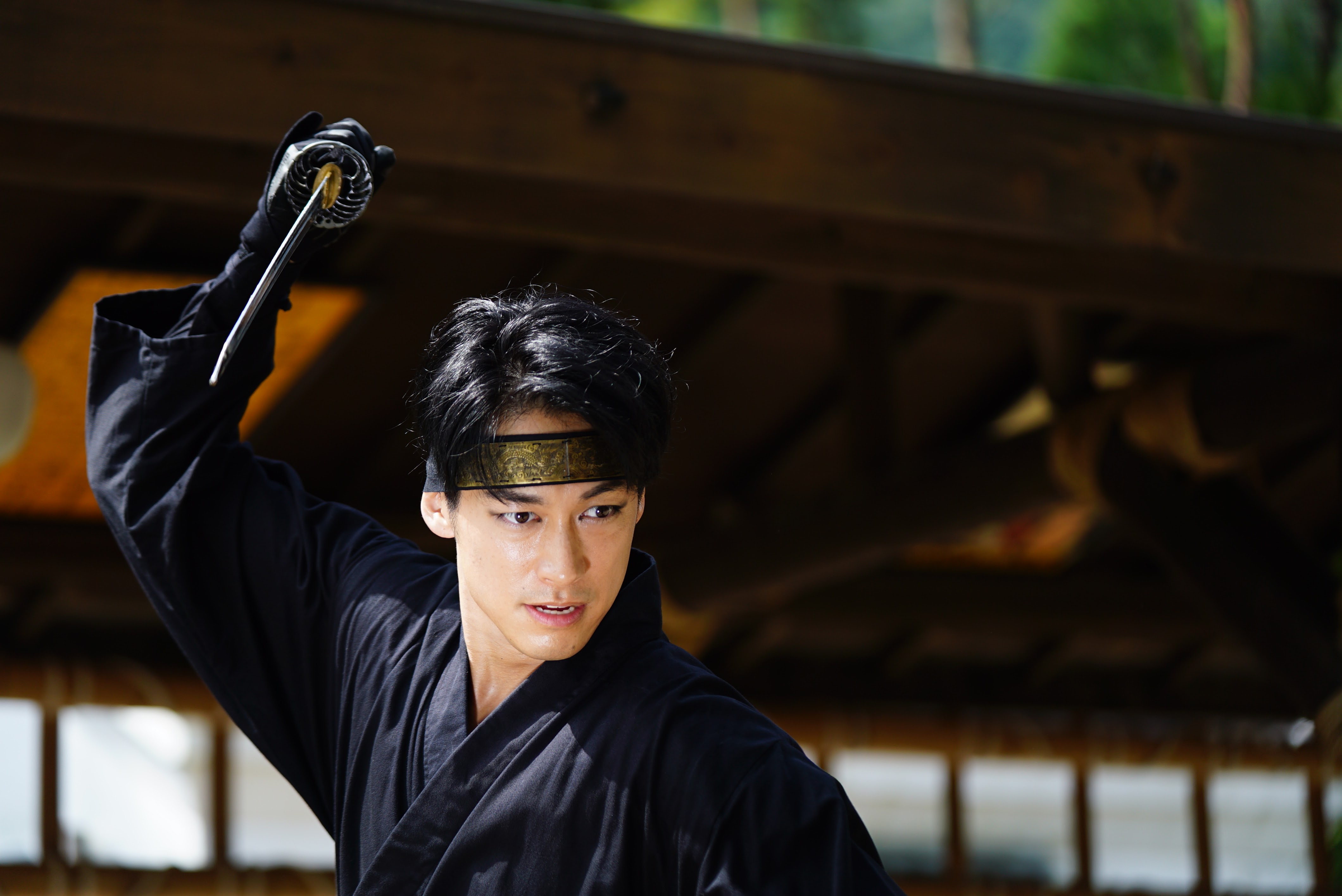
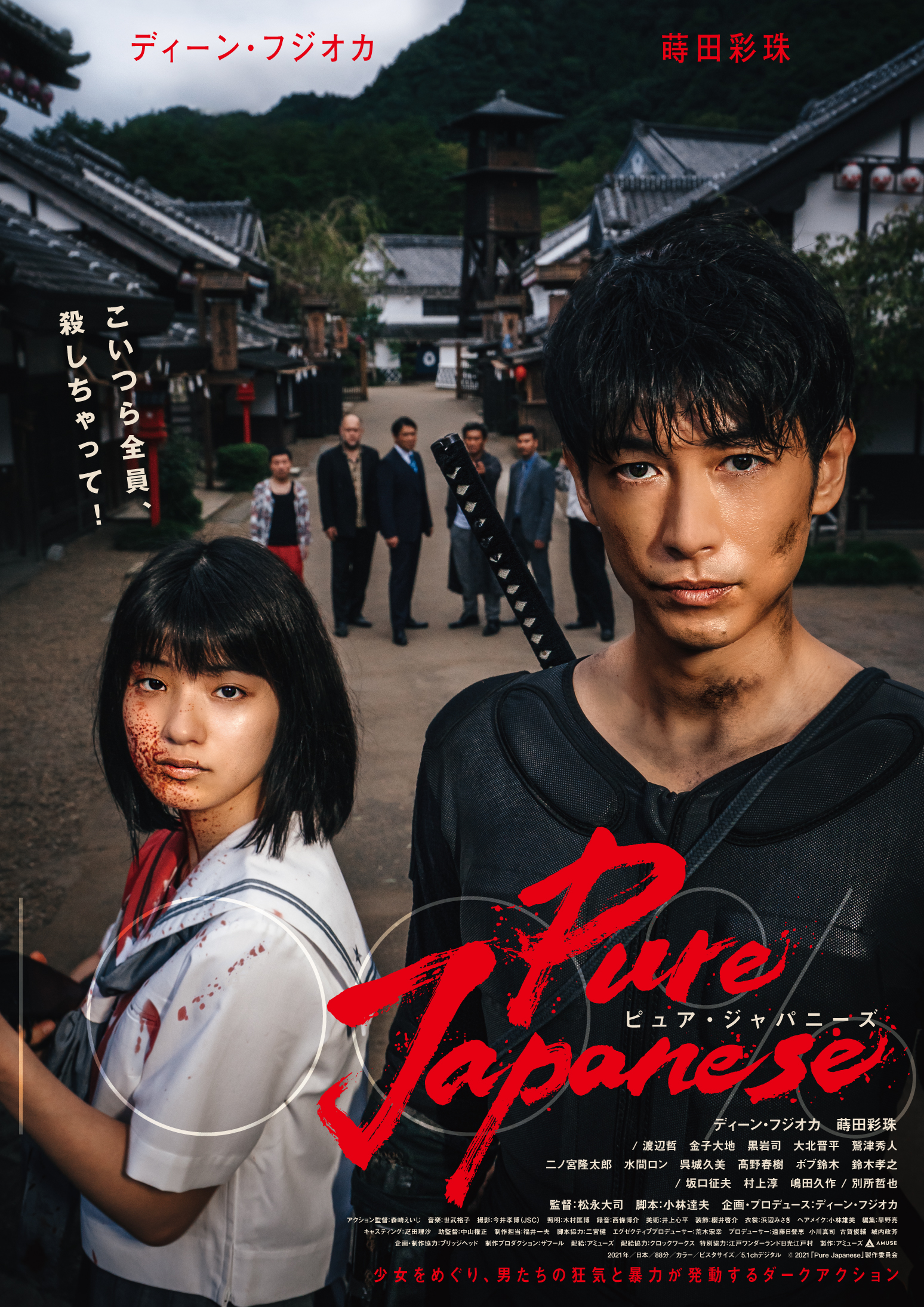
On the basis of the film’s title, you probably expect me to say something like “Here comes the latest showfest of quirkiness from Japan”. Well, I am not going to say it. Indeed, Daishi Matsunaga’s Pure Japanese gives off the vibe of being an homage to Takashi Miike’s style of filmmaking with the violence factor cranked up to the max. However, the film is actually a thoughtful examination of cultural hybridity and modern issues which are plaguing Japan.
Release Info
Directed by: Daishi Matsunaga Starring: Dean Fujioka, Aju Makita, Tetsu Watanabe
Language: Japanese Original Title: ピュア・ジャパニーズ Runtime: 87 min
Synopsis
Daisuke Tateishi (Dean Fujioka) works as an “action actor” in a historical theme park. He ended up doing this job because of a traumatic accident from the past, which forced him to leave the United States. Meanwhile, a local politician (Tetsuya Bessho) harasses an old farmer Ryuzo (Tetsu Watanabe) and his granddaughter Auymi (Aju Makita) because he wants to get their land. Daisuke steps into action and protects Ayumi. However, conflict with the yakuza evokes within him the insatiable desire for violence, something which he tried to suppress for a long time.
True Grit
I have to say that I am not a die-hard fan of Dean Fujioka but even to me it is evident that Pure Japanese was a passion project for the actor. In the press booklet, Fujioka says that his personal experience of living in-between Japan and the United States served as a source of inspiration: “What does it mean to be a Japanese in the society today? Is it the blood? Nationality? If Japanese language is the OS to control the mind and action of those who speak, maybe our lives are just a vehicle for that OS.”
Indeed, the movie strives to elaborate upon the theme of Japanese identity. Screenwriter Tatsuo Kobayashi provides us with an all too familiar storyline centering on a lonely warrior who reluctantly has to save the day (see numerous flicks of such kind with Chuck Norris and Jean-Claude Van Damme) and recognisable tropes (a high school girl with a gun, ninjas, and deadly yakuza); however, the main protagonist is not given some magical MacGuffin which allows him to embrace his distinct nationality. Rather than that, the actual MacGuffin (a medical test called “Pure Japanese'') forces him to question the concept of kokutai.
In my opinion, this was a very clever approach. The movie obviously takes cues from Quentin Taratino, Takeshi Kitano, and the aforementioned Takashi Miike, but it is not just an action flick. It tries to emphasise an anti-globalist/anti-political stance of Yukio Mishima, especially in the bloody third act, and even references the famous writer.
That being said, the plotline is at times quite predictable, but smooth editing and cinematography compensate for this shortcoming. The music score is quite catchy, but it can be heard only during the film’s most important moments.
With regard to performances, Dean Fujioka is 100% in Sho Kosugi mode, which (given the context of the film) is a compliment. Aju Makita is a great addition as a damsel in distress. It was also great to see J-Drama veterans like Tetsu Watanabe and Kyusaku Shimada in the supporting roles.
Recommendations
If you are looking for an unconventional but not too out-of-the-ordinary revenge story, then I do recommend Pure Japanese. The movie is now officially out on Amazon Prime Video. My thanks go to the Copacetic PR agency for reaching out to me about the film. For more information, you can also visit the official movie site. If you can’t have enough of Dean Fujioka, then please do know that he recently released a new single.
Overall score: 8/10
«Enjoyed this post? Never miss out on future posts by following us»

The Tournament (1974) [Film Review]

The Tournament; or, Angela Mao vs. Thailand
This week’s review will be about a movie from Angela Mao Ying’s golden years at Golden Harvest Productions. In the early 70’s she starred in such martial arts classics as Hapkido (1972), When Taekwondo Strikes (1973), and The Tournament (1974) (not forgetting about her small fighting role in Enter the Dragon). As I have accidentally stumbled upon The Tournament, I thought it would be a good idea to review this somewhat overshadowed film by the awe of Bruce Lee and Jackie Chan.
Release Info
Directed by: Wong Fung Starring: Angela Mao Ying, Carter Wong, Guan Shan, Got Heung-Ting
Language: Cantonese Original Title: 中泰拳壇生死戰 Movie Industry: Hong Kong Runtime: 94 min
Plot
A sister of a martial arts student is kidnapped by gangsters. They are willing to give her back in exchange for ransom, which the brother does not have. However, he heard about Thai boxing matches for money. Thus, he goes to his master (Got Heung-Ting) for help. The master has doubts about going to Thailand and putting out Kung Fu against Thai boxing, but he eventually agrees. Unfortunately, the student dies on the ring and ashamed master Liu returns to Hong Kong. The Martial Arts Association turns its back on him and revokes his membership. Devastated master commits suicide. Nevertheless, his daughter Lau Siu-Fung (Angela Mao) and son (Carter Wong) decide to avenge their father by taking on the oblivious members of the association and Thai boxers. Some sorry asses are about to get kicked!
Hail to Kung Fu
Surprisingly, The Tournament is a pleasant watch and it delivers its main premise: Angela Mao beating up random thugs back to Qin dynasty. The beginning is very slow-paced and a bit confusing, so you have to pay attention to details, but it perfectly establishes the drama (master Liu’s loss of honour) and the emotional motivation for the character of Feng. As a result, it is all the more enjoyable when the real fighting starts 40 minutes into the film.
In addition, in a similar fashion to Hapkido (1972), the movie contains anti-Japanese undertones as Feng not only has to face fellow Kung Fu masters, but also Karate students who want to take over her house. This creates an explosive mix halfway through the movie and an excellent opportunity to display some of the best battles with Angela. We see her beating the living hell out of the Chinese, the Japanese, and… Sammo Hung himself (another time when Sammo got bashed by Angela was in When Taekwondo Strikes (1973)).
When hordes of opponents finally give in, Feng and her brother finally to travel to Thailand (accompanied by a catchy incidental music that might have inspired Lalo Schifrin when composing Rush Hour score) and, obviously, go against the Thais. Sadly, Carter Wong is nothing more than just a punching bag in the story and the whole burden of saving the day rests on Angela’s shoulders. This is especially visible in the boxing matches (very well choreographed) as well as in the finale in Ayutthaya (thumbs up for shooting on the real location). However, Golden Harvest had to utilise yet another stereotype by putting Angela against (some random but intimidating) foreigner towards the end of the film. Still again, it’s a joy to watch her in action.
 
Recommendations
If you are tired of re-watching Bruce Lee flicks, you can safely turn to Angela Mao. The Tournament is one of my personal favourites from Angela’s repertoire and I safely recommend it to anyone who is in dire need of great (but not unbelievable) kung fu battles. In my view, Angela was incredibly fluent, vibrant, and convincing in her fighting scenes. Needless to say, I have to agree with the opinion of others that Angela Mao was indeed the real deal and the true Lady Whirlwind.
Overall score: 8/10

Te3n (2016) [Film Review]

Te3n; or, Vengeance for a Granddaughter
     I couldn't do anything for my daughter. And after she was gone, I couldn't take care of our Angela also. I can't sleep at night. I have to find the man who took Angela away from us. And I promise you… I will find him.
Continuing my discussion of Montage, I’m now moving on to Te3n, an official Hindi remake of the South Korean thriller.
Release Info 
Directed by: Ribhu Dasgupta Starring: Amitabh Bachchan, Nawazuddin Siddiqui, Vidya Balan
Language: Hindi Movie Industry: Bollywood Runtime: 136 min
Synopsis
8 years since the kidnapping of his granddaughter Angela, John Biswas (played by the legendary Amitabh Bachchan) is relentlessly visiting the police station day by day. Inspector Sarita Sharma (Vidya Balan) politely tells Biswas that they have no clues about the kidnapper. Also, Martin Das (Nawazuddin Siddiqui), the officer who was handling Angela’s case, is frequently visited by John. Yet, personal shame pushed him to become a priest, thus he is reluctant to help Biswas. Nevertheless, undeterred grandfather begins his own investigation as one day he notices a girl wearing his granddaughter’s cap. In the meantime, another kidnapping occurs in exactly the same manner as the one 8 years earlier. Father Martin is convinced that the same kidnapper has returned.
Crime Streets of Kolkata
Firstly, I have to point out that I’ve seen Montage and Te3n back-to-back. Though watching Montage was an invigorating experience, I was pleasantly surprised by Te3n as well. I know it’s a remake and the script clearly does not shy away from its Korean progenitor since it tells the same story, but it’s not a lesser production altogether. Indian filmmakers took what was best in Montage, framed it in Indian cultural background (great setting of Kolkata), and added a few subtle changes. What were the results:
Slow-paced progression of the events. Especially at the beginning, it is very hard to get into the story. Both films begin with the same sequence of a child’s death, but whereas Montage jumped immediately at the whole before-it’s-too-late stuff because “statute of limitations,” Te3n scraps this whole segment and we have to sit through 20 minutes of talking and flashbacks in order to understand what is going on.
Yet, it’s not entirely a bad thing. Who said that thrillers have to be only fast-paced? This introduction at least allows us to get to know three main characters: another substantial change. In Montage, there was only the mother and the detective. Here, we have the grandfather, the priest (former detective), and the police inspector (who is a woman). Major change indeed, but it significantly improves the story.
In the original film, the mother seemed two-dimensional, hence the detective had to carry on his shoulders the emotional charge of the story. In Te3n, the three characters provide fresh perspective for the viewer. We’ve got John Biswas whose traits are the mixture of the mother and the detective (determination to catch the abductor, obsession, near insanity), Father Martin who used to be like detective Cheong Ho but his guilt destroyed him, and Inspector Sharma who... does not really give a damn about the old kidnapping case. In consequence, new characters not only remake but also reinvent Montage’s plotline, making it open to new interpretations.
Additionally, the way how John Biswas discovers the kidnapper’s identity is done differently. In Montage, it was not much of an investigation than a complete accident for the mother. She found an umbrella with a logo, made the list of suspects and it was the end. However, John goes full Sherlock as he finds new pieces of evidence (a cap, a pen, a company logo). Another positive alteration.
However, that’s basically it when it comes to plot changes. The makers of Te3n knew the value of Montage and did not even try to veer off its main course. Careful re-enactment of Montage’s most important moments (kidnapping, picture in the garbage truck, and dreadful railway station sequence) was a bit of a letdown to me. I know it’s a remake, but I hoped for some greater ingenuity. Yet, what I’ve seen was satisfactory enough.
In terms of performances, the three (as the Hindi title hints) leading actors are the main pillars of this picture. Amitabh Bachchan does a marvellous job as the grandfather seeking justice. You can feel the anguish, suffering, and emotional torment of the main character. Nawazuddin Siddiqui is convincing as a disillusioned cop-turned-priest seeking redemption. Surprisingly, Vidya Balan does well as a female police officer and I’m encouraged to check out some of her other films. Padmavathi Rao, though only in a supporting role, deserves an honourable mention as John’s wife.
Recommendations
Even though it’s a remake, I highly recommend this film to anyone interested in a good thriller. Although the main crime is repeated, the movie is well written, has an awesome cast, good music, and is set in West Bengal. Even if you have already seen Montage, check out Te3n to see what was done in a different way. In my opinion, Te3n stands equally with its South Korean source material on the level of quality. A solid production among Bollywood's 2016 releases.
Overall score: 8/10

Montage (2013) [Film Review]

Montage; or, To Catch a Kidnapper
     This is where I was wrong. You've mistaken yourself for the victim and not the cause of all these cases at the time.
This week’s review, or, in fact, reviews (as I’m going to discuss Te3n (2016) as well) will be about a surprisingly well-made crime story with a double twist straight from South Korea. Brace yourselves for an intense pursuit, investigation of two(!) kidnapping cases and ingenious catharsis at the very end. To be specific, I’m talking about Montage (2013).
Release Info 
Directed by: Jeong Keun Seob Starring: Kim Sang Kyung, Uhm Jung Hwa, Song Young Chang
Language: Korean Original Title: 몽타주 Runtime: 119 min
 
Synopsis
Detective Cheong Ho (Kim Sang Kyung) is still struggling with an unsolved kidnapping case which happened 15 years ago. Unexpectedly, the detective picks up a new lead only five days prior to the expiration of the case’s statute of limitations. Surprisingly, somebody left a flower on the crime scene. Even though Cheong Ho locates the man in question, the suspect manages to escape and it is already too late to prosecute him for his crimes. Detective quits the force, but soon after he is called again as it turns out that another kidnapping occurred with exactly the same methods used as in Cheong Ho’s old case. Is it possible that the same kidnapper is active once again?
Perfect Crime, Better Repetition
From the opening scene, director (and writer) Jeong Keun Seob leaves the viewers completely in the dark (similarly to the mother behind the wheel with a bag on her head) as the central sequence of the story sets in motion a chain of convoluted events leading up to the kidnapper’s identity. Although we have very little information about what happened 15 years earlier, we are almost immediately thrown into the thrilling search for the kidnapper. This is probably the first highlight of the film; as it does not attempt to provide a moral standpoint, but allows to get to know the main characters. On the one hand, there is the detective who treats the kidnapping case personally and almost seems to be obsessed with it. On the other hand, we have the mother, Ha Kyung (Uhm Jung Hwa), who is even more obsessed and determined. These two characters form the starting point of an amazing “whodunit” story.
So, what really happened 15 years ago that irreversibly changed the detective and the mother? Ha Kyung’s daughter (Kim Sung Kyung) was kidnapped when coming back from school. The kidnapper left a photograph of the child in a garbage truck and ordered $50,000 to be delivered in a bag at a railway station, where he swiftly took it into a crowd of army cadets. Ridiculed police officers focused on the lost money, but detective Cheong Ho came back to the mother’s apartment and listened to a recorded phone call from the kidnapper. The bad guy was willing to give the child back for more money.
I know it’s been three years (so far) since the release of Montage, but I don’t intend to reveal the ending so as not to ruin your own fun of watching the film. All you need to know is that 15 years later, the crime is committed again with the same methods (though, the idea of army cadets still appearing on the same railway station everyday for 15 years is too far-fetched), but, this time, the plan is pushed to perfection. Only Cheung Ho knows that the real kidnapper has got away again, but how to nail him down? The key is the old tape recording of a phone call.
Simultaneously to these events, we see the mother conducting her own investigation. Quite cleverly and meticulously Ha Kyung collects previously unknown pieces of evidence and creates a list of suspects. Eventually, she arrives at an empty house and finds a calendar marked with the countdown to the case’s statute of limitations expiration... Yet, the key to understanding the film's big twist at the end is the fact that the detective’s and the mother’s storylines do not occur simultaneously. Jeong Keun Seob tricks us into believing that what we see on screen happens in real time, but actually it does not. Once you get this, you will understand the beginning and the ending of the film.
In terms of performances, Kim Sang Kyung does a great job as a mentally broken detective. Yet, I couldn’t help but constantly think about his other police role from Memories of Murder (2003) (an unintentional reference?). Uhm Jung Hwa is also convincing as the mother, but her character is inconsequentially written. The actress clearly tried to do her best with the material she had, but towards the end of the film, it was the detective character whom I was rooting for.
Recommendations
I can’t remember the last time since I’ve seen such a clever thriller. Of course, it’s done very much in the Hollywood style, but it does not suffer from the accumulation of insane plot twists and mind-bending revelations. Some things could have been improved, but this was already done in Te3n which I want to focus on in my next post. All in all, Montage is a solid entertainment that will certainly keep you engaged in one sitting.
Overall score: 8/10