Showing posts with label action. Show all posts

Mechanical Violator Hakaider (1995) [Tokusatsu Review]

Mechanical Violator Hakaider; or, Requiem for a Destroyer
     Do you want to live? Do you want to live and have a free will of your own?
It’s been quite some time since I covered Tokusatsu outside the realm of Godzilla. Actually, while being on the lookout for some Goji clips on YouTube, I spotted some random video in Japanese characters, but the thumbnail caught my attention, so I clicked on it. All I cay is that looking at unknown 90s Toku vintage action sent me on a search to find the original source. This led me to Mechanical Violator Hakaider, directed by none other than the crazy nerd himself Keita Amemiya.
Release Info
Directed by: Keita Amemiya Starring: Yuji Kishimoto, Mai Hosho, Jiro Okamoto, Yasuaki Honda
Language: Japanese Original Title: 人造人間ハカイダー Runtime: 77 min
Synopsis
A group of criminals raid an abandoned prison facility. In one of the sealed chambers, they discover a man in chains (Yuji Kishimoto). The man turns himself into an android known as Hakaider and kills the criminals. He mounts a bike and rushes to a utopian world known as Jesus Town, which was built on the ruins of Jerusalem. Jesus Town is governed by the Parliament and psychotic leader Gurjev (Yasuaki Honda). A group of outlaws led by a girl called Kaoru (Mai Hosho) plan to destroy the Parliament. Hakaider teams up with Kaoru because she believes he is the black knight who saved her in her dreams. When the outlaws are attacked, Hakaider steps into action.
Knockin’ on Heaven’s Door

Having done some research online, it turns out the character of Hakaider is actually the original creation of Shotaro Ishinomori, the mastermind behind Super Sentai and Kamen Rider. The villainous robot was part of 1970s Toku manga and TV show called Android Kikaider; however, Amemiya’s movie is not in continuity with the previous media. Instead, Mechanical Violator Hakaider is a stand-alone sci-fi spin on the side character, turning him into a sympathetic anti-hero much in the vein as Terminator from T2: Judgement Day (1991).
If you are already familiar with Keita Amemiya (see my review of the Zeiram franchise), then you know you are in for a ride filled with old-school fireworks, miniatures, model work, stop motiion, front projection, and early CGI. Amemiya uses every single trick in the book to make a satisfying dark Toku spectacle driven by ridiculously satisfying action, Mad Max-inspired production design, and moments of genuine poignancy.
The story itself is simple enough to keep you engaged. We have the main hero who doesn’t know what exactly he is: a tool of destruction or perhaps misunderstood champion of morality. It is only when Hakaider meets the cheerful Kaoru, he experiences some real happiness.
I know that I am a sucker for love subplots, but I really like the romance between Hakaider and Kaoru because it wasn’t just “love at first sight”. In fact, the majority of the thing was presented through Kaoru’s dreams, which made it extremely poetic.
Now, moving to the baddies. Amemiya does some clever deconstruction of expectations here. Gujrev looks like an angel, and he even has a bunch of fake wings. The soft way he speaks and his affection for flowers makes you think he is a kind person, but nothing could be farther from the truth. The same goes for Gujrev’s henchman, android Michael, who looks all clean and slick, as if he came out of the Timeranger show. The android even claims to be a representative of justice, but he too is driven by twisted misconceptions about life, peace, and obedience.
Oh, and a bit of trivia! Perceptible viewers may spot among the outlaws a familiar face from Zyuranger; that is, Ami Kawai who played Lami in the show. Here, unfortunately, she doesn't have much a screen time, but it's great to see her in another Tokusatsu production. 
With regard to disadvantages, the movie’s runtime is quite short and I watched the director’s cut(!) This version lasts 77 minutes, whereas the theatrical one is 26 minutes shorter. It makes me think what exactly was cut to accommodate the shorter runtime, but I have no desire to watch the original version.
Recommendations
All in all, Mechanical Violator Hakaider is a lot of fun if you’re looking for something vintage, yet without gruesome violence. It took me like a whole week to track this movie down. I’ve searched for it anywhere, until my stupid brain told me to head over to YouTube of all places, and lo and behold there it was. Now I’m so super charged that I want to check out more of Keita Amemiya’s filmography.
Overall score: 7/10
«Enjoyed this post? Never miss out on future posts by following us»

City Hunter (2024) [Film Review]

City Hunter; or, Mr Private Eye
     I’ll take you on your case. Let’s go avenge your brother.
I’m back with new, belated update. This time, I take a look at another 2024 April release. To be specific, I really wanted to check out a Netflix live-action adaptation of the popular City Hunter franchise.
Release Info
Directed by: Yuichi Sato Starring: Ryohei Suzuki, Misato Morita, Asuka Hanamura, Fumino Kimura
Language: Japanese Original Title: シティーハンター Runtime: 102 min
Synopsis
Tokyo, 2024. Private detective Ryo Saeba (Ryohei Suzuki) is an excellent marksman, and also a pervert when it comes to relations with women. He is working on a case of a missing girl together with his friend Hideyuki Makimura (Masanobu Ando), who is an ex-cop. After the murder of Makimura, Saeba joins forces with his partner's sister, Kaori (Misato Morita) to discover the mystery behind a deadly drug known as Angel Dust.
Midnight Lighting
To be honest, my knowledge of City Hunter is limited only to the 1993 Hong Kong adaptation with Jackie Chan in the leading role, so please don’t hit me. I have no idea how it’s possible, but the City Hunter craze never caught me. I’m familiar with the premise of the show, but I don’t even think that the original anime and OVAs from Sunrise were broadcast in my country. The Korean and French adaptations from 2011 and 2019 respectively are also beyond me. As a result, I approach the 2024 film with the non-fan mindset.
The Netflix production directed by Yuichi Sato certainly caught my attention due to its stylish production design and over-the-top action set pieces. It is clear that this movie was made by the fans for the fans, so even though I am missing out on some vital easter eggs and plotlines from the manga, I still appreciate the fast pacing and interesting storyline.
Although the movie is set in present day, you can clearly feel the vibe of the 1980s. What is more, I love the neon lighting of many scenes and great attention to detail (city skyline is oftentimes prevalent throughout the movie). In addition, the end credits are a real design treat.
In my opinion, Ryohei Suzuki totally rocks as Ryo Saeba. I really like his overconfident on-screen behaviour, so it’s much easier for me to buy his interpretation of the character than Jackie Chan’s. However, the NSFW jokes crop up a bit too often, in my opinion. Because of these, at times, I had a feeling that I was watching yet another Naked Gun movie.
Additional praise goes to Misato Morita as Saeba’s sidekick, Kaori Makimura. Personally, I think she steals a lot of the scenes, especially the ones that involve drama and moments of vulnerability between the characters. I think that Morita had better material to work on than in the case of The Naked Director, and I certainly look forward to seeing her in more movies and dramas. That being said, Takaya Sakoda really scared me as the main villain. Indeed, he gave a menacing performance and at first, I thought I was looking at deaged Ken Mitsuishi from Ouroboros drama. There is certainly a similarity in the crazed look of both actors. I also liked seeing Asuka Hanamura and Fumino Kimura in supporting roles.
Recommendations
To sum up, I greatly enjoyed City Hunter from Netflix and I’m definitely open for a potential sequel. In the meantime, the movie encouraged me to check out the Sunrise anime, but I still have no desire to watch Korean and French productions.
Overall score: 7/10
«Enjoyed this post? Never miss out on future posts by following us»

Mad Cats (2023) [Film Review]

Mad Cats; or, Demon Warriors
     This has nothing to do with me! I just got dragged into it!
Welcome to another December review, in which I am taking a look at another upcoming Third Window release, which is Mad Cats (2023), an indie action flick cooked up by director Reiki Tsuno.
Release Info
Directed by: Reiki Tsuno Starring: Sho Mineo, Yuya Matsuura, Ayane
Language: Japanese, English Original Title: MAD CATS Runtime: 88 min
Synopsis
Taka (Sho Mineo) is a young guy who leads a “worthless” existence. One day, he receives a tape on which a female voice tells him that his brother (So Yamanaka), an archeologist, is held captive at a place where they once found a cat. Taka rushes to that place only to discover that there is an ancient artefact from Egypt, which is the forbidden catnip. Demonic cats who turned into humans are chasing after Taka. In the quest to save his brother, he is joined by a street beggar Takezo (Yuya Matsuura) and a mysterious woman (Ayane).
Hell Here
I have to say that I went in to check out Reiki Tsuno’s Mad Cats completely blind, having read completely nothing about the movie beforehand, and this approach was beneficial to me. Mad Cats feels like an homage not only to the pulpy style of Quentin Tarantino, but also to many horror/thriller flicks from the 1980s like The Terminator (1984) or Fright Night (1985).
In fact, I did notice the stylistic parallels between Mad Cats and Adam Wingard’s The Guest (2015) which also was constantly referring to the kick-ass cinema of the 1980s. Awesome soundtrack composed by Yuki Hotta (with the generous usage of Birthday Girl songs) and really eye-catching cinematography by Shintaro Teramoto are the definite assets of the movie.
That being said, the story itself may not be everybody’s cup of tea. Undoubtedly, Mad Cats has the necessary dosage of comedy, action, and typical sense of creative wackiness you would expect from an indie production, but at times, the film may feel dragged out and repetitive with some of its sequences.
This may also come off as nitpicking, but I do believe that sound mix might have been improved. Maybe it was only my case because I was watching the film with headphones, but a lot of sound effects seemed louder than the regular voice track. Still again, this is not a big issue that distracts you from the viewing experience.
With regard to performances, the main actors do a fine job. Sho Mineo is great as the goofy everyman, Ayane is definitely a force of nature as the female warrior, whereas Yuya Matsuura is having a field day as a street bum who accidentally gets entangled in an otherworldly battle. After seeing the actor in Onoda - 10,000 Nights in the Jungle (2021), and Lonely Glory (2022), I really look forward to his future projects.
Recommendations
All things considered, Mad Cats is an interesting indie production with a big heart, but there are certain loose ends which may be noticeable for demanding viewers. Personally, I do not regret seeing it. The movie is going to be made available on region-free Blu-Ray from Third Window Films on the 29th of January, 2024. The release is going to include such bonus features as an interview with director Reiki Tsuno, director feature commentary, behind the scenes materials, and theatrical trailer.
Overall score: 6/10
«Enjoyed this post? Never miss out on future posts by following us»

Okay! Madam (2020) [Film Review]

Okay! Madam; or, National Lampoon’s Airborne Vacation
     We have to go on this trip!
It has been a while, but I am getting back into Korean movies again. I am not sure if this is a long term thing or a passing mood, but I decided to check out some Korean comedies. My obvious first pick became Lee Chul Ha’s Okay! Madam from 2020. I admit that the movie would have totally missed my radar had it not been for a recommendation post made by my friend @penel over at MyDramaList.
Release Info
Directed by: Lee Chul Ha Starring: Uhm Jung Hwa, Park Sung Woong, Jung Soo Bin
Language: Korean Original Title: 오케이 마담 Runtime: 100 min
Synopsis
Mi Young (Uhm Jung Hwa) and Suk Hwan (Park Sung Woong) are a middle-class family. She runs a shop at a traditional market, and he is a technology wizard who fixes computers. All of a sudden, it turns out that they win a trip to Hawaii. The couple together with their daughter (Jung Soo Bin) board an exclusive plane. Nevertheless, family happiness is quickly disrupted when a group of terrorists takes over the plane. The assailants are looking for a former spy from North Korea who is allegedly on board. Mi Young and Suk Hwan step into action to save their daughter and the rest of the hostages.
High Anxiety
When I saw @penel’s feed post for the first time, I thought to myself, “Oh cool, it's a plane movie!” It was only later when I realised that Okay! Madam is also a comedy. Indeed, it is very hard to make a successful comedy set on board of an aircraft. However, there are a few noticeable examples, such as Airplane! (1980) and Happy Flight (2008).
Okay! Madam is a very light-hearted and briskly paced fun entertainment. It even manages to conjure up a few plot twists along the way. Consequently, I am very grateful I checked out the film without paying attention to the plot synopsis or watching a spoiler-charged theatrical trailer. I suggest you do this as well in order to get full enjoyment out of the movie.
I realise that some demanding viewers may be put off by the film’s low production value. Evidently, it was made on a tight budget, which can be seen in many CGI shots of a plane in distress, whereas all the interior shots were shot in studio conditions. Still again, the greatest advantage of the movie is the script and great performances of the leads.
Speaking about performances, Uhm Jung Hwa is having such a field day in this movie! I mainly know the actress from her dramatic endeavours, but in Okay! Madam she clearly demonstrates her comic abilities. Park Sung Woong is also funny as the geeky husband. Lee Sang Yoon makes a standard appearance as your ordinary Mr Tough Guy, but he does well with his role. The rest of the supporting appearances are fine, but do not particularly stand out.
Recommendations
Even though the film is a Korean production, it makes me wonder if the title is actually a witty reference to Corey Yuen's action-packed Yes, Madam! (1985) which jettisoned Michelle Yeon into stardom. All in all, I greatly enjoyed Okay! Madam. The movie is available on numerous streaming platforms, including Amazon Prime.
Overall score: 8/10
«Enjoyed this post? Never miss out on future posts by following us»

GTO: The Movie (1999) [Film Review]

GTO: The Movie; or, Canada Village
     I am a teacher with a mission!
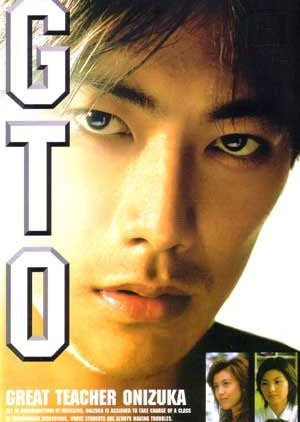
A few days ago the school year ended where I live, so (as a teacher) I was in the mood for educational vibes. As a result, I grabbed the TokyoShock DVD of Great Teacher Onizuka: The Movie (1999), the concluding chapter of the popular FujiTV drama of the same name that was based on a manga by Tooru Fujisawa.
Release Info
Directed by: Masayuki Suzuki Starring: Takashi Sorimachi, Norika Fujiwara, Rena Tanaka
Language: Japanese Original Title:  グレート・ティーチャー・オニヅカ ,  Runtime:108 min
Synopsis
Eikichi Onizuka (Takashi Sorimachi) arrives in the city of Horobai in the Hokkaido region. The city used to be prosperous in the 1980s, but it was economically driven to the ground by the local businessman Katsuragi (Isao Natsuyagi). Onizuka teaches a class in which a boy, Seiji (Zen Kajihara), is in love with Katsuragi’s daughter Ayano (Rena Tanaka). The problem is that Ayano is hated by other students for her father’s actions. Onizuka, while being on the run from the police and a local journalist (Norika Fujiwara), steps into action.
GTO on the Road
Allow to me clarify at first that if you haven’t seen anything from the franchise of Great Teacher Onizuka, then this movie is not a good place to start. The best place to begin your journey is the 12-episode drama + special episode. This was my introduction into the realm of GTO and I couldn’t be a better one. Even though the drama is 25(!) years old, it can still grab you by the heart with its engaging storylines, amazing acting, and kick-ass music score.
This brings me right to the disadvantages of GTO: The Movie because it lacks all of the aforementioned assets of the drama that came before it. What is more, it is not a cinematic experience at all. Well, it is at least in terms of technical aspects because it was shot on film and in widescreen format with the neat aspect ratio of 1.85:1. However, in terms of screenplay, the movie feels like yet another rehashed special episode.
For all intents and purposes, GTO: The Movie is a directionless picture that plays things safe so as to grab the cash from fans of the drama. There is not enough character growth to make me care for stone-cold students with whom Onizuka interacts, let alone Onizuka himself who does crazy stuff just because he is cool, not because he has motivation to be the best teacher he can be for his students (as he demonstrated in the series).
That being said, I did enjoy the banter sequences between Onizuka and a local journalist. The action stuff okay, but the lack of Poison theme until the end credits made everything feel stale. In addition, I appreciate the fact that the crewmembers shot the living crap out of this film on actual location.
With regard to performances, no matter what, I will always regard Takashi Sorimachi as the definitive incarnation of GTO. The man was born to play this part. Norika Fujiwara is fine as a comic-relief character, but thankfully she is not a love-interest replacement for Nanako Matsushima. Also, the leads are backed by FujiTV’s finest veterans of the 1990s, such as Masahiro Komoto, Masahiko Nishimura, Ito Toshihito, Kazue Tsunogae, and Keiko Toda.
The DVD version I have also contains 15 minutes of bonus features, including trailers and interviews with the cast and crew. Interestingly, Takashi Sorimachi stated that he was very calm while shooting the picture, even though he was very stressed when making the drama. Norika Fujiwara complained about the amount of running she had to do in the film, and also explained that this was her second feature as Cat’s Eye (1997). Surprisingly, Rena Tanaka spoke very seriously about her role, which makes me wonder whether or not she is a method actress.
Recommendations
All things considered, GTO: The Movie is not a decent film, but it is a so-so conclusion of the drama. You can watch it only if you want to pass the time somehow and you got tired of rewatching your batch of favourite Dragon Zakura episodes. That is it from me at the moment. Stay great like Great Teacher Onizuka.
Overall score: 6/10
«Enjoyed this post? Never miss out on future posts by following us»

Godzilla: Final Wars (2004) [Tokusatsu Review]

Godzilla: Final Wars; or, Last Hurrah for Monster Rumble
     The world is ruined, and the war is already lost. Now it's a matter of pride. We either die hiding... or die fighting.
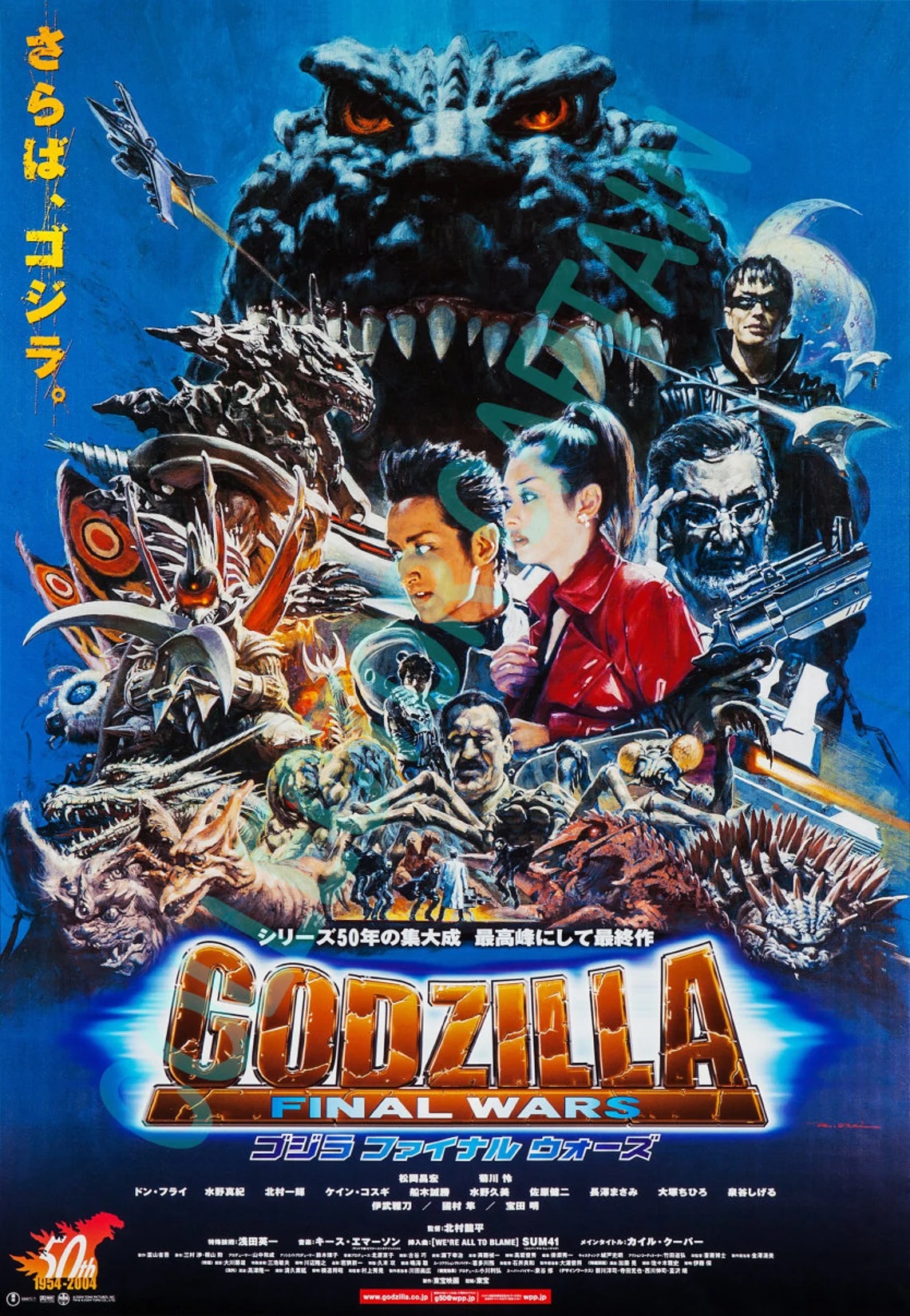
Even though this review is already quite belated, I am glad that I finally found the time to talk about my final Godzilla movie for the year 2023; that is, Godzilla: Final Wars, the last instalment of the Millennium series directed by Ryuhei Kitamura and released in 2004 for the 50th anniversary of the franchise.
Release Info
Directed by: Ryuhei Kitamura Starring: Masahiro Matsuoka, Rei Kikukawa, Maki Mizuno
Language: Japanese Original Title ゴジラ ファイナルウォーズ Runtime: 125 min
Synopsis
Godzilla has been defeated and buried in ice imprisonment beneath the South Pole. However, the world was plagued by many disasters and wars that caused the awakening of many monsters. All of a sudden, an alien race calling themselves Xiliens arrives and neutralises the monsters. The aliens want to negotiate a treaty with humans. However, the real motive of the aliens is to conquer Earth. When the monsters get unleashed, Godzilla breaks free from the South Pole as well. Operation Final War is set in motion.
Out with a Bang
After the release of Godzilla: Tokyo SOS, the Toho Studios arrived at a conclusion that Godzilla movies are no longer that profitable as they used to be in the past, so the executives considered axing the franchise. However, producer Shogo Tomiyama decided it would be a good idea to end the series on a high note with a commemorative movie that would retire the King of Monsters for a decade or longer.
To fill in the director’s chair, Tomiyama hired a young director Ryuhei Kitamura who was already known for such films as Versus (2000), Aragami (2003), and Azumi (2003). However, Kitamura had no experience with the Tokusatsu genre, even though he was a Godzilla fanboy since childhood.
Kitamura’s personal auteur style and enthusiasm for the series allowed him to create a unique take on the Big G. Together with writers Wataru Mimura and Isao Kiriyama, he developed an action-packed story that functions as a stand-alone movie in the franchise. At best, you can regard Final Wars as a multiverse finale, but I like to think of it as the missing 16th movie of the Showa era because it follows the wacky science-fiction style of these movies from the 1970s.
It goes without saying that Final Wars is very divisive among the fanbase. Many viewers embrace the batshit craziness that oozes from the screen, whereas others just can’t stand the shifts in tone that alter between the Matrix vibes and traditional monster rumble. I admit that even for me watching this film for the first time ten years ago was just too much. It felt like a sensory overload with too many characters and too many bombastic subplots, but as I matured, I learned to appreciate it for what it is. By no means it is a standard Godzilla flick, but an event film, the purpose of which was to celebrate the 50 year-long legacy of the King.
I have to say that I appreciate top-notch action and special effects helmed by Eiichi Asada that preserved the traditional suitmation technique while utilising CGI in demanding shots. The same kind of praise, however, cannot be said about the music score composed by the late Keith Emerson, Nobuhiko Morino, and Daisuke Yano. The music is more all-over-the-place than the film itself, which really affects the viewing experience. There are some nice action cues, but on the whole, the score is bland and uneventful. Final Wars would have benefited more from Akira Ifukube’s classic themes.
With regard to performances, the leading stars of the film do a great job indeed and they are quite memorable in this whole shabang of insanity. Masahiro Matsuoka does okay as the standard hero who strives to save the day. Rei Kikukawa and Maki Mizuno rock as the Otonashi sisters. Interesting fun fact is that Maki Mizuno is the granddaughter of the legendary Kumi Mizuno who has a small supporting part in the film. We can also spot other Tokusatsu veterans: Kenji Sahara, Masato Ibu, Jun Kunimura, Koichi Ueda, Akira Emoto, and Akira Takarada. Kazuki Kitamura is simply too outlandish as the main villain, but I love him anyway. Last but not least, Don Frye plays Captain Douglas Gordon, and this character is simply too-cool-for-school with his over-the-top gigachad demeanour.
Even though Toho made money from the buzz surrounding the movie (merch, video games, re-release of the 1954 original, etc.), Final Wars itself was a box office failure, recouping approximately half of its original budget. Still, it appears that director Ryuhei Kitamura was satisfied from the movie he delivered.
Personally, I was dying to see the film back in 2004, but there was no theatrical release in the land of forgotten ghosts where I live. However, a distribution label Monolith did issue the film on DVD in a special edition, but the price for it was insane. It was not until 2023 that I was able to get this DVD edition which includes a making-of documentary as well as featurettes from the LA premiere of the film. Unfortunately, the audio on the release is either English or Polish. So, I still have to rely on a bootleg DVD from Hong Kong just to be able to hear the unaltered Japanese audio track. 
Recommendations
All things considered, the aim of the Millennium series was to keep the flame of Big G’s popularity going and to attract new fanbase, but the results were mixed. Godzilla: Final Wars marks the end of an era whether you like it or not. This is the last film that used the suitmation technique. This is the last film that features so many cameos from Tokusatsu veterans. This is the last film that was shot on Toho’s famous pool and backlot before these got restructured. This is the last film that was dedicated to the memory of Ishiro Honda, Eiji Tsuburaya, and Tomoyuki Tanaka, the creators of Godzilla. It was not until the year 2014 when Godzilla was reintroduced into the public spotlight with the American remake that ushered in the MonsterVerse series. However, this is a story for another time.
Overall score: 6/10
«Enjoyed this post? Never miss out on future posts by following us»

Godzilla, Mothra and King Ghidorah: Giant Monsters All-Out Attack (2001) [Tokusatsu Review]

Godzilla, Mothra and King Ghidorah: Giant Monsters All-Out Attack; or, Post-War Trauma
     Godzilla is passé.
This week is provide my penultimate review of my Godzilla Millennium series rundown. To be specific, I want to focus on a film about which I have mixed feelings. This is Godzilla, Mothra, and King Ghidorah: Giant Monsters All-Out Attack from the year 2001, directed by Shusuke Kaneko.
Release Info
Directed by: Shusuke Kaneko Starring: Chiharu Niiyama, Ryudo Uzaki, Shiro Sano, Hideyo Amamoto
Language: Japanese Original Title: ゴジラ・モスラ・キングギドラ 大怪獣総攻撃 Runtime: 105 min
Synopsis
The Japan Self-Defense Forces are alerted about the American nuclear submarine that went missing. In the meantime, a TV reporter Yuri Tachibana (Chiharu Niiyama) films a documentary piece near Mount Myoko, which is hit by a mysterious earthquake. It turns out that Godzilla might have returned and the only way to stop the creature is to reawaken the so-called Guardian Monsters: Baragon, Mothra, and King Ghidorah.
Anger and Hatred
Contrary to common misconceptions within the fandom, this movie did not come about because of the poor financial and critical reception of Godzilla vs. Megaguirus (2000). During the production of the aforementioned film, producer Shogo Tomiyama was still keen on developing the idea of revisiting Godzilla in an alternate universe with each new motion picture. Therefore, he recruited the services of an experienced Tokusatsu director Shusuke Kaneko.
Kaneko was a major Godzilla fanboy since childhood, and it was his lifelong dream to actually make a Godzilla movie. Already in the 1990s, when the Heisei movies were at their peak, young Kaneko contacted Tomiyama, but the producer politely refused his pitch to direct. Consequently, Kaneko honed his craft in the Tokusatsu genre by directing for Daiei the now-extremely popular Gamera Trilogy (1995-1999).
When Kaneko was approached with the offer in 2000, he developed several script ideas for the potential film, but the one closest to his vision involved Godzilla as the ruthless villain facing off against protectors of Earth: Varan, Baragon, and Anguirus. Toho accepted the idea, but gave the ultimatum to replace the original monsters with King Ghidorah and Mothra in order to make the film more bankable because the previous outings were box office bombs.
The movie itself certainly feels different in tone and its subject matter from other Millennium flicks crafted by Masaaki Tezuka and Takao Okawara. The GMK film is Shusuke Kaneko’s attempt to bring the King of the Monsters back to his roots, to make him not an anti-hero, but an unforeseeable force of nature that detests humans and wants to destroy all forms of life.
What is more, Kaneko not only changed Godzilla’s modus operandi and his appearance, but also gave the monster a spiritual dimension of origin. Of course, the nuclear aspect of Godzilla remains intact, but Kaneko heavily implies that the Big G is also an embodiment of souls of Japanese soldiers who were left to die by the Imperial Army during the war. In consequence, Godzilla becomes a demon that haunts Japan not only for its trauma stemming from the bombing of Hiroshima and Nagasaki, but also for the country’s war crimes. Godzilla’s mercilessness is especially telling in a scene where he slams to the ground a hospital filled with innocent people, including a girl who survived the monster’s previous attack.
It goes without saying that Mothra is always the Kaiju heroine, and she always rocks on that front, but it is impossible for me to picture King Ghidorah as the benevolent dragon who saves the day. This is the major cognitive dissonance that ruins this movie for me. King Ghidorah time and time again, for decades, was Godzilla’s arch-nemesis, not the saviour of mankind.
In terms of cinematography and special effects, the GMK movie is the most 2000-like looking production of the Millennium series. I’m not sure why it’s the cause of this apart from that Kaneko is definitely a modern filmmaker, whereas Tezuka and Okawara feel more traditional with their approach to Godzilla. There’s nothing wrong with both approaches. In fact, GMK has many cinematic nods to Godzilla from 1998, as if Kaneko was indirectly throwing shade at the American production. In addition, the special effects director Makoto Kamiya does a fine job with blending classic miniature work with CGI.
With regard to performances, Chiharu Niiyama and Ryudo Uzaki really carry the film with their performances. Uzaki is especially memorable as the army admiral who undergoes a fantastic voyage deep into the belly of Godzilla. The movie also features appearances of the veteran actors such as Shiro Sano, Masahiko Tsugawa, Hiroyuki Watanabe, and Hideyo Amamoto. There are also cameos done by Masaaki Tezuka, Koichi Kawakita, Ai Maeda and Aki Maeda (as twin sisters) as well as Mizuho Yoshida, Akira Ohashi, and Rie Ota (who were the suitmation actors for the titular monsters).
Last but not least, Kow Otani provided a truly menacing music score for the film. I will always cherish the composer’s soundtrack for the Outlaw Star anime, but his addition to the Godzilla franchise cannot go unnoticed as well. “His music was so emotional and classical; it reminds me of old-fashioned kaiju movies, (Akira) Ifukube’s sound. His music makes me excited. It makes your heart beat,” stated Shusuke Kaneko (source).
Recommendations
Undoubtedly, Godzilla, Mothra and King Ghidorah: Giant Monsters All-Out Attack is a film that stood the test of time and can be watched with having the knowledge of the rest of Godzilla films. However, it is very dark indeed, so it does not have a lot of rewatch value for me. The movie was released on Blu-Ray in 2014.
Overall score: 7/10
«Enjoyed this post? Never miss out on future posts by following us»