Showing posts with label 2022. Show all posts

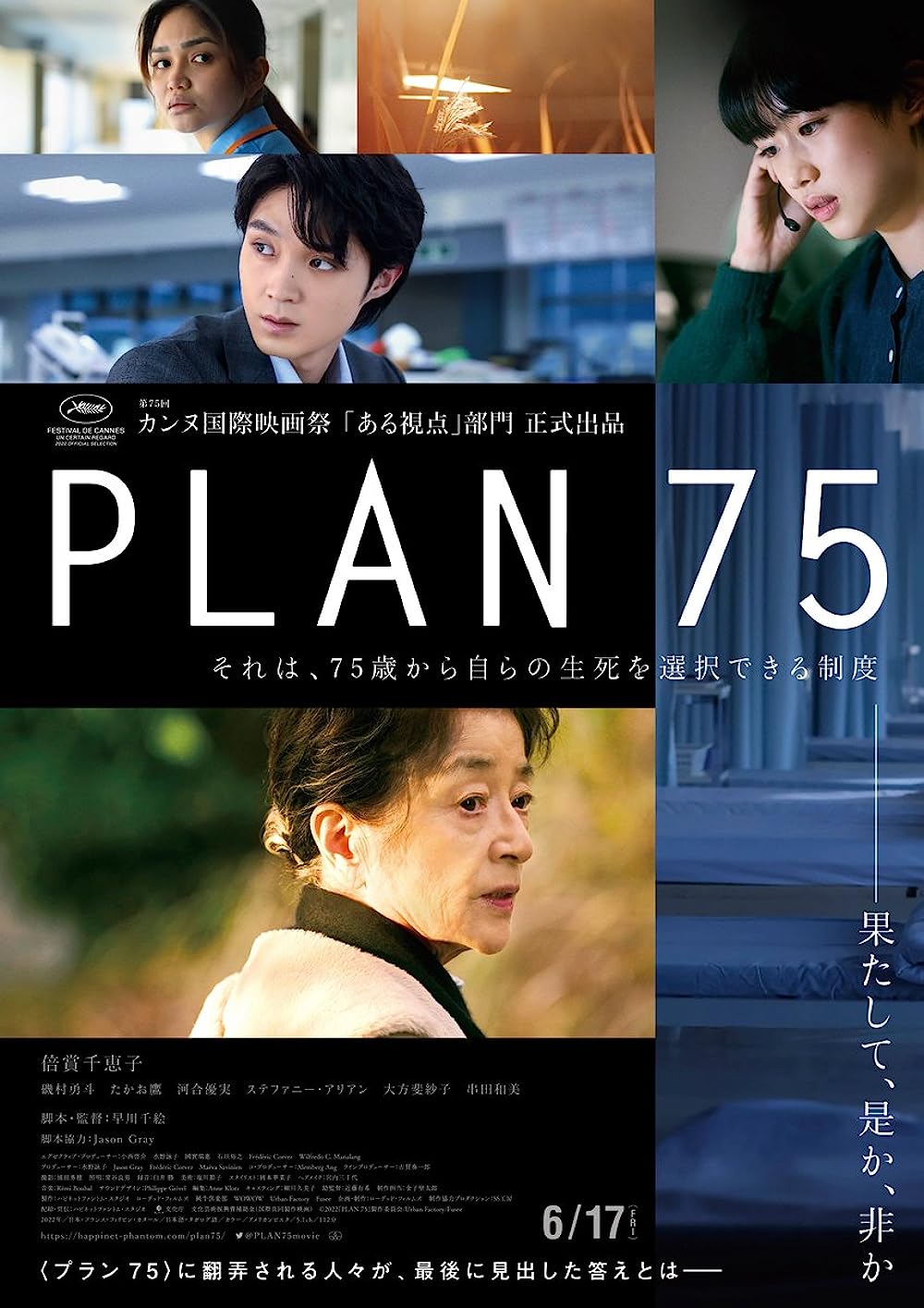
Plan 75 (2022) [Film Review]

Plan 75; or, The Death of Society
     It’s something I should think about doing for my grandchildren.
Plan 75 is one of those films that I really wanted to watch as soon as the official trailer dropped online. However, I was afraid that I won’t have the ability to do so because Chie Hayakawa’s movie is kind of a low-profile production that started to slowly gain traction through film festivals. Thankfully, I watched Plan 75 on the big screen in my own country because a local distributor picked up the rights for the film.
Release Info
Directed by: Chie Hayakawa Starring: Chieko Baisho, Hayato Isomura, Stefanie Arianne
Language: Japanese Original Title: PLAN 75 Runtime: 113 min
Synopsis
In view of the surplus of the elderly population, which has a negative influence on the economy of Japan, the government implemented a special bill called “Plan 75”. It enables voluntary suicide for citizens aged 75 and over. We follow the development of the plan through the perspectives of three people: Mishi Kakutani (Chieko Baisho), an elderly hotel worker who loses her job; Himoru Okabe (Hayato Isomura), an administrative worker who promotes the plan; and Maria (Stefanie Arianne), a staff member at a facility where the suicides are carried out.
The Gift of Life
Well, if you suffer from Thanatophobia or you can’t stand the topic of death, then Plan 75 is not a movie for you. This is not to say, however, that the movie is some kind of a dark thriller or horror. On the contrary, the power of Plan 75 stems from a mundane approach to the subject matter. It is not an apocalypse, not a war against humanity. The Japanese society accepts the outrageous political plan because herd mentality always wins against individual thinking. In fact, the individual has to conform and sacrifice himself or herself for the good of the group.
The more I think about the film, the more I find it disturbing. Chie Hayakawa insightfully examines the aforementioned dilemma through the main characters of the unfolding drama. The director shows that not only the elderly citizens are the victims of the situation, but also the younger generations who are taught fake empathy when interacting with prospective participants of Plan 75.
With regard to performances, allow me to say that being able to see the legendary Cheiko Baisho on the big screen, in a near-empty theatre room, was a profound experience for me. She really carried the film with her performance and I can’t imagine any other classic Japanese actress in the role of a woman who does not give up on hope. Hayato Isomura and Stefanie Arianne really shine in the supporting roles and the subplots of their characters really complement the main message of the film. Yuumi Kawai also appears as Yoko, a phone guide of Baisho’s character, but her screen time is limited to barely two scenes.
Recommendations
If you have the ability to watch the film legally where you live, then I encourage you to check out Plan 75. It was distributed in Poland by Aurora Films. I sincerely hope that the film will also receive a release on physical media outside of Japan.
Overall score: 8/10
«Enjoyed this post? Never miss out on future posts by following us»

The Monk and The Samurai (2022) [Short Film Review]

The Monk and The Samurai
     The lives of two men, a monk and a samurai suffer unbearable loss. Heroic to the end their tales intertwine as they battle with the chaos, redemption, justice and vengeance within.
Recently, I was approached with a review offer from Troy’s Team group located in Beijing. From what I know, they are a team of martial artists who worked on several big Chinese productions, such as Kung Fu Yoga (2017) or Ip Man 4 (2019), but they focus on movie production as well.
The latest result of their efforts is a short film called The Monk and The Samurai (2022). A 10 minutes long tale about two individuals influenced and moulded by a traumatic event. The film is primarily a collection of animated images intertwined with live-action clips. I am not an expert in editing, but the seamless transition between the effects made me think whether the filmmakers had use the popular rotoscoping technique to achieve the desired effect. All in all, the visuals are indeed pleasant for the eye.
With regard to the storyline, it is straightforward and easy to follow; this is mainly thanks to a skilful narration by John M. Shang. In fact, director Troy Sandford stated that the film was inspired by an idea to create a book “of short bed time martial art stories ideal for kids and adults” (source: presskit). Indeed, The Monk and The Samurai short feels very much like a bedtime tale to be enjoyed by parents and their children. The film perfectly encapsulates in a nutshell the spirit of ancient Asian myths about gallant warriors trying to do justice in the times of hardship.
All things considered, The Monk and The Samurai is a well-made short film, and I sincerely hope that more “episodic tales” like that will be made in the future by Troy’s Team. My respect goes to the creators and all the actors involved in the project.
 
«Enjoyed this post? Never miss out on future posts by following us»

Shin Ultraman (2022) [Film Review]

Shin Ultraman; or, In the Tokuverse of Madness
     Some things are only clear when you are in between. I believe this is why I exist.
Shinji Higuchi and Hideaki Anno, the creative duo behind Neon Genesis Evangelion (1995) and Shin Godzilla (2016) return once again to the Tokusatsu genre. Supervised by the Toho Studios and Tsuburaya Productions, the Shin Ultraman movie is the latest instalment in Higuchi and Anno’s so-called Shin Japan Heroes Universe, a marketing project that aims to reinvent the most popular Kaiju heroes.
Release Info
Directed by: Shinji Higuchi Starring: Takumi Saitoh, Masami Nagasawa, Hidetoshi Nishijima
Language: Japanese Original Title: シン・ウルトラマン Runtime: 112 min
Synopsis

Japan is known as the only country on Earth that is constantly plagued by kaiju monsters. For this reason, the government created a special team known as S-Class Species Suppression Protocol, so they could analyse the giant monsters and help the military in fighting them off. However, the recent attacks render the team helpless. All of a sudden, an extraterrestrial being called Ultraman appears and saves the day. Who is Ultraman? Is he a friend or a foe? The arrival of a mysterious alien sets in motion a chain of events that may lead to the annihilation of Earth.
Nostalgia Service
Allow me to start my review by saying that I am not a massive fan of Ultraman. It is not that I dislike the franchise, but I never felt the need to check it out in full apart from bits and pieces on YouTube. As a result, Shin Ultraman is my first proper interaction with this series that has been around for over 50 years now.
At first, I was a bit weary of the movie given the fact that it was cooked up by Shinji Higuchi and Hideaki Anno. As I have stated in my review of Shin Godzilla, I did not greatly enjoy their NGE-charged take at the Godzilla mythos. I was afraid that the directors will repeat their fanboy mojo concerned with fatalism, depression, and bureaucracy in Ultraman, but nothing could be further from the truth.
Shin Ultraman is, for all accounts and purposes, a love letter to the original series that started it, Ultra Q (1966), and to the general spirit of good old Tokusatsu shows from the Showa era. When handing over his script for the film in 2019, Hideaki Anno stated that his intention was not to introduce Ultraman for a new generation of young spectators, but to adults who used to watch the show in their childhood (source). Shinji Higuchi also added that they purposely avoided repeating the bleak style of Shin Godzilla to avoid blandness.
In consequence, Shin Ultraman is light-hearted, special-effects charged spectacle that can be enjoyed by Toku fans across the globe, even those who are unfamiliar with Ultraman. In fact, I dare to say, the movie feels more like a miniseries rather than a feature due to its narrative structure. Every 20 minutes or so, we get new monsters, new threats, and action set pieces thrown at us. Brisk pacing of the film coupled with top-notch cinematography, tight editing, and the soundtrack evocative of classic Tsuburaya TV shows amounts to a more than entertaining viewing experience.
Evidently, Higuchi and Anno couldn’t help themselves and had to throw in their critique of Japanese authority, but this is not a prevalent theme of the picture. More interesting is the examination of human capacity to become an apex predator ready to destroy other species. The resolution of this problem in the finale is done in a very thoughtful manner indeed.
Speaking about performances, Takumi Saitoh obviously shines as the lead, Shinji Kaminaga. Masami Nagasawa does great as the partner and (a sort of) Kaminaga’s love interest, Hiroko Asami; however, Higuchi and Anno just had to fetishise her character in certain scenes (cue giant Masami walking hypnotised across Tokyo in high heels).
The SSSP team is composed of the always charismatic Hidetoshi Nishijima, nerdy Daiki Arioka, and funny Akari Hayami. In contrast to the neurotic protagonists of Shin Godzilla, the SSSP experts seem likeable and cheerful, even in the face of grave danger. The supporting parts of grumpy old politicians were done by veteran actors such as Tetsushi Tanaka, Kyusaku Shimada, Ryo Iwamatsu, and Yutaka Takenouchi (he also appeared in Shin Godzilla). What is more, motion capture stand-ins for Ultraman were the original suitmation actor Bin Furuya and Hideaki Anno. In addition, the film features voice appearances by Issei Takahashi as Ultraman and Koichi Yamadera as Zoffy, Ultraman’s superior.
Recommendations
All things considered, Shin Ultraman is a wild, entertaining Tokusatsu ride. In the times of real-life hopelessness, people need more of this sort of light-hearted visual spectacle. Higuchi and Anno stated that the film is intended to be the first part of a new Ultraman trilogy of movies, but only time (and box office returns) will tell if we get the sequels. In the meantime, I look forward to Shin Kamen Rider which is due to come out next year. Shin Ultraman is going to debut on Amazon Prime in Japan next week on the 18th of November.
Overall score: 8/10
Note: All the pictures used belong to Toho Co., Ltd. and Tsuburaya Productions.
«Enjoyed this post? Never miss out on future posts by following us»

Beloved (2022) [Film Review]

Beloved; or, Stay With Me
     I have an idea. How about we spend one last day together? Go somewhere, walk around, have dinner…
Director Bishrel Mashbat is no stranger to this blog as I have already reviewed his feature-length debut In the Land of Lost Angels (2018). I was pleasantly surprised when Bishrel Mashbat reached out to me recently with information that he made a new movie called Beloved. Needless to say, I checked it out and was not disappointed.
Release Info
Directed by: Bishrel Mashbat Starring: Iveel Mashbat, Jana Miley, Charletta Rozzell
Language: English, Mongolian Runtime: 92 min
Synopsis
Anar (Iveel Mashbat) and Kassy (Jana Miley) constitute an inter-racial couple living in the United States. They have been married for five years, but things are not going well. In fact, their marriage gradually falls apart and they two behave towards each other more like roommates than husband and wife. Both of them consider divorce, but are they truly willing to give up on their relationship?
Memories of You
First of all, I have to say that Beloved seems to be a conventional story that has been done numerous times before, but the theme of marriage examination is not as important as that of nostalgia and introspective feelings of the main characters.
It is difficult for me to describe it, but the usage of music by Louis Armstrong, Camile Saint-Saëns, Eric Satie, Tchaikovsky, and Chopin, coupled with top-notch production design done by Nimi Lkhagva evokes this distinct feeling of coziness and warmth that can be found in pictures of such auteur filmmakers as Wong Kar-wai or Hirokazu Koreeda.
In other words, I felt as if I wanted to step into the 4:3 frame and experience the setting surrounding the characters on my own. Consequently, it goes without saying that Bishrel Mashbat is an artist who puts extreme emphasis on visuals rather than dialogue. Therefore, Beloved pulls you in with its ontological aspects (characters functioning in spaces and stuck in the past) rather than with expository means (standard breakaway of marriage).
With regard to performances, of course, I immediately spotted Iveel Mashbat whom I have already seen in In the Land of Lost Angels. In my opinion, he gives a more compelling performance in Beloved due to the general subject matter of the film. Obviously, Jana Miley cannot go unnoticed as well. She did a great job playing an emotionally-torn wife. My praise also goes to Charletta Rozzell who played a supporting but extremely vivid part.
Recommendations
If you are in need of a peaceful, yet thoughtful film, then I recommend Beloved. It officially premiered at the Seattle Asian Film Festival and is currently making rounds at other festivals. I sincerely hope that, similarly to In the Land of Lost Angels, Bishrel Mashabat’s latest film will also make its way to Amazon Prime and/or other streaming service.
Overall score: 7/10
«Enjoyed this post? Never miss out on future posts by following us»

Rising Sun over Hollywood: American Imaginings of the Japanese Setting in Cinema- Part 1 [the 1950s-1960s]

Disclaimer: The article is filled with spoilers for such movies as Sayonara, The Teahouse of the August Moon, My Geisha, You Only Live Twice, and The Crimson Kimono. Please refer to endnotes whenever these are indicated in the article by parenthesis.
 
Everybody wants to talk about themselves, and everybody wants to hear everybody else's story, so we take turns playing reporter and celebrity. ~ Ryū Murakami
 
In the world of today when globalization takes precedence over everything else, it is hard to find a movie enthusiast who has not heard about the giants of Japanese Cinema, such as Akira Kurosawa, Nagisa Oshima, Hirokazu Koreeda, Ryusuke Hamaguchi, and many others. Indeed, we live in the age of immediacy, which (thanks to physical media, festivals, and online services) allows Western consumers to gain access to a wide variety of Asian productions. However, this was not always the case. Before the advent of Television and the universal format of VHS, the phenomenon of importing foreign movies and presenting them to a wider audience was not a common practice. If it did happen, the movie was either significantly altered to accommodate the “supposed” needs of an audience unfamiliar with the piece[1] or remade altogether, which happens nowadays as well (for instance, the upcoming remake of Parasite).
     Evidently, production companies and distributors know best. Like an overprotective father, they look after spectators who are (according to them) consumed by idle, child-like stupidity which renders them unable to read subtitles or appropriately understand cultural intricacies of a given theatrical piece. Oftentimes, it is much easier to take viewers by a hand and transport them away to Oriental frontiers in a special safety harness which does away with the language barrier and enables to face cultural differences between the East and the West head on, turning this aspect into a main axis which drives the story. Of course, I refer to Hollywood-made pictures set in Japan. The purpose of this article is to examine how the Japanese setting and its central protagonists were (and continue to be) reflected in American productions.
     Apart from numerous bullet-point lists outlining the many foreign movies set in Japan, it is hard to find academic information on the subject. The only interesting article I was able to find was “Speaking in Images: Japan in Hollywood Films” (2005) penned by Charles Fox, a researcher from Ritsumeikan University. It is a bit challenging read indeed and the 30-page-long text does not exhaust the topic completely, but it makes a few valid arguments which may serve as points of departure for further discussion.
     “It should be noted that Japan made its first entry into the American film consciousness all the way back in the silent film era, and that entry was both as a subject and as a member of the company creating the illusion that is popular film,” Fox states on page 268 of his article and gives an example of Sessue Hayakawa who made in it big in Hollywood during the pre-war era and beyond[2]. With regard to the early days of Hollywood representations of Japan, Fox focuses in great detail on a detective movie called Mr. Moto’s Last Warning (1939); however, the researcher largely omits the period of the 1960s in his analysis, the time of America’s renewed interest in Japan after the occupation.
     In my opinion, this period is the most crucial one for understanding the nature of cross-cultural encounter where the West met the East and the baggage of onscreen stereotypes that came with it. The reason is that the late 1950s/early 1960s marked a shift in public American consciousness. Japan was no longer an enemy, but a much-needed ally during the challenging phase of the Cold War. How did that shift transpire in Hollywood?
     Allow me to focus on a film called Sayonara (1957) with Marlon Brando and Miiko Taka in the leading roles and based on a novel by James Michener. The movie presents us with an American Air Force fighter pilot Major Gruver (Brando) who is transferred from his outpost in Korea to Japan so he could reunite with his fiancée Eileen (Patricia Owens). Gruver is accompanied by his former subordinate Kelly (Red Buttons) who comes back to Japan to marry a local woman, Katsumi (Miyoshi Umeki). Gruver supports his friend in his marital endeavour but learns in the process that mixed relationships between American army men and Japanese women are frowned upon by generals in charge. The real problem for Gruver arises when he falls in love with the lead performer of a theatre company, Hana-ogi (Taka).
     Evidently, it has to be acknowledged that Sayonara touches upon the troubling issue of prejudice and racism against the people of Japan. The military personnel in the movie and their families (see Eileen and her mother) are present in as idyllic fashion as the inhabitants of the Tara household from Gone with the Wind (1939). They choose to stay amongst themselves and they have more than a questionable view of the Japanese citizens. Major Gruver initially shares this discriminatory mindset, but his outlook on things gradually changes with the help of Kelly and Captain Bailey, who is also romantically involved with a local dancer. After a confrontation with Eileen, Gruver realises that he is a prisoner of his own presuppositions, and his integration into a foreign land manifests itself when he meets the beautiful Hana-ogi.
     Sayonara is both a light-hearted rom-com and a tragic drama. In the first half of the picture, we see Gruver’s clumsy attempts to win Hana-ogi’s heart. The problem is that Hana-ogi hates Americans because she lost her family during the air raids. However, Hana-ogi very quickly (and conveniently for the plot’s sake) changes her viewpoint: “I realised the hate was of my own making. That is why I came to ask you to forgive me for what I have been feeling,” says Hana-ogi. This is perhaps the most controversial line of the entire movie which nearly turns the woman into yet another reincarnation of, what Charles Fox calls, the Madame Butterfly archetype[3]. However, the disastrous consequences of that line are quickly quelled by Gruver’s response who tactfully asks Hana-ogi to forgive him for his own foolishness and prejudice.
     In consequence, a passionate relationship develops between Gruver and Hana-ogi, but I would not compare it to the shallow enchantment between Pinkerton and Butterfly from Puccini’s opera. Gruver treats Hana-ogi with respect and states numerous times that he truly loves her. This is the moment when the tragic aspect of Sayonara sets in because Kelly is ordered to go back to the States without his wife. Of course, Gruver intervenes but to no avail. As a result, his dear friend and Katsumi resolve to commit suicide, so they could at least be together in heaven. The scene in which Gruver finds their bodies in an embrace constitutes the tragic core of the story. This is a cautionary sign for Gruver; how he is going to end up if he keeps pursuing a Japanese woman’s heart. Hana-ogi realises that as well, so she bids him farewell from the distance and leaves.
     This would have been a perfect way to end the film, but no… The Hollywood machine has to conclude a film with a happy ending. Therefore, we get another 15 minutes in the course of which it turns out that a magical new law is passed which will allow American army men return home with their Japanese spouses. Needless to say, Gruver tracks down Hana-ogi in Tokyo and, in an extremely rushed ending, proposes to her. The damsel obviously accepts the proposal and expresses to pesky journalists her hope that someday the people of America will accept their relationship.
     On the whole, Sayonara is unevenly paced. The movie tries to tackle Japan-oriented racism while reinforcing some of the outdated stereotypes. By no means I refer to the Gruver/Hana-ogi relation but an affair between Eileen and a Japanese kabuki actor Nakamura… who is played by Ricardo Montalban in a heavy make-up. Apart from the fact that this relationship goes absolutely nowhere in the story (because the audiences can’t see a Western woman marrying a Japanese man), it is unforgivable in my opinion that a Mexican actor was given the Japanese-specific part. Talk about the height of white-washing. This aspect and the over-idealised ending render Sayonara just an interesting take on Japan, which may serve as a land of cross-cultural encounter and mutual reconciliation, but the filmmakers themselves remain prisoners of cultural presuppositions. This forces them to create double standards in a story that is supposed to break such.
     Speaking of Marlon Brando, we cannot omit in this discussion yet another Japan-centered production with him in the leading role. To be specific, I refer to The Teahouse of the August Moon (1956). Evidently, the movie was released just a year before Sayonara, but it also serves as a pitiful example of yellowface casting.
     In the film, we follow Captain Fisby (Glenn Ford) who, as punishment for his past blunders in the army, is ordered to turn a small village of Tobiki on Okinawa into a glowing example of American democracy and capitalism. The Captain ardently proceeds to fulfil his superiors’ wishes, but cultural differences get in the way. These are especially aggravated by a local, happy-go-lucky translator Sakini (played by Brando himself).
     Nowadays, The Teahouse of the August Moon is frequently cited as the first American movie which openly discussed the issue of interracial marriage. To me, this particular motion picture feels like an extended episode of M*A*S*H sitcom because it has the same witty ambience and, just like that TV show, strives to educate the viewers. That is to say, the message is intercultural exchange should not be overtaken by the process of Americanization. Rather than that, both parties should acknowledge their respective differences. Captain Fisby realises that when the villagers build a teahouse for the purpose of making brandy for the army. Initially, his orders were to make them build a school in the shape of a pentagon…

     The Teahouse of the August Moon is a passable Hollywood production, but in my opinion, the casting of Marlon Brando as a Japanese native literally destroys the viewing experience. Allegedly, Marlon worked very hard on his role, trying to learn the dialect, and enduring two hours of make-up session each day before shooting. Still, the end result is off-putting and dated.
     My Geisha from 1962 is, in turn, a classic comedy of mistakes. In this story, the viewers are presented with a “film-within-a-film” structure as an experienced and successful director Paul Robaix (Yves Montand) desires to shoot a movie adaptation of Madame Butterfly. The director is married to a popular actress, Lucy Dell (Shirley MacLane) who was always the leading lady of her husband’s picture; however, this time Robaix (in pursuit of his artistic aspirations) wants to make an entire movie in Japan, and with a Japanese actress in the lead! Nevertheless, Lucy is determined to show that she is the perfect choice to play the legendary Madame Butterfly.
     As Charles Fox describes in his article, “Lucy does not intend in the beginning to crash Paul’s picture; rather, on a bet with the film’s producer she dresses as a geisha at a party in Tokyo for Paul and the film’s leading man, Bob (played by Robert Cummings), just to see if she can fool Paul. She succeeds only too well. Almost immediately afterward, Paul announces that he is tired of the endless string of would-be Americans he is seeing at his auditions, that the geisha he met at the party (Lucy, in other words) is the only person for the part of that essence of Japanese womanhood, Butterfly” (2005: 275).
     On the basis of this elaborate description, it may seem that My Geisha is yet another example of whitewashing in motion next to Sayonara and The Teahouse of the August Moon. However, there is much more to this story. Lucy pretends to be a Japanese girl, not just to win a role, but to save her husband’s production from budget cuts. If anything, her own ignorance of the oriental culture is reflected back at her on numerous occasions: When she offends a geisha master, or when she pretends to speak Japanese. In the moment when Paul discovers the whole affair and intends to break up with Lucy on the premiere night, Lucy realises the vanity of her actions when the real, proper geisha Kazumi (Yoko Tani) presents her with a special gift.
     In other words, My Geisha focuses on marital problems which are exposed and alleviated by a foreign setting. Had it not been for Japan itself, Paul and Lucy would have never reached an understanding in the film’s finale because the husband had to set aside his pride, whereas the wife had to renounce her fake Japanese identity. In my opinion, Fox is too harsh towards the movie when remarking that “Lucy’s version of the Madame Butterfly geisha construes the Japanese woman as offering sex freely as comfort to any man with whom she shares what she mysteriously calls ‘sympathy’” (2005: 276). In the context of My Geisha, Fox over-interprets a scene in which Lucy (disguised as a Japanese woman) rejects the marriage proposal of her co-star, and in doing so, she says simple mumbo-jumbo about geishas always willing to offer themselves to men but only physically. If anything, this scene once again underlines Lucy’s ignorance of Japan.
 
    Interestingly, James Bond himself is also a part of a large pantheon of gaijins who visited Japan. In You Only Live Twice we see him having (mis)adventures in Tokyo, Kobe, and in the region of Kagoshima.
     The movie itself is an intriguing entry from a historical point of view. Sean Connery was done and dusted with the role because he felt cheated by the producers and could not handle the popularity that was propelled by the media. What is more, he was frequently mobbed by the paparazzi during the shooting in Japan. As a result, what we get to see most of the time is Sean being constantly bitter on camera. Consequently, the editing, especially of conversation scenes, is quite shoddy when compared to earlier (and subsequent) Bond films.
     Nevertheless, the locations are amazing. I dare to think that this is the first Bond film that used outdoor shooting to the fullest. Hotel New Otani in Tokyo is appropriated as "Osato Chemicals and Engineering Company," which Bond investigates. In addition, we see Bond running from the bad guys at docks in Kobe, and there is even a training scene near the famous Himeji Castle (which also appears in Kurosawa's Kagemusha). Blofeld's base is located in a volcano, which can be found in Kirishima National Park.
     There is also a whole slew of Asian actors who appear in the film. We get the wonderful Tetsuro Tamba as Bond's ally and the Bond girls are played by Akiko Wakabayashi and Mie Hama. In brief roles, we can also spot Teru Shimada and Burt Kwok (the immortal Kato from the Pink Panther movies).
     From the technical side, You Only Live Twice is a solid motion picture, but the screenplay is its Achilles’ heel. For instance, halfway through the movie Bond has to "turn Japanese" in order to stay undercover. They just paint his eye line a bit which looks downright silly... Alas! The disguise does not work as Blofeld's henchmen try to kill the spy at least on two occasions.
     As for the Bond girls, Akiko Wakabayashi has a great onscreen chemistry with Sean, so it is all the more surprising to see her suddenly killed off at the end of the second act. Her death serves no purpose in the story apart from introducing Mie Hama. Had the producers curbed their enthusiasm to cram as many beauties as possible, the story itself would have been more compelling. The audience was already familiar with Akiko Wakabayashi’s character for two thirds of the film, so she could have provided a greater emotional anchor during the film’s finale.
     Bond movies always try to go with the latest trends, so when ninja movies were popular in the 1960s, we get a squad of ninjas storming Blofeld's base (because ninjas are cool!) Well, at least lavish production design by Ken Adam adds an entertaining factor to the finale.
     Summing up, You Only Live Twice marks the first time when the Bond franchise started going off the rails. Japan is yet another exotic land functioning as a background for explosive action, yet another chapter in Bond’s life filled with expendable women and more-than-reliable allies who save his skin at the right moment. On the whole, You Only Live Twice is an okay action movie, but I like to revisit other Bond’s adventures centering on Asian themes (The Man with the Golden Gun and Tomorrow Never Dies).
     Last but not least, the notable exception from Hollywood’s shortcomings in portraying Japanese people on the screen is a black-and-white noir film The Crimson Kimono (1959) directed by Samuel Fuller. In this movie, we follow two LAPD detectives: Joe Kojaku (James Shigeta) and Charlie Bancroft (Glenn Corbett) who are trying to solve a murder of a stripper. The problem arises when the two officers fall for a damsel in distress, Christine (Victoria Shaw).
     Indeed, The Crimson Kimono does not take place in Japan, but still, it manages to obliterate every single faux pas committed by the previously discussed movies. By analogy, one would think that Detective Bancroft is the romantic hero of the story whereas Detective Kojaku functions as his clumsy sidekick. Nothing could be further from the truth. It is Kojaku who is the main protagonist. He is an able and determined policeman who always jumps into action. He is no way inferior to his American friend. What is more, it is Kojaku who wins the girl in the chilling finale.
 
    The Crimson Kimono is not so much a whodunit but an examination of a bromance between Kojaku and Bancroft. The exposition halfway through the film tells us that the two men go way back together. They fought in the Korean War and now they are living together as roommates: “But what those two had together in the war, no one can touch. It was Joe's blood that kept Charlie alive in Korea, and now it's Charlie's friendship that's keeping Joe alive. It's like... Well, it's like mixing two dabs of paint together. You can never separate them.”
     The core of the conflict arises when Kojaku and Bancroft fall in love with a woman whom they are supposed to protect. Christine reciprocates the advances of Kojaku, which ultimately makes him question his own identity: “I was born here. I'm American. I feel it and live it and love it, but down deep, what am I? Japanese-American? American-Japanese? Nisei? What label do I live under, Chris? You tell me.” In addition Kojaku does not want to be unfair towards Bancroft and tells him about his feelings towards Christine but the confrontation ultimately leads to a misunderstanding in the course of which Kojaku accuses Bancroft of racism.
     In the end, when the culprit is caught, Kojaku learns that he made a mistake. He became a victim of his own presupposition. The Japanese character emerges triumphant with a lady by his side, but at a cost of losing his dear friend. In my opinion, it is absolutely criminal that in the modern age of questionable blockbusters where Japanese actors are featured as supporting characters (see numerous productions with Ken Watanabe and Hiroyuki Sanada) nobody talks about The Crimson Kimono. It is almost as if Hollywood wants you to forget about the film which was ahead of its time.
     All things considered, Hollywood movies made in the 1950s and the 1960s explore an array of interesting themes concerning American-Japanese relations, but many of these pictures are unable to go outside the constraints propelled by cultural ignorance. Oftentimes, the character of a Japanese local is played by a Westerner, whereas the heroine sometimes serves as a reflection of the Madame Butterfly archetype. The Land of the Rising Sun in these productions functions as a site of cross-cultural encounter, the outcomes of which are frequently positive, although a bit idealistic. How does the image of Japan in American movies progress further in subsequent decades? Please stay tuned for the second part of the article in which I will discuss the period of the 1970s and the 1980s. In the meantime, thank you for reading.
Endnotes
[1] For instance, please refer to the American cut of Godzilla (1954) released as Godzilla: King of the Monsters in 1956.
[2] See the actor’s brilliant performance in The Bridge on the River Kwai (1953).
[3] The Madame Butterfly archetype: In the context of Puccini’s opera, the Japanese woman is regarded by a Western lover as a romanticised boon from the Orient. The woman really loves her husband, but it is a one-sided dependency. In the end, Butterfly has to give up her life to fulfil the needs of her ungrateful lover (Yoshinara 2002 in Fox 2005: 269). Basically, this archetype symbolises an enchantment of a Westerner with the East.
«Enjoyed this post? Never miss out on future posts by following us»

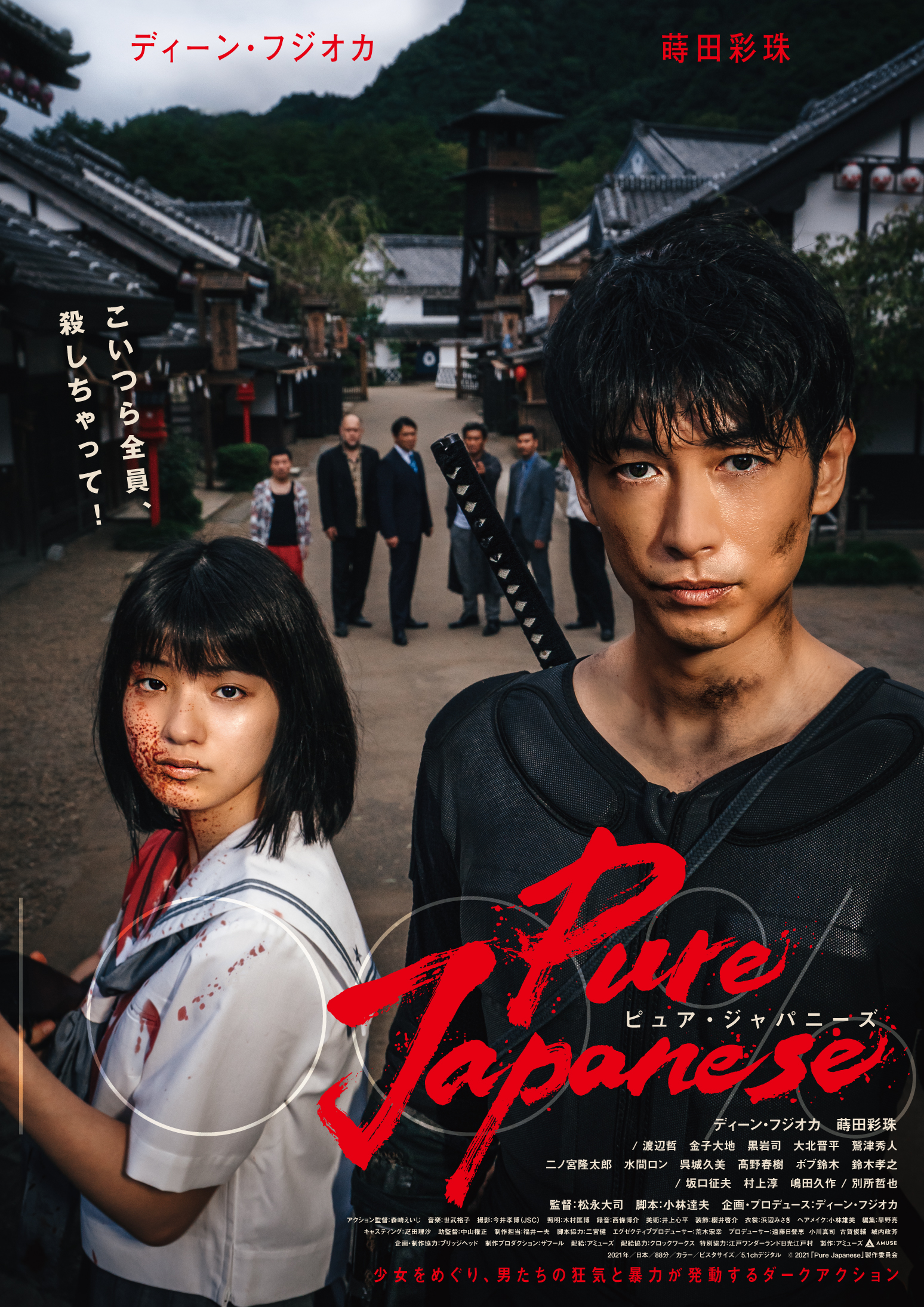
Pure Japanese (2022) [Film Review]

Pure Japanese; or, Bilateral Frenzy
     Raised right paws beckon fortune, raised left paws beckon people. Both paws raised means beckoning both.
On the basis of the film’s title, you probably expect me to say something like “Here comes the latest showfest of quirkiness from Japan”. Well, I am not going to say it. Indeed, Daishi Matsunaga’s Pure Japanese gives off the vibe of being an homage to Takashi Miike’s style of filmmaking with the violence factor cranked up to the max. However, the film is actually a thoughtful examination of cultural hybridity and modern issues which are plaguing Japan.
Release Info
Directed by: Daishi Matsunaga Starring: Dean Fujioka, Aju Makita, Tetsu Watanabe
Language: Japanese Original Title: ピュア・ジャパニーズ Runtime: 87 min
Synopsis
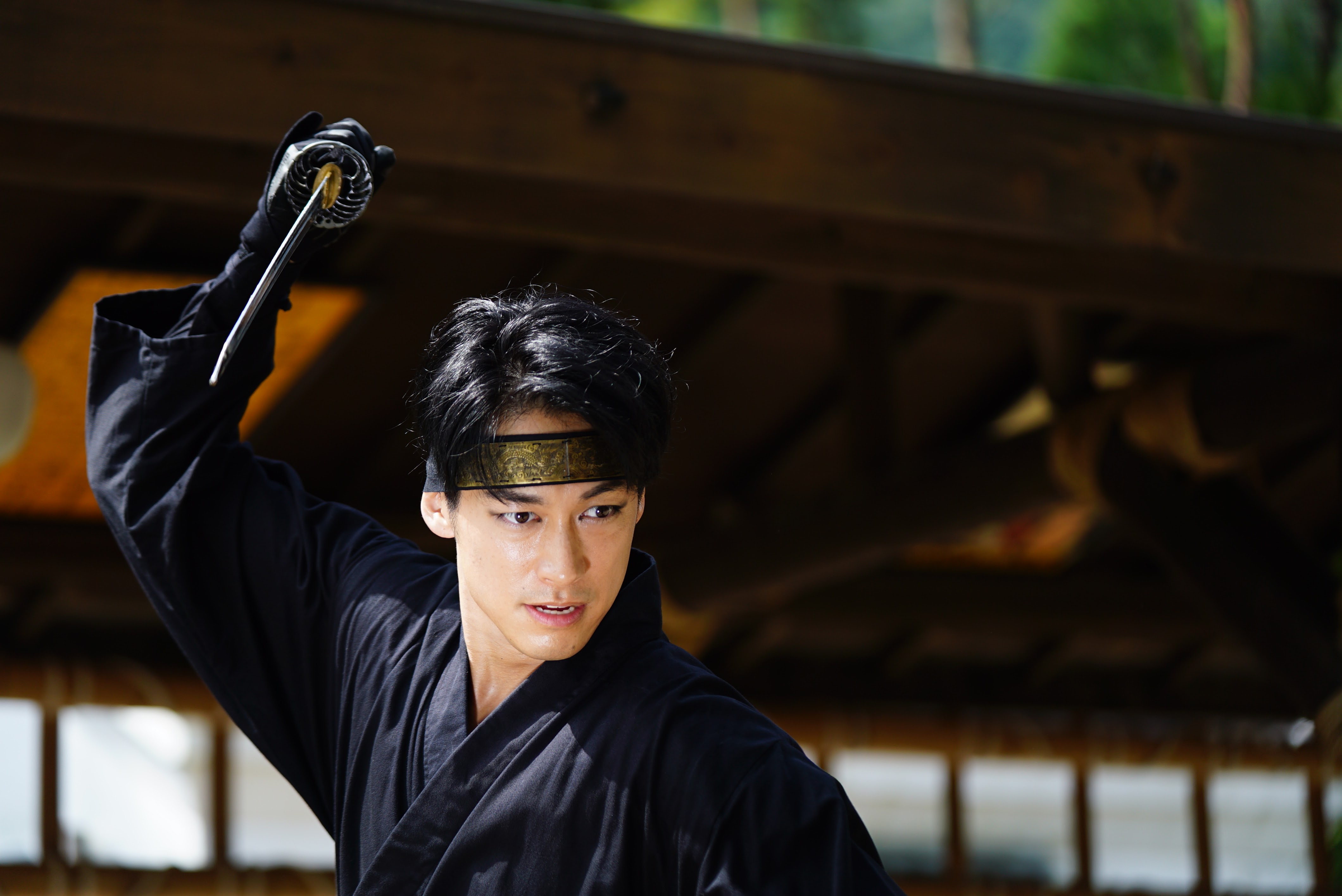
Daisuke Tateishi (Dean Fujioka) works as an “action actor” in a historical theme park. He ended up doing this job because of a traumatic accident from the past, which forced him to leave the United States. Meanwhile, a local politician (Tetsuya Bessho) harasses an old farmer Ryuzo (Tetsu Watanabe) and his granddaughter Auymi (Aju Makita) because he wants to get their land. Daisuke steps into action and protects Ayumi. However, conflict with the yakuza evokes within him the insatiable desire for violence, something which he tried to suppress for a long time.
True Grit
I have to say that I am not a die-hard fan of Dean Fujioka but even to me it is evident that Pure Japanese was a passion project for the actor. In the press booklet, Fujioka says that his personal experience of living in-between Japan and the United States served as a source of inspiration: “What does it mean to be a Japanese in the society today? Is it the blood? Nationality? If Japanese language is the OS to control the mind and action of those who speak, maybe our lives are just a vehicle for that OS.”
Indeed, the movie strives to elaborate upon the theme of Japanese identity. Screenwriter Tatsuo Kobayashi provides us with an all too familiar storyline centering on a lonely warrior who reluctantly has to save the day (see numerous flicks of such kind with Chuck Norris and Jean-Claude Van Damme) and recognisable tropes (a high school girl with a gun, ninjas, and deadly yakuza); however, the main protagonist is not given some magical MacGuffin which allows him to embrace his distinct nationality. Rather than that, the actual MacGuffin (a medical test called “Pure Japanese'') forces him to question the concept of kokutai.
In my opinion, this was a very clever approach. The movie obviously takes cues from Quentin Taratino, Takeshi Kitano, and the aforementioned Takashi Miike, but it is not just an action flick. It tries to emphasise an anti-globalist/anti-political stance of Yukio Mishima, especially in the bloody third act, and even references the famous writer.
That being said, the plotline is at times quite predictable, but smooth editing and cinematography compensate for this shortcoming. The music score is quite catchy, but it can be heard only during the film’s most important moments.
With regard to performances, Dean Fujioka is 100% in Sho Kosugi mode, which (given the context of the film) is a compliment. Aju Makita is a great addition as a damsel in distress. It was also great to see J-Drama veterans like Tetsu Watanabe and Kyusaku Shimada in the supporting roles.
Recommendations
If you are looking for an unconventional but not too out-of-the-ordinary revenge story, then I do recommend Pure Japanese. The movie is now officially out on Amazon Prime Video. My thanks go to the Copacetic PR agency for reaching out to me about the film. For more information, you can also visit the official movie site. If you can’t have enough of Dean Fujioka, then please do know that he recently released a new single.
Overall score: 8/10
«Enjoyed this post? Never miss out on future posts by following us»

The Journalist (2022) [Drama Review]

The Journalist; or, Checks and Balances
     After seeing how Ms Matsuda strives to give a voice to the voiceless no matter how difficult it may be, I became interested in becoming a journalist.
The Journalist a.k.a. Shinbun Kisha is a 2022 Netflix JDrama directed by Michihito Fujii and based on the director’s previous movie of the same title. The original story was inspired by a nonfiction book by Isoko Mochizuki, which centered on the Moritomo Gakuen scandal. I am always a sucker for political thrillers, so let’s see how this particular drama manages to penetrate through the red tape of corporate greed and media censorship.
Release Info
Directed by: Michihito Fujii Starring: Ryoko Yonekura, Go Ayano, Ryusei Yokohama
Langauge: Japanese Original Title: 新聞記者 No. of eps.: 6
Synopsis

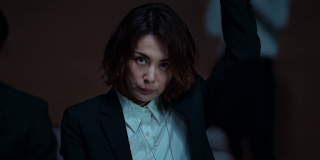
Tokyo, 2019. The government prepares for the upcoming Olympic games. Anna Matsuda (Ryoko Yonekura) is a nonconformist reporter working for the Touto News network. Driven by personal tragedy, she is determined to expose corrupt officials and their shady deals. Matsuda investigates the case concerning a certain Eishin Academy. In the course of her work, the journalist discovers how IRS agents were framed by the government which desperately wants to protect the Prime Minister.
A Few Good Men
When I heard about the drama for the first time on social media, I mistakenly thought that it was going to be released in 2023, so I was pleasantly surprised when the show premiered in January, 2022. I am always up for a drama with the wonderful Ryoko Yonekura in the lead, but this role marks a departure from her iconic performances in Doctor X, Legal V, and The Negotiator.
What I mean is that The Journalist is not an over-the-top entertainment with epic moments and scenes played for laughs. This is a realistic story about a real tragedy. In the present-day political climate, when we see ultra nationalists and oligarchs accumulating power, it is important to stress the independence of free media and the right of ordinary voters to know the truth.
The first episode of the drama is very dire, to be honest. The viewers are presented with a lot of information, names, and characters. It is really hard to get into the thick of the intrigue, but it gets easier in episode 2. Ryoko Yonekura plays a fallen character. Anna Matsuda is by no means heroic or infallible. In fact, I would not even say that she is the main protagonist. The newspaper reporter relentlessly tracks down the people involved in the scandal and the narrative unfolds through their perspectives.
Hidetaka Yoshioka is freaking amazing as Mr Suzuki throughout the first three episodes, then the focus shifts to Shinbou Terajima as Mrs Suzuki, Go Ayano as Shinichi Murakami, and Ryusei Yokohama as Ryo Kinoshita. It is all about the determination of these few good people (their guilt and struggles) that makes this drama an interesting watch.
With regard to the supporting parts, it was great to see such veteran actors as Shiro Sano, Yusuke Santamaria, Tetsushi Tanaka, and Go Riju as the baddies. In my opinion, Yusuke Santamaria stole the show with his villainous performance. Although working mainly as a comedian, he proves once again (after Cold Case drama) how great a dramatic actor he can actually be. In addition, it was great to spot Satoshi Miki’s regulars: Ryo Iwamatsu and Eri Fuse in small roles.
Recommendations
All in all, The Journalist is an enjoyable slow burner. It manages to capture the greatness of several newspaper-oriented thrillers like Zodiac (2007) or Spotlight (2016), but the resolution in the final episode is a bit underwhelming. Personally, I believe that there is no potential to make a second season unless the writing team has some good ideas about developing the real estate/Eishin Academy intrigue further. I recommend The Journalist primarily because of the aforementioned performances and outstanding cinematography.
Overall score: 7/10
«Enjoyed this post? Never miss out on future posts by following us»