Extreme Job (2019) [Film Review]

Extreme Job; or, Fry Hard
     What’s the point of working so hard if we can’t even eat properly?
This time, I decided to watch an action comedy flick Extreme Job, directed by Lee Byeong Hun. As of 2019, the movie holds the record of the second most viewed production in the history of South Korean cinema. It was inspired by a Chinese production Lobster Cop from 2018.
Release Info
Directed by: Lee Byung Hun Starring: Ryu Seung Ryong, Lee Ha Nee, Jin Seon Kyu
Language: Korean Original Title: 극한직업 Runtime: 110 min
Synopsis
Captain Ko (Ryu Seung Ryong) is the leader of a narcotics team composed of skilled, yet hot-headed police officers. After committing a major blunder during the arrest, the team is given the last chance to save their faces by conducting an undercover surveillance of an international drug gang. For their stakeout base, they choose a chicken restaurant that is on the verge of bankruptcy. Convinced that there won’t be lots of customers, the policemen buy the restaurant. Unexpectedly, their recipe for a rib marinade becomes a hit and hungry customers begin to storm the restaurant...
Cook up the Police
Well, Extreme Job is a pleasant, happy-go-lucky comedy of mistakes that thrives on character chemistry and situational gags. The best way to describe the film is to call it a mix between John Badham’s Stakeout (1987) and Michael Hui’s Chicken and Duck Talk (1988). I am pleasantly surprised that South Korean filmmakers are warming up to such classic styles of comedy.
In my opinion, the only disadvantage of the film is the confusing second act which directs the heroes by mere coincidence onto the bad guys and their schemes. Apart from that, it is hilarious to watch Captain Ko and his men struggling to do their job while keeping the crowds of customers happy.
As expected from a Korean production, the action aspect does not disappoint as welll because we get some great fight sequences, especially in the film’s great finale. (I got that A Better Tomorrow reference!)
With regard to performances, Ryu Seung Ryong does a great job as the team’s leader. I think that he could easily play Golgo 13 in the live-action adaptation (he looks totally like this comic book character). My praise also goes to Lee Hanee as Detective Jang. She kicked ass the female member of the team. In addition, it was great to see Shin Ha Kyun as the villain yet again (*The Villainess flashbacks*).
Recommendations
I highly recommend Extreme Job if you want to lighten up your mood. It is a decent comedy with action elements. As of 2022, apart from a Region A Blu-ray, the movie is also available on Amazon Prime. I thought that it is on Netflix as well, but I could not track it down there.
Overall score: 8/10
«Enjoyed this post? Never miss out on future posts by following us»

A2 (2001) [Documentary Review]

A2 (2001); or, Paradise Lost
     I can’t express adequately what I want Aum to be, but I know I don’t like the way it is now.
Three years after an incredibly insightful documentary about Aum Shinrikyo and the aftermath of 1995 Tokyo attacks, director Tatsuya Mori returns with a follow-up. In A2, we see the crumbling organisation that struggles to reform itself; however, a new law is passed in the parliament which allows the police to monitor the activities of the cult.
Release Info
Directed by: Tatsuya Mori Language: Japanese
Original Title: A2 Runtime: 124 min
Sonshi He Knows Me
In order to explore the troubling situation which Aum Shinrikyo found itself in, Tatsuya Mori visits different satyams/households where the followers reside. Mori records their everyday activities, but he also captures ordinary citizens who relentlessly confront members of Aum. Apart from these local interventions, the viewers catch a glimpse of the cult at a decision-making level: We again see Hiroshi Araki together with his colleagues trying to save the reputation of Aum. At the same time, Joyu Fumihiro is released from custody and we see him striving to create a revamped version of Aum called Aleph.
It is evident in A2 that Mori loses his patience. The director himself confronts Araki and other members of Aum time and time again about the 1995 attacks and consequences of their horrible actions. “Our society’s become so brazen, so hateful, and that was all triggered by Aum. I couldn’t stand to see the whole incident be forgotten, but then I don’t know what should be done. Japanese society is clearly much worse than it was five years ago - it’s definitely warped. I think Aum was the main cause of that,” the director states.
Incidentally, we see a lot more of Mori in A2 than in the previous part. Perhaps in these little scenes with Aum followers, the director wanted to underline that this visual examination of the cult is more personal to him. In my opinion, Mori was given greater access to Aum’s facilities than before. Thanks to this richer video material, we are able to see that the followers continue to worship Shoko Asahara as well as practise his questionable teachings (see purification ritual or meditation while wearing special helmets with wires).
In addition, we witness the confrontations between local townspeople and the followers who reside in their areas. In many cases, the locals are angry and determined to drive Aum people out of their cities, but sometimes we see the opposite reaction. Ordinary people and the followers bond with each other, they casually crack jokes, or even exchange jokes. Some residents say to Mori that it is better to talk to Aum rather than fight it.
From the big-scale events, we get to see the release of Joyu Fumihiro who is tracked down by right-wing nationalists, who in turn get in conflict with the police. It is an incredibly detailed insight into the political aspect of Japanese life and how it was changed after the 1995 attacks.
Perhaps the most baffling, yet unnerving at the same time are the actions of Araki, Fumihiro and their associates. During a confrontation with a victim of the Matsumoto sarin attack, it becomes clear that people in charge of Aum have no idea how to show remorse or even understanding of what had happened. They are only interested in keeping the organisation going, which makes me all the more sorry for regular followers who fell victim to Asahara’s dogma.
Recommendations
All things considered, I highly recommend Tatsuya Mori’s A2 documentary. It is a great addendum to the first part. Recently, A2 was screened at DAFilms as part of the Made in Japan, Yamagata 1989-2021 program. In 2016, Mori also released an updated version of the documentary called A2: Kanzenhan. The film is also available on DVD from Tidepoint Pictures.
Overall score: 9/10
«Enjoyed this post? Never miss out on future posts by following us»

Pure Japanese (2022) [Film Review]

Pure Japanese; or, Bilateral Frenzy
     Raised right paws beckon fortune, raised left paws beckon people. Both paws raised means beckoning both.
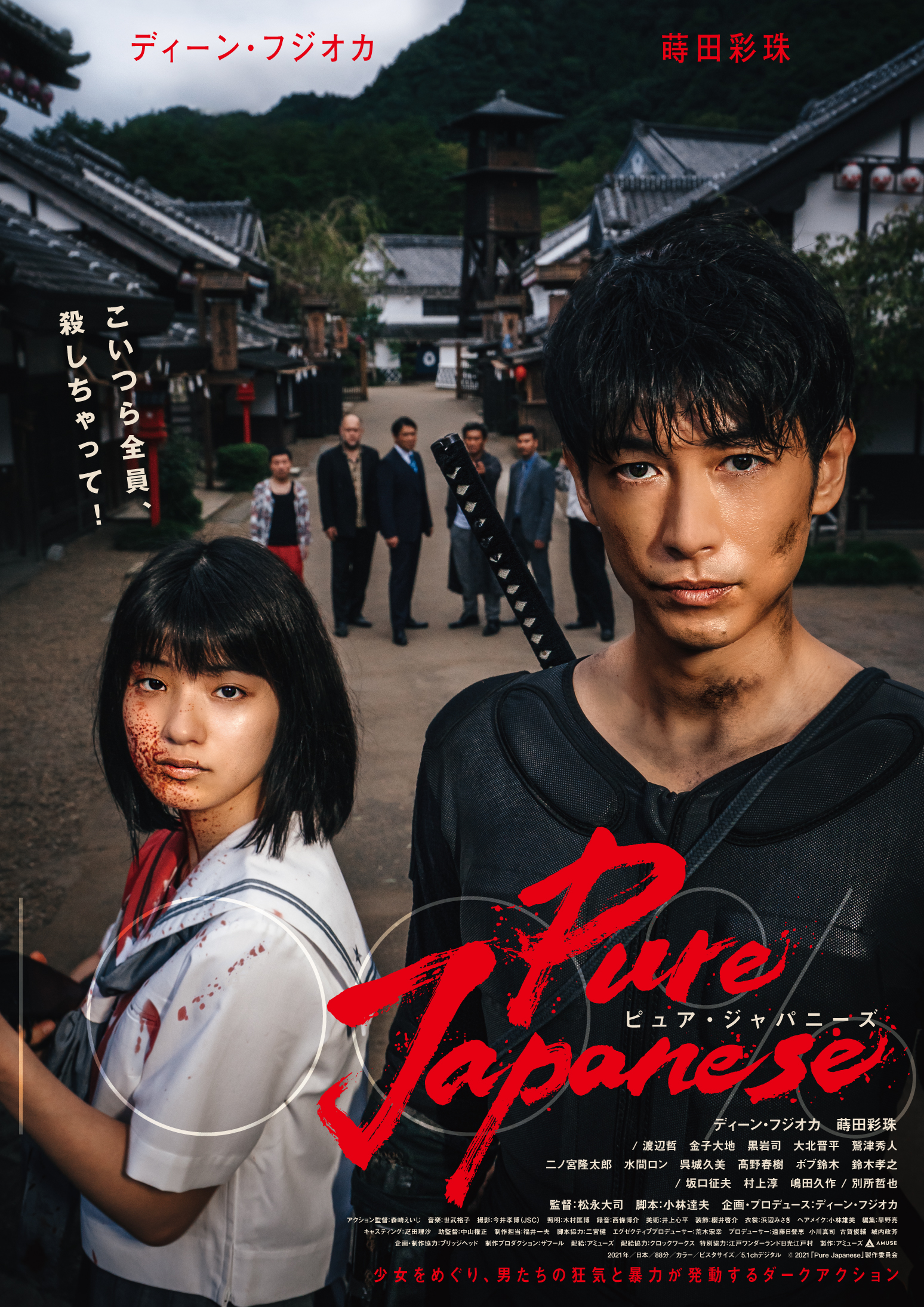
On the basis of the film’s title, you probably expect me to say something like “Here comes the latest showfest of quirkiness from Japan”. Well, I am not going to say it. Indeed, Daishi Matsunaga’s Pure Japanese gives off the vibe of being an homage to Takashi Miike’s style of filmmaking with the violence factor cranked up to the max. However, the film is actually a thoughtful examination of cultural hybridity and modern issues which are plaguing Japan.
Release Info
Directed by: Daishi Matsunaga Starring: Dean Fujioka, Aju Makita, Tetsu Watanabe
Language: Japanese Original Title: ピュア・ジャパニーズ Runtime: 87 min
Synopsis
Daisuke Tateishi (Dean Fujioka) works as an “action actor” in a historical theme park. He ended up doing this job because of a traumatic accident from the past, which forced him to leave the United States. Meanwhile, a local politician (Tetsuya Bessho) harasses an old farmer Ryuzo (Tetsu Watanabe) and his granddaughter Auymi (Aju Makita) because he wants to get their land. Daisuke steps into action and protects Ayumi. However, conflict with the yakuza evokes within him the insatiable desire for violence, something which he tried to suppress for a long time.
True Grit
I have to say that I am not a die-hard fan of Dean Fujioka but even to me it is evident that Pure Japanese was a passion project for the actor. In the press booklet, Fujioka says that his personal experience of living in-between Japan and the United States served as a source of inspiration: “What does it mean to be a Japanese in the society today? Is it the blood? Nationality? If Japanese language is the OS to control the mind and action of those who speak, maybe our lives are just a vehicle for that OS.”
Indeed, the movie strives to elaborate upon the theme of Japanese identity. Screenwriter Tatsuo Kobayashi provides us with an all too familiar storyline centering on a lonely warrior who reluctantly has to save the day (see numerous flicks of such kind with Chuck Norris and Jean-Claude Van Damme) and recognisable tropes (a high school girl with a gun, ninjas, and deadly yakuza); however, the main protagonist is not given some magical MacGuffin which allows him to embrace his distinct nationality. Rather than that, the actual MacGuffin (a medical test called “Pure Japanese'') forces him to question the concept of kokutai.
In my opinion, this was a very clever approach. The movie obviously takes cues from Quentin Taratino, Takeshi Kitano, and the aforementioned Takashi Miike, but it is not just an action flick. It tries to emphasise an anti-globalist/anti-political stance of Yukio Mishima, especially in the bloody third act, and even references the famous writer.
That being said, the plotline is at times quite predictable, but smooth editing and cinematography compensate for this shortcoming. The music score is quite catchy, but it can be heard only during the film’s most important moments.
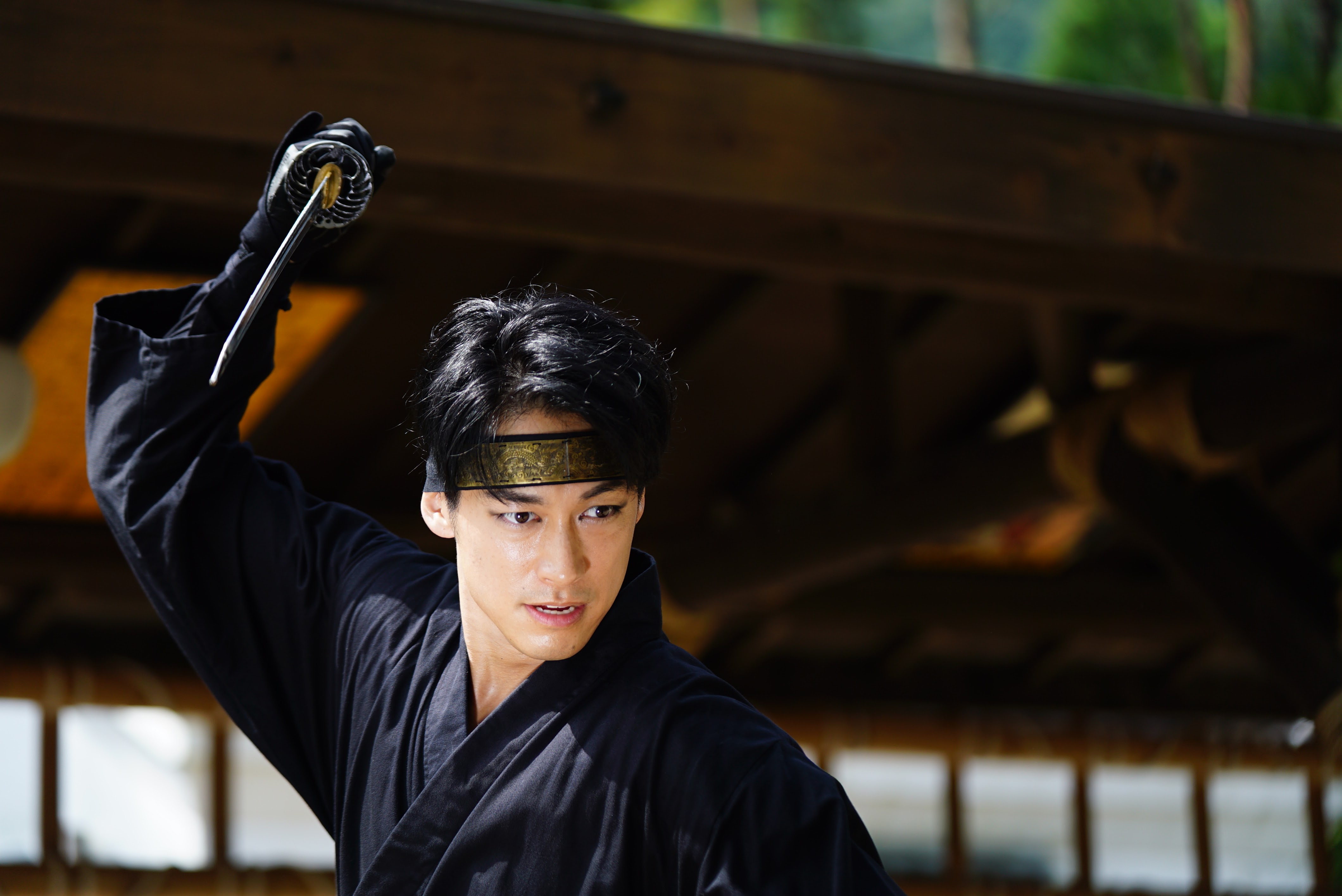
With regard to performances, Dean Fujioka is 100% in Sho Kosugi mode, which (given the context of the film) is a compliment. Aju Makita is a great addition as a damsel in distress. It was also great to see J-Drama veterans like Tetsu Watanabe and Kyusaku Shimada in the supporting roles.
Recommendations
If you are looking for an unconventional but not too out-of-the-ordinary revenge story, then I do recommend Pure Japanese. The movie is now officially out on Amazon Prime Video. My thanks go to the Copacetic PR agency for reaching out to me about the film. For more information, you can also visit the official movie site. If you can’t have enough of Dean Fujioka, then please do know that he recently released a new single.
Overall score: 8/10
«Enjoyed this post? Never miss out on future posts by following us»