Funuke Show Some Love, You Losers! (2007) [Film Review]

Funuke Show Some Love, You Losers!; or, National Lampoon’s Countryside
     Greetings, I would like to introduce myself first. I'm Wago Sumika, age 22. I'm an actress. But the truth is, I haven't done anything remarkable as of yet thanks to the lack of competence by the agency I was with. I want to become an actress that makes people say "there is no replacement for Wago Sumika" as soon as possible. I am prepared to endure through any hardship to make that happen.
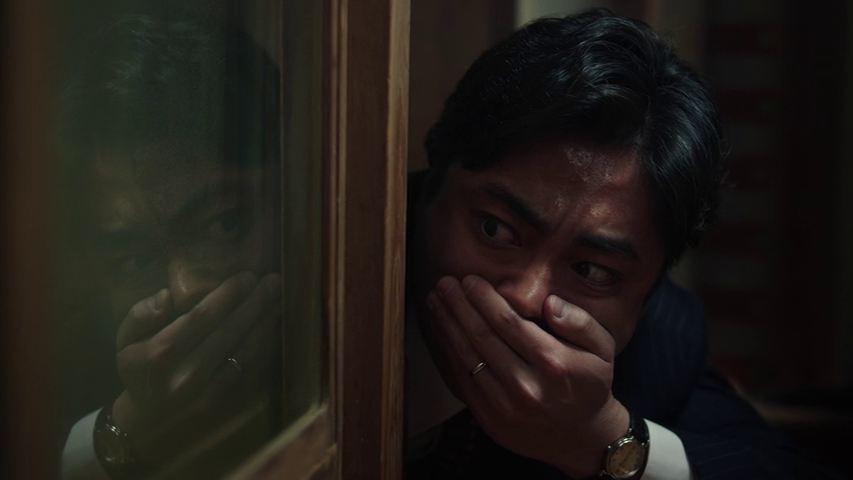
When thinking about family dramas made in Japan, people frequently enumerate such skilled filmmakers as Yasujiro Ozu, Hirokazu Koreeda, Miwa Nishikawa, or even Kiyoshi Kurosawa. Personally, I believe that director Daihachi Yoshida also deserves an honorable mention mainly because of his awesome debut feature from 2007 called Funuke Show Some Love, You Losers! based on the novel by Yukiko Motoya.
Release Info
Directed by: Daihachi Yoshida Starring: Eriko Sato, Masatoshi Nagase, Aimi Satsukawa, Hiromi Nagasaku
Language: Japanese Original Title: 腑抜けども、悲しみの愛を見せろ Runtime: 112 min
Synopsis
An elderly couple living in the countryside, Mr and Mrs Wago, tragically die in a road accident while trying to save a cat. The funeral ceremony leads to the reunification of three siblings: Shinji (Masatoshi Nagase) who now takes care of family business, 18-year-old Kiyomi (Aimi Satsukawa) who aspires to become a mangaka, and Sumika (Eriko Sato) who is determined to make it big as an actress in Tokyo. However, Sumika’s dream and her quest to its fulfillment unfortunately influences the family in a negative way. She bullies Shinji into supporting her financially and tortures Kiyomi for what she did to her in the past. Having been recently fired from her talent agency, Sumika does not let go and writes a letter to an acclaimed movie director Tetsuo Komori (Nobumichi Tosa). Surprisingly, she receives a reply...
All in the Family
While sitting down to watch Funuke Show Some Love, You Losers! I had no idea what to expect because I knew nothing about director Daihachi Yoshida and the main cast. The movie begins in quite a grim way only to kick into comedy gear a few minutes later. The central figure of the storyline is Sumika as we see her wreaking havoc across her home town just so she could prove that she is a true actress.
The movie certainly takes advantage of Yasujiro Ozu’s and Mikio Naruse’s filmmaking styles in certain scenes but it is not a straightforward parody of Tokyo Story (1953) or When a Woman Ascends the Stairs (1960). Funuke tries to be its own thing with the usage of slapstick, innovative flashbacks, and situational comedy. As a result, it becomes not only an entertaining spectacle but also an engrossing drama in which you can’t help but care for the characters. In consequence, the film feels like a baby conceived by SABU and Quentin Tarantino.
With regard to performances, Eriko Sato is undeniably too cool for school as unstoppable Sumika. From the arrival scene to the “climactic” battle in the fields, she gives her best in the leading role. My praise also goes to Aimi Satsukawa and Masatoshi Nagase who played the siblings. Another mention goes to Hiromi Nagasaku for her hilarious appearance as Shinji’s wife, Machiko. It comes as no surprise that Nagasaku won Best Supporting Actress award twice for her performance of extremely agreeable yet sexually-frustrated housewife.
Recommendations
If you are looking for an exemplary black comedy from Japan, then give a chance to Funuke Show Some Love, You Losers! I guarantee that crazy confrontations will leave you laughing, whereas outrageous plot twists will make you feel gobsmacked. This movie is for keeps. Please try to grab a Blu-Ray copy of the film from Third Window, which also contains making-of featurette as well as deleted and extended scenes.
Overall score: 8/10
«Enjoyed this post? Never miss out on future posts by following us»

The State of JAV Industry: Analysing The Naked Director Drama [Editorial]

Disclaimer: Although the article discusses a NSFW show, it does not contain any kind of NSFW images or videos. It is not the author’s intention to glorify or criticise the Japanese Adult Video industry. If adult themes are something that puts you off, then feel free to skip this text.
 
     JAV has a very different atmosphere. It’s not very sophisticated, in fact it’s primitive. It’s a bit like eating and menus in restaurants: you’re hungry and you have a sudden craving for noodles, so you go and eat noodles. Your appetite is towards porno videos, so you go and rent whatever turns you on. And as with food, viewers can use basic ingredients to ‘cook’ the desired stimulation from the video themselves. ~ Kaoru Kuroki
 
I realise that I have already shared my thoughts on The Naked Director drama a couple of months ago, but after rewatching the first episode recently, I realised that there is more ground to cover with regard to this show. Specifically, how it intertextually references the idiosyncratic nature of JAV videos and comments on the industry in general.
     For the readers who have not read my old review, here is how the story in the drama goes: Hokkaido, 1980. Toru Muranishi (Takayuki Yamada) is a typical salaryman who lives in an ordinary home together with his mother, wife, and two children. In order to avoid being fired by his company, he learns from the best co-worker the art of salesmanship. When things finally start going in the right direction for Toru, he discovers that his wife is cheating on him. On top of that, his company went bust. Frustrated and depressed, Toru accidentally gets himself entangled in the adult industry. From illegal audio tapes through uncensored magazines to feature-length movies, Toru embarks on a journey to break the conservative boundaries and become the Showa era’s “King of Porn”.
     The first episode presents us with Muranishi working as a salaryman on the services of a company that sells English encyclopedias. In the very first scene, we see him pleasuring himself in a shabby toilet and then proceeding to play a video game in a restaurant. He is a quiet, withdrawn man who only pretends that he is working. Only when he is given an ultimatum by his boss do we see Toru on the path to become a true businessman with trading shtick. The parallel that his mentor draws between closing a deal and trying to charm a beautiful woman is not without importance. When Toru finally produces results for the company, we see his performance chart (presented as a red line in a vertical position) going up to a ceiling and beyond. Together with professional confidence, our protagonist also acquires masculinity and libido.
     However, the blissful period does not last forever. His former mentor figure robbed the company from its savings. Little did Toru know back then that he would commit a similar misdeed years later. That is to say, he will use the payments of his actresses to cover the fees for his satellite channel. The sequence at the publishing office serves as a foreshadowing of who Muranishi will eventually become.
     Directly after this sequence, we come back with Toru to his household where he discovers that his wife is cheating on him with a postman. The way this scene (and a similar one at a love hotel towards the end of the episode) is presented emphasises the factor that differentiates JAV productions from its Western counterparts.
     Former JAV actress Shibuya Kaho, in an extremely detailed and comprehensive YouTube interview from 2021, explained that the difference between Japanese kinky videos and Western ones lies in the fact that JAV flicks always strive to ground the NSFW stuff within a certain narrative framework (source). In other words, they try to tell a story, whereas this is not the case with American and European productions which often throw a screenplay out the window and cut to the hanky panky visuals.
     Indeed, Kaho is right with her reasoning. Japanese pornographic videos, even though they are not technically high art or pinku movies, actually contain storytelling elements. For instance, a young girl engages in a passionate relationship with her homeroom teacher (who is a female) because she can’t bear the fact that her education is reaching an end and the two will soon be apart, or an exemplary husband falls for the charms of his mother-in-law but the wife/daughter figure catches them in the act, shocked and mortified. The examples are numerous.
 
     The betrayal scene from The Naked Director plays out in the same style. It is not a NSFW moment just for the shock value, but it furthers Muranishi’s character development. His own wife regards him as unfit to be a husband. Jobless and wifeless at the same time, Muranishi seeks to reaffirm his masculinity which pushes him into the whirlwind of the porn industry. In the final scene at a hotel, he and Toshi record an audio of a random couple in the midst of an intercourse. Muranishi, driven by his horrible experience, entitles the tape “Encyclopedia Salesman’s Wife and Unknown Man,” which again reaffirms the nature of JAV industry. He is selling not just a kinky audio filled with moans, but a conceptual story as well which the listeners imagine while reading the tape’s title.
     With a doubt, Toru Muranishi became one of the key filmmakers in the JAV showbiz in the 1980s. His company Diamond Image was raking in one trillion yen in annual revenue (Wong & Yau 2018: 62). This was caused mostly due to the fact that he initiated the trend of the so-called honban AV; that is, movies which had real sex scenes (Wong & Yau 2018: 61). Still, he continued to push the storytelling angle in his productions as reflected in the drama: a film about a trip guide, a film about female spies in Hawaii, etc.
     Nevertheless, the most profitable picture for Diamond Image turned out to be Kaoru Kuroki’s debut called “I Like It SM-ish” (SM Poi no suki). Researchers claim that this feature has documentary style, but it gained popularity because of Kuroki’s onscreen rebellious attitude. She did not assume an image of an innocent girl, but she displayed extreme assertiveness or even downright lunacy in front of a camera, which was a new experience for JAV audience at that time (Wong & Yau 2018: 61). This led Muranishi to state the following years later: “I had to do unprecedented things to succeed. But reality verified this. Whether it’s in a French palace or the beautiful sea of Tahiti. The viewers are not impressed. The most liked setting is still the uneventful apartment bed” (source: mini-documentary).
     Indeed, The Naked Director goes at lengths to faithfully portray the life of Toru Muranishi but truth still remains stranger than fiction. In fact, during his stay in Hawaii, Muranishi shot not one but 30 different movies with approximately 15 actresses who were flown out from Tokyo in turns. In addition, he and the whole crew were arrested which resulted in Toru paying the bail money for 17 people in total (source).
     Creative liberties with regard to the character of Kaoru Kuroki are also questionable. There is no evidence that Kaoru had a messed-up childhood as presented in the drama. Actually, she had a steady and supportive family, which stands in even greater contrast with her decision to go into the JAV business. It is said that she wanted money to study in Italy, but Kaoru herself stated that she treated appearances in these videos purely as performance art because she admired such great filmmakers as Nagisa Oshima, Bernardo Bertolucci, and Ingmar Bergman (source). It was later when she started viewing her JAV status as a social mission. Muranishi said about Kaoru: “Kuroki Kaoru’s films were the best ones I have ever made. In view of female liberation and feminism, she was mostly criticized by women, but she laughed at it, still showing her armpit hair and asking them what they think.” (source: mini-documentary).
     So these were my brief thoughts on The Naked Director drama and the real story of the JAV industry behind it. I hope that the text was not too boring. I only wish we could get an official English release of the Zenra Kantoku Muranishi Toru Den novel someday. Please refer to the list of sources if you want to seek out more information about Muranishi and the JAV history. Allow me to end the article with a quote from the director himself: “What is the most important thing in life? It’s not yourself at your best, but yourself when you lose everything. Despair will accompany you most of the time, and then I want you to think about me. When you feel like quitting, please think of me. ‘Compared to that Japanese guy, I’m doing just fine!’ This may give you strength to carry on. Nice desu ne!”
Sources: The Japanese Adult Video Industry (2018) by Heung-wah Wong and Hoi-yan Yau * Pornography, Ideology, and the Internet: A Japanese Adult Video Actress in Mainland China (2019) by Mei Zhang * Shibuya Kaho Interview * Wikipedia * Web Archive * Japan Times * Tokyo Reporter * The Life of the Japanese King of Adult Video (mini-documentary no longer available on YouTube, thanks for nothing PRC).
«Enjoyed this post? Never miss out on future posts by following us»

Shin Godzilla (2016) [Tokusatsu Review]

Shin Godzilla; or, You Can (Not) Remake
     Man is more frightening than Godzilla.
It has been 5 years since the release of Shin Gojira, Toho’s 29th Godzilla live-action movie. The mid 2010s marked a renaissance period for the King of the Monsters in view of the MonsterVerse movies and numerous anime productions. Needless to say, I was extremely hyped when Toho announced that they are going to make a new movie (please refer here and here to see my old posts), but when I finally saw the movie, it left me with mixed feelings. This is most certainly not a conventional Godzilla flick and it took me a really long time to digest my thoughts and come to appreciate it for it strives to be something new within the franchise with nearly 70 years of cinematic legacy.
Release Info
Directed by: Hideaki Anno, Shinji Higuchi Starring: Hiroko Hasegawa, Satomi Ishihara, Yutaka Takenouchi
Language: Japanese Original Title: シン・ゴジラ Runtime: 120 min
Synopsis
Tokyo Bay, 2016. An amphibious creature emerges from sea depths and wreaks havoc on the Japanese soil. The Japanese authorities do not know how to handle this threat until the monster returns to sea. A group of researchers determines that the creature came to existence in the course of nuclear fission caused by radioactive waste dumped into the sea. Consequently, there is a strong possibility that it may return again in a changed form. When this happens, the United States intervene and enforce on Japan permission to use nuclear weapons so as to stop the monster. Nevertheless, the research team led by Rando Yaguchi (Hiroko Hasegawa) develops a safe, alternative plan that will allow the freezing of Godzilla.
Power of Resurgence
After the box office success of Gareth Edwards’s Godzilla from 2014, Toho also wanted to capitalise on their popular brand. Since the contract with Legendary Studios did not limit the Japanese in terms of live-action productions, they called up director Hideaki Anno with an offer of making a new movie. Anno initially declined, stating that he was too exhausted after making Evangelion: 3.0 You Can (Not) Redo (2012) and that he would not be able to match the greatness of Ishiro Honda’s original picture. Nevertheless, Anno’s close collaborator, Shinji Higuchi, managed to persuade him, and so the two were given the tough job of getting a Godzilla flick done within 16 months.
Considering the limited time window the filmmakers were given, I have to say that in terms of special effects and production design, they did a marvellous job. It would seem that all the action is CGI, but the crew actually combined a number of practical and digital effects together. What we see on the screen is part-real and part-computer generated. Interestingly, Godzilla was played via “motion picture” technique by actor Mansai Nomura.
With regard to the screenplay, however, here is where I am having issues. Hideaki Anno just can’t help but relive these Neon Genesis Evangelion vibes in each and every scene of the film. As a result, we get to see the following, already familiar to anime fans tropes: out-of-touch grumpy politicians having boring discussions about Godzilla, hot waifu speaking English, good nerdy girl, and general feeling that the world is about to end. What is more, NGE tone is reinforced through the music score. As I have already mentioned in my editorial devoted to Godzilla music, composer Shiro Sagisu does a fine job whenever he is allowed to be original and creative, but the inclusion of various remixes of “Decisive Battle” from NGE just to please Anno’s fanboy fantasies is unforgivable.
That being said, I respect what Anno and Higuchi were going for with Shin Gojira. For the first time in the franchise, we get a new movie which does not acknowledge the 1954 father picture in any way. This is a full remake but a remake with a purpose. In this reality filled with red tape and bureaucracy, Godzilla functions as an embodiment of everything wrong with Japanese policies. It strikes the Japanese nation like the 2011 Tohoku earthquake and the 2015 Fukushima Daiichi nuclear disaster. People are dying because of the ineptitude of their leaders. The only hope for change lies in the group of able young men and women who take a stand against the King of the Monsters and save the day.
In my opinion, the ending is way too optimistic and right-centered for Hideaki Anno who constantly basks in the postmodernist shades of depression. Perhaps it was the change initiated by the studio or Shinji Higuchi. Interestingly, the very last scene clearly indicates the possibility of a sequel, but Higuchi himself stated that there will never be Shin Gojira 2 because of the Hollywood productions which are churned out with increasing frequency. If there is going to be a new Japanese Godzilla movie, it will be a totally new story.
On a side note, I have to praise the magnificent ensemble cast of Shin Gojira. There are so many great actors and actresses in it! Apart from Hiroki Hasegawa as the main lead, there is also Satomi Ishihara, Issei Takahashi, Ren Osugi, Kimiko Yo, Akira Emoto, and Jun Kunimura.
Recommendations
If you are struggling with depression, then you will certainly find Shin Godzilla as an entertaining viewing experience. The movie is an undeniably bold, new entry in the franchise that explores the titular monster and its significance in greater depth, but it does not have a lot of rewatch value, in my opinion. Allow me to give a big shout out to MangaUK for their 2-disc DVD release of the film. The picture quality is excellent and I appreciate 70 minutes of bonus features.
Overall score: 7/10
«Enjoyed this post? Never miss out on future posts by following us»