Showing posts with label 2021. Show all posts

Godzilla MonsterVerse Movies: Memories from Cinema and Sofa [Editorial]

For a very long time, I was thinking if I should take up discussion on the MonsterVerse movies. Obviously, these are American productions, so I did not want to trash my blog with separate reviews of these, even though they are technically part of the Godzilla franchise. For a moment, I considered posting my thoughts on Letterboxd, but I think the best solution is to talk about the films and my memories of them in the form of a concise editorial.

     So here we are. The MonsterVerse movies. The frenzy that started back in 2014 with the release of Gareth Edwards’s Godzilla. However, the slow built-up for the film started already before the premiere of Godzilla: Final Wars. That is to say, the Godzilla vs. Hedorah (1971) director, the late Yoshimitsu Banno, secured the rights from Toho to make a Godzilla short film using 3D technology. Banno started assembling the creative team for the project in the United States, and the idea evolved into making a 3D feature. Ultimately, Legendary Studios teamed up with Banno, and after securing a licence from Toho, they geared up for an official Godzilla live-action remake.
     Being a Godzilla fan in the 2010s, I relentlessly followed the news about the upcoming movie. I still remember the excitement when I saw a 2012 conceptual teaser video, then a leaked 2014 teaser trailer with J. Robert Oppenheimer’s voiceover and a promo photo of Gareth Edwards and Akira Takadara (the actor had a cameo in the film, which unfortunately ended up on the cutting room floor).
     Come May 2014 and I was ready for action. After a whole day at a university, I went to cinema with a colleague who was also a Godzilla enthusiast. We got tickets for late afternoon screening and barely any people were in the audience. When the lights went dark and the opening credits by Kyle Cooper rolled in, I knew I was in for a special viewing experience.
     Needless to say, I greatly enjoyed the film. Nowadays, moviegoers complain that the film does not have enough of Godzilla in it and the monster fights are scarce, but I believe Edwards’ restrained approach compensated for that lack. Godzilla (2014) is more about Kaiju ambience than the King himself. It is a film about the looming, larger-than-life danger that is beyond human comprehension. To my mind, this is the first American monster movie that actually strived to show the psychological side of dealing with monster rumble in the same vein as Spielberg dealt with fear of the unknown in Close Encounters of the Third Kind (1977).
     When the movie ended, I was the only guy at a movie theatre that was clapping. To date, I remember that some parents with children looked at me like some sort of weirdo. My colleague, on the other hand, had teary eyes because he was so moved by the final shot of Godzilla roaring and disappearing in the sea depths. I said to him, “Now, I have to wait four years for a sequel!”
     Little did I know I had to wait five years instead of four. Godzilla: King of the Monsters was plagued by production delays. Even though Gareth Edwards was slated to return as a director, he was eventually replaced by Michael Dougherty who brought the whole project home. In the meantime, I was dealing with sickness on my own, so I was unable to see Kong: Skull Island (2017) on the big screen, which (in fact) is the film that ushered in the MonsterVerse concept; that is, giant monsters having crossovers and fighting each other. For Hollywood, it sounded like a novelty in view of Marvel movies, but Toho started doing this as early as the 1960s.
     I eventually caught a copy of Skull Island on DVD and greatly enjoyed it, although I’m not a massive King Kong fan. The action and bright colours were definitely a stand-out, but some of the sequences involving the military felt dragged out to me.
     By 2018, I managed to get better, so I was ready for the premiere of King of the Monsters in June 2019. To be honest, this movie was everything I wanted it to be. The action set pieces and the monster fights were outstanding, in my opinion. In addition, some of the sequences were just really beautiful like the release of King Ghidorah from his ice imprisonment, the airplane getaway from Rodan, or Mothra’s transformation. The last moment in particular made me cry at the cinema because it was so well done. The rearrangement of Yuji Koseki’s original theme gave me incredible chills.
     All the more, it is hard for me to comprehend the hate this film gets. Evidently, it had a lot of human characters, human drama, and cheesy one-liners, but on the whole it was light-hearted fun. The creative team knew what kind of film they wanted to make, and they delivered on that front. Still, it does not change the fact that the film basically failed at the box office, barely recouping its box-office and marketing costs.
 
    It comes as no surprise that Legendary took to heart the complaints of cinemagoers and, after many delays, they re-edited the living crap out of Godzilla vs. Kong before releasing it worldwide in Spring 2021. Back then, my country was still dealing with the pandemic, so I was unable to see it in the cinema, but I watched the film on streaming, and bought a disc later on.
     Well, Adam Wingard’s Godzilla vs. Kong certainly has a briskier pace than King of the Monsters and it is definitely more colourful. Basically, it is a movie in which a giant lizard and an ape go boom boom, so I can’t complain. However, in terms of overall tone, it stands out from the previous MonsterVerse entries. In fact, I believe it can be said that each MonsterVerse Godzilla flick is actually a love letter to Toho’s classic glory days of the franchise. Godzilla (2014) pays homage to the Heisei era by reusing the theme of an old warrior showing up for one more battle, King of the Monsters to the Showa era with the multiple monster/people shenagings, and Godzilla vs. Kong to the Millennium era with its neon aesthetics and bombastic inclusion of Mechagodzilla.
     All things considered, I like MonsterVerse movies for what they are, but it is nice to live in the fourth era of the Big G’s renaissance. The question remains: How long will it last? Legendary already develops the fourth film and a TV series, but Toho also works on their 70th anniversary film Godzilla Zero (2024), and they also churn out remakes of other popular properties: Shin Ultraman (2022), Shin Kamen Rider (2023), etc. It goes without saying that sooner or later Toho will reintroduce the King yet again for a new generation of cinemagoers.
«Enjoyed this post? Never miss out on future posts by following us»

Bamnol - The Debt (2021) [Short Film Review]

Bamnol - The Debt
     My granddaughter works hard! All you do is get drunk everyday!
It has been roughly two months since my The Monk and The Samurai review, and now I am back with another short film discussion. Recently, I was approached with a review offer from director, writer, and producer Robin Dudfield, who informed me about his directorial debut called Bamnol - The Debt.
The official synopsis on IMDB provides us with the following information: “A university student's life spirals out of control after she takes responsibility for a family debt.” This is the essential premise of the entire story, but there is so much more to the context of the main heroine’s drama.
The leading character is called Sothy (Erica Tan). She is an ordinary student and a hard-working girl, but one day, she notices that her father takes money from a loan shark. Subsequently, he proceeds to indulge himself in binge drinking. To make matters worse, he collapses and has to be hospitalised. All of this forces Sothy to pay off her father’s debt, to literally suffer for the sins of her parental figure.
Evidently, this theme has been used repeatedly in numerous movies, but in the case of Bamnol, it works in the film’s favour because it allows to highlight a number of topical issues which take place across the globe, such as falling into debt, prostitution, and human trafficking. Director Robin Dudfield skillfully guides the narrative of this social drama, and encapsulates it in a 12-minute vignette that really makes you feel sorry for the plight of Sothy.
Undoubtedly, the cinematography done by Adam Pray on location in Phnom Penh, Cambodia is great to look at. I also appreciate tight and unpretentious editing helmed by Erikcs Mickevics and the aforementioned Adam Pray. With regard to performances, Erica Tan gives a truly convincing performance as the leading character. If I were to nitpick, I would say that sound editing could have been improved a bit. Evidently, the movie was not shot in a studio but on location, so some ADR is required to properly hear the dialogue in certain scenes.
All things considered, Bamnol - The Debt is a compelling short film indeed. If you happen to have spare 12 minutes, then you can check it out fair and square on YouTube via Robin Dudfield’s official channel.
«Enjoyed this post? Never miss out on future posts by following us»

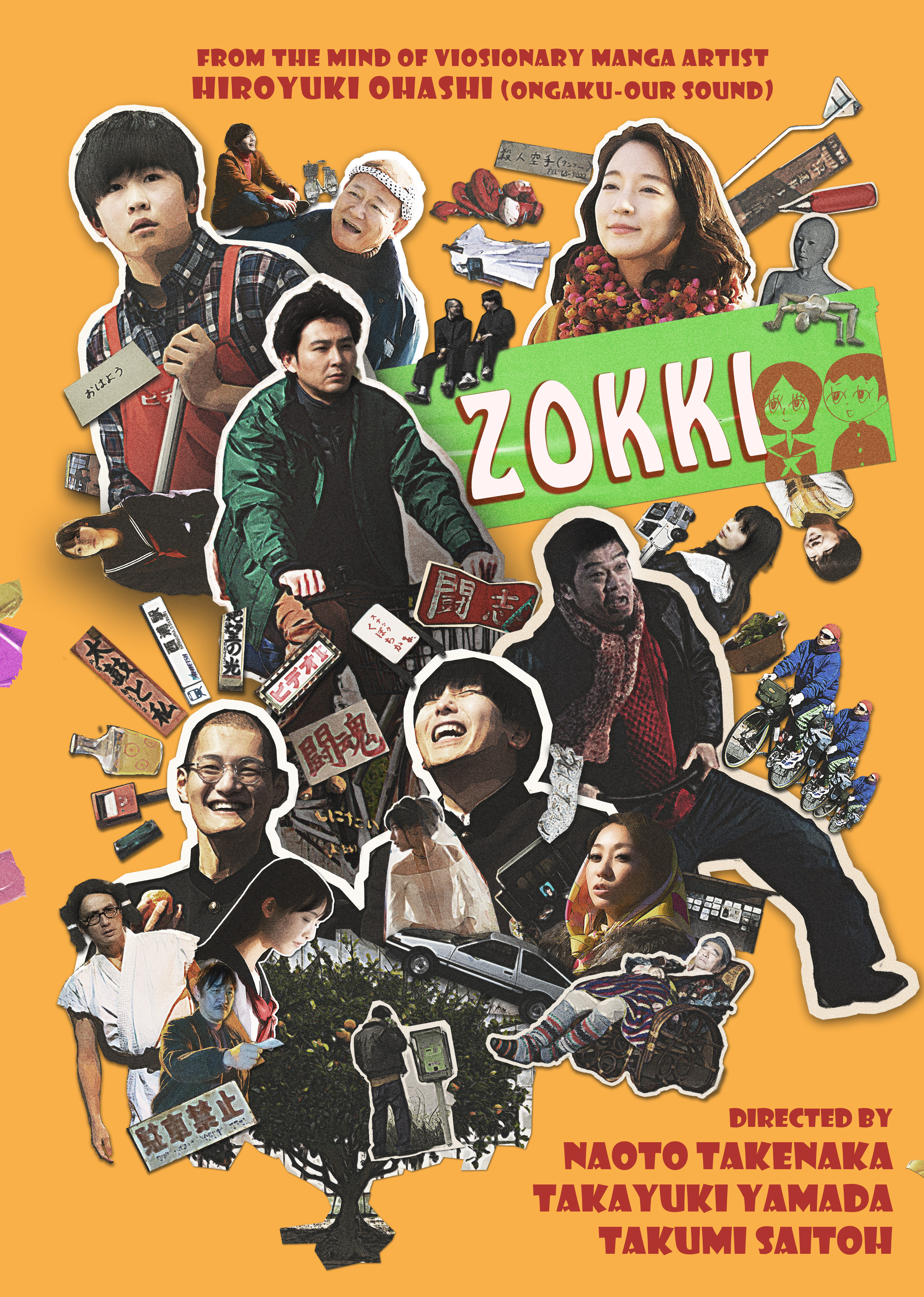
Zokki (2021) [Film Review]

Zokki; or, Too Many Secrets
     Lately, I've been thinking. If a living creature loses what it keeps secret, maybe it can't go on living. Once we finish confessing all our secrets... Or rather... If we confessed all our secrets, would we die, I wonder? So Ryoko, take care of your secrets. Keep as many as you can.
If I were to tell you that there is a Naoto Takenaka, Takayuki Yamada, and Takumi Saitoh movie out there, you would probably wonder who managed to bring together such a mind-blowing cast of excellent actors. In this case, nothing could be further from the truth! The three gentlemen joined forces… as directors(!) and brought to the screen an adaptation of the manga series by Hiroyuki Ohashi called Zokki.
Release Info
Directed by: Naoto Takenaka, Takayuki Yamada, Takumi Saitoh Starring: Riho Yoshioka, Ryuhei Matsuda, Joe Kujo
Language: Japanese Original Title: ゾッキ Runtime: 113 min
Synopsis (issued by the distributor)
There’s an old man who feels the need to impart his knowledge to a grown-up granddaughter; a quiet loner seeking self-discovery on his bike and the fisherman he encounters who invites him to a special meal; a school friendship that turns awkward because of an infatuation with an older sibling; a boy and his father who have very different ideas about how to enjoy themselves; and a friendship between two neighbours that revolves around a series of notes. Scripted by Yutaka Kuramochi, Zokki is less an anthology than a series of snapshots of a strange and quirky world.
Made in Japan
In my opinion, Zokki fits very much into the same narrative stylistics as Survive Style 5+ (2004) and Fish Story (2009). What I mean is that the viewers are presented with a series of vignettes, which gradually cross over into their respective contexts and ultimately constitute one whole. I would not say that Zokki is a wild comedy, but if you have seen Satoshi Miki's flicks, then you will recognise the flavour of distinct quirkiness that could have been manufactured only in Japan.
Although there are five stories featured, the three main ones caught my attention: The first story feels as if it had been penned by Haruki Murakami himself. A guy who clearly has issues with intimate stuff embarks on a bike journey. The second story revolves around two high school students who befriend each other and, consequently, one of them develops an unhealthy obsession. The third one is that of a complex relationship between a father and a son with a touch of horror. To be honest, I think the movie would have been better had the third tale been trimmed a little because it feels prolonged and, in a way, lacks resolution. Still, I very much enjoyed the first two segments, especially the part about high-schoolers.
With regard to performances, unfortunately we are not getting to see Naoto Takenaka, Takayuki Yamada, and Takeru Saitoh in action, but watch out for the leading parts done by Riho Yoshioka, Ryuhei Matsuda, and Joe Kujo. There are also wonderful cameo appearances from Jun Kunimura, Shinnosuke Mitsushima, Yurina Yanagi, Masanobu Ando, and Mai Kiryuu.
Recommendations
If you are in need of yet another set of happy-go-lucky short stories sprinkled with Japanese sensibility, then I recommend Zokki. The movie comes out on Blu-ray from Third Window on the 25th of April. This edition is going to contain such bonus features as interviews with all three directors, a look at behind the scenes, and a theatrical trailer.
Overall score: 7/10
«Enjoyed this post? Never miss out on future posts by following us»

Onoda - 10,000 Nights in the Jungle (2021) [Film Review]

Onoda: 10,000 Nights in the Jungle; or, Lonely Warrior
     They’d said, “We’ll come back for you.”
I have been aware of the real life story concerning Hiroo Onoda for quite some time, but I have never known all the details. If you have not heard about it, the phenomenon of the so-called Japanese holdouts refers to soldiers who were either uninformed or refused to believe that World War II had ended. Arthur Harari’s Onoda: 10,000 Nights in the Jungle tells the story of a man who kept on fighting until 1974 on a remote island.
Release Info
Directed by: Arthur Harari Starring: Yuya Endo, Yuya Matsuura, Kanji Tsuda, Tetsuya Chiba, Issey Ogata
Language: Japanese Original Title: ONODA 一万夜を越えて Runtime: 166 min
Synopsis
Young Hiroo Ononda (Yuya Endo) is an intelligence officer training at a special facility under the guidance of Major Taniguchi (Issey Ogata). In 1944, he was sent to Luband Island in the Philippines with a mission of limiting the impact of enemy attacks. Nevertheless, the Allied Forces liberated the island in 1945. While the rest of Japanese troops either died or surrendered, Onoda and three other soldiers continued to carry out their guerilla activities, waiting for the arrival of Imperial forces.
Left Behind
In my opinion, Onoda: 10,000 Nights in the Jungle is a gripping adventure drama which provides an insight into the life of a soldier who is perceived by many as the paragon of discipline and devotion to homeland. Still, it has to be acknowledged that the movie was not based on Onoda’s official autobiography but rather other historical accounts, such as Bernard Cendron and Gérard Chenu's Onoda, seul en guerre dans la jungle; hence, it is difficult to label the film as a biographical motion picture. The director himself was heavily influenced by the novels of Joseph Conrad and Robert Louis Stevenson (source: press book).
Nevertheless, the movie closely follows the major events from Onoda’s stay on the island. It is fascinating to see how he rejects the tell-tale signs that the war is over and proceeds to blindly believe that Japan will team up with China in order to “liberate” the Asian continent. This is a story of false presuppositions and delusions, but also of incredible sacrifice, especially in view of the fact that Onoda was not alone at the beginning of his crusade.
Although the movie lasts nearly three hours, you do not feel bored at all. I think it’s best to say that Onoda: 10,000 Nights in the Jungle is divided into two parts: the first one focuses primarily on young Onoda (Yuya Endo) and young Kinshichi Kozuka (Yuya Matsuura) trying to survive during the 1950s. In 1969, we see aged characters (played by Kanji Tsuda and Tetsuya Chiba respectively) as they try to stay in hiding, away from the local villagers. I appreciated this unconventional measure of double performance, but I believe that the movie would have worked better if there were two actors playing the characters consistently from beginning to the end.
That being said, I appreciate the onscreen performances as well as the supporting parts done by veteran actors like Issey Ogata and Kyusaku Shimada. Beautiful on-location cinematography by Tom Harari also cannot go unnoticed.
Recommendations
I suggest you watch the film back-to-back with Kazuo Hara’s unforgettable documentary The Emperor's Naked Army Marches On (1987) in order to get a full picture of what was going on in the Philippines towards the end of the war. Onoda: 10,000 Nights in the Jungle is going to be released in UK cinemas by Third Windows Films on the 15th of April. VOD/Blu-ray edition will follow appropriately on the 16th of May. The disc is going to include interviews with actor Kanji Tsuda, director Arthur Harari, DOP Tom Harari, and assistant director Benjamin Papin.
Overall score: 8/10
«Enjoyed this post? Never miss out on future posts by following us»

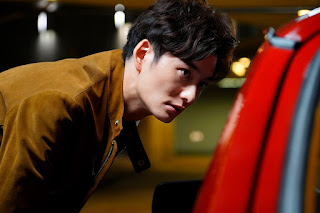
Cube (2021) [Film Review]

Cube (2021); or, Running Scared
     I see a sin in your eyes.
My first encounter with the Cube franchise was not a positive one. Back in the early 2000s, while watching preview trailers on a rented VHS tape, I stumbled upon a teaser for Cube 2: Hypercube (2002). This advertising clip was so atrociously bad that it made me dislike the series before even seeing it. However, I caught the original Cube (1997) on TV years later and actually enjoyed it. It was simple, innovative, gripping, and had memorable characters. Therefore, I am all the more surprised that the Japanese decided to remake this horror classic almost 25 years later…
Release Info
Directed by: Yasuhiko Shimizu Starring: Masaki Suda, Anne Watanabe, Masaki Okada
Language: Japanese Original Title: CUBE Runtime: 108 min
Synopsis
Six strangers wake up in a cube-shaped room. They do not know how they got there or what is their purpose of being in the cube. Each wall of the room (including ceiling and floor) has doors, which lead to same cube-designed areas. The strangers try to get out of the endless, claustrophobic maze while avoiding deadly traps awaiting them en route.
Cube Your Enthusiasm
The 2021 remake directed by Yasuhiko Shimizu and produced by Vincenzo Natali (the director of the original film) faithfully repeats the basic points of the 1997 source material, but it also manages to muster up a few innovations on its own. Let’s take a look at production design, for instance. Evidently, this is a studio flick (Shochiku), so the crew actually had a budget to work with. The cubical rooms do not have the industrial, “used” look as in the original. Instead, they seem brighter, cleaner, and more spacious. The lighting of the sets is also pleasant for eyes.
In terms of the story's overall execution, Cube feels like a play on Japanese stereotypes. Whereas the original had clear anti-authority sentiment, the remake presents us with a critique of generational conflict, social politeness, honne/tatemae modes in daily interactions, and group mentality vs. individualism. Watching the 1997 and 2021 remake back to back reminded me about a passage from Haruki Murakami’s Underground: The Tokyo Gas Attack and the Japanese Psyche, in which a survivor of the 1995 subway events states that Americans would have certainly behaved differently from Japanese passengers during a terrorist attack and, consequently, there would have been less victims.
This is very much the vibe you get from Cube (2021). The characters behave in an erratic manner when it comes to action, and they seem to be afraid more of each other rather than of the actual maze… In the original, the protagonists hated each other’s guts but at least they consciously worked on getting out. In the remake, the hints as to how the cube operates are thrown into the characters' faces. They discover solutions to challenges they face by pure chance.
With regard to performances, Masaki Suda does well as the leading man, but he gets outshined most of the time but the supporting parts of Takumi Saitoh and Kotaro Yoshida. Hikaru Tashiro is unfortunately bland as the child who forms a bond with Suda’s character. Anne Watanbe looks adorable in prison rags, but her character is one-dimensional and just when you think this is an issue, the film surprises you with a plot twist (no spoilers). As for Masaki Okada, I am glad that his fame gets recognised internationally nowadays, but this movie does a disservice to him. He just goes full Jack Torrance towards the finale. You should never go full Jack Torrance.
Recommendations
All things considered, I do not regret watching the Cube remake. Undoubtedly, it is inferior to the original, but it is worth checking out just for the production design and top-notch sound editing, which really enhances the viewing experience. It is an okay horror flick for one viewing only.
Overall score: 7/10
«Enjoyed this post? Never miss out on future posts by following us»

The Silent Sea (2021) [Drama Review]

The Silent Sea; or, 2021: A Lunar Odyssey
     Not a damn thing works smoothly in this station.
I have been looking forward to The Silent Sea drama since the first information about the shooting schedule dropped in December, 2020. Still, I had to endure an additional month of waiting after the Netflix premiere at the end of 2021 because of personal stuff and work. Well, as they say, better late than never. This is my review of The Silent Sea.
Release Info
Directed by: Choi Hang Yong Starring: Gong Yoo, Bae Doona, Lee Joon, Kim Sun Young
Language: Korean Original Title: 고요의 바다 No. of eps.: 8
Synopsis

Near future, the world is plagued by shortages of water and food caused by environmental changes. Doctor Song Ji An (Bae Doona) can’t get over the death of her sister who tragically died in a mysterious accident on Balhae Base research station on the moon. The Republic of Korea’s Space and Aeronautics Division asks her to join a team of specialists led by Captain Han Yoon Jae (Gong Yoo). They are sent on a mission to retrieve top-secret samples from the now-abandoned Balhae Base. Upon arriving there, the team realises something is amiss. That is to say, something, or someone, is lurking within the premises of the base.
Fly Me to the Moon
The Silent Sea was based on a 2014 short film The Sea of Tranquillity (I couldn’t track it down) by Choi Hang Yong, who also directed all 8 episodes of the drama. Interestingly, the executive producer of the show was Jung Woo Sung, the star of Steel Rain (2017) and The King (2017). The screenwriting duties were given to Park Eun Kyo who penned in the past Neverending Story (2012) as well as Mother (2009).
This drama is science-fiction at its purest. Fans of the genre will undoubtedly notice that The Silent Sea borrows tropes and concepts left and right from such legendary juggernauts of modern cinema as the Alien franchise (1979-1997), The Abyss (1989), Leviathan (1989), and Ad Astra (2019). There is room for thoughtful critique of modern problems plaguing the social order, but this aspect does not eclipse the willingness of filmmakers to provide the audience with a dose of thrills and chills.
In my opinion, The Silent Sea feels very much like the Lost (2004-2010) TV series, but instead of the island setting we get the moon. The first episode of the drama, albeit visually outstanding, is a bit overwhelming because its main focus is setting up the action and introducing (lots of) characters. Onwards the second episode, it gets easier to dive into the mysteries concerning the Balhae Base as well as the motivations of the main protagonists: Captain Han Yoon Jae and Doctor Song Ji An.
I have read online a lot of criticism about the plotline of the drama, especially the climax and dramatic reveal of (no spoilers) what actually was going on, but I personally found the whole thing enjoyable. I especially appreciated the themes of political corruption, company wars, and unethical research. The only thing that put me off; however, were CGI effects concerning one of the characters. From the visual standpoint, the effects looked good, but there was still some degree of uncanny valley which made these sequences look awkward.
Still, I love the marvellous production design. The Balhae Base looks incredible and the moon’s surface is fantastic, whereas the space suits are awesome. With regard to performances, it is always a pleasure to see Gong Yoo in the heroic role. This time, there is an added bonus because Gong’s character has an epic tattoo on his neck. Bae Doona is always wonderful as the female lead, but I was hoping for more character development in this case. Throughout most of the drama, we see Doctor Song either as bitter or depressed.
As for the supporting cast, I absolutely love Kim Sun Young as Doctor Hong. I have said this already on MDL and I will say it again: To me, she IS the Space Ajumma! In addition, I greatly enjoyed the appearances of Lee Moo Saeng as Chief Gong, head of the security team, and of Lee Joon as Lieutenant Ryoo Tae Seok, the head engineer. In general, the cast members have great chemistry, which also transpires in these sweet promo materials from Netflix, here and here.
Recommendations
After Space Sweepers (2021) and now The Silent Sea, South Korea has proven once again that they can do top-notch entertainment, even in the form of a miniseries. I sincerely hope that there will be a second season; however, we have to bear in mind that the drama came out in-between two other major Netflix players: Squid Game (2021) and All of Us Are Dead (2022). It’s reassuring to see that Netflix cares about the K-Drama audience, but I hope the quality will not be overshadowed by the quantity. The Silent Sea deserves an additional season because there is still the potential to develop the story further, but I would not like to see this drama last as long as Lost, The Walking Dead, or Stranger Things. Sometimes shorter is better.
Overall score: 8/10
«Enjoyed this post? Never miss out on future posts by following us»

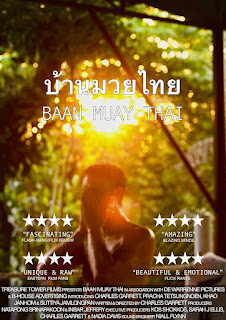
Baan Muay Thai (2021) [Film Review]

Baan Muay Thai; or, The Measure of a Man
     When I was 19, I could do anything. Hurt but no real problem. One or two days and I was fine. Now it is not the same.
It’s time for another indie feature! In this review, I would like to take a look at Baan Muay Thai, a debut production directed and written by Charles Garrett. I heard about the film for the first time a little over a year ago when the Asian Film Fans team was working on a video review. I was lucky enough to interview the director and hear the surprising and extremely detailed backstory of the film.
Release Info
Directed by: Charles Garrett Starring:Charles Garrett, Khao Janhom, Pracha Tetsungnoen, Suttiya Jamlongpan
Language: English, Thai Original Title: Baan Muay Thai
Synopsis
Max (Charles Garrett) is a Londoner who spends his days in a trading business. One day, he is called by a good friend from Thailand. The ailing coach wants Max to help in reinvigorating their training camp and participate in an exhibition match. Max quits his job and goes back to the land where he once trained in order to rediscover the art of Baan Muay Thai.
Honour of the Gym
The first thing which definitely transpires while watching Baan Muay Thai is the naturalistic, guerilla-like filmmaking style. As a viewer, you are really under the impression that what you are seeing is a documentary about a British guy who wants to help out his friends in need and reconnect with his inner self in the process.
In consequence, Baan Muay Thai goes for the feeling rather than the experience. Do not expect this movie to be yet another action-packed rehash of Enter the Dragon (1973) or Ip Man (2008). You will not find Donnie Yen or Angela Mao here. This movie is about real struggles and real characters and it boldly ventures into the kitchen-sink drama territory of the first Rocky (1976) picture.
Be prepared for steady camera work, beautiful overview shots of Thailand, and nuanced but sparse dialogue. The director has recently recut the film, and the updated version certainly has a better pacing and is easier to follow in terms of narration. In addition, the English subtitles are hardcoded which eliminates the problem of translation not displaying properly during the screening.
Recommendations
If you are on the lookout for a calm, poignant drama with great visuals, then I recommend Baan Muay Thai. I sincerely hope that Charles Garrett will keep on making more indie films with the same type of true-to-life ambience. My thanks go to the director for sharing the screener and I am looking forward to part II.
Overall score: 7/10
«Enjoyed this post? Never miss out on future posts by following us»
250th Review: Hell’s Garden: Office Royale (2021)

Hell’s Garden: Office Royale; or, The Art of Delinquent War
     Your problem is you don't know what you are missing. Dignity. Your fighting lacks elegance. That's not office lady fighting. It is just street fighting.
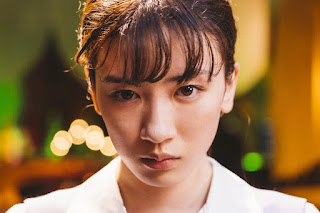
After catching a break from experiencing “high culture”, I decided to start off the year 2022 with something a bit more mainstream and light-hearted. Following an MDL recommendation, I gave a chance to Kazuaki Seki’s Hell’s Garden: Office Royale. Super colourful poster and actress Mei Nagano were enough to get me hooked.
Release Info
Directed by: Kazuaki Seki Starring: Mei Nagano, Alice Hirose, Nanao, Rina Kawaei, Miyuki Oshima
Language: Japanese Original Title: 地獄の花園 Runtime: 102 min
Synopsis
Naoko Tanaka (Mei Nagano) is a 26-year-old office lady. She tries to perform her tasks as diligently as possible, but little do outsiders of the corporate world know that within big companies there is always a power struggle between factions of office ladies. Similarly to yakuza gangs, they challenge each other and fight for dominance. These battles are put to an end with the arrival of a new OL executive, Ran Hojo (Alice Hirose). The new leader unites rival cliques and even befriends Naoko. All of a sudden, Naoko gets kidnapped by office ladies from another company. Ran rushes to rescue her friend, but she is no match to the opponents. It turns out that Naoko is not as innocent as she looks. To protect Ran, she stands up against power-hungry OLs…
The Way of the Office Lady
I have to say that Hell’s Garden: Office Royale is simple, ridiculous fun all the way through. Because of its witty puns and outrageous battle scenes, I thought the film is based on a particular manga/anime material, but it is actually a love letter to the delinquent heroine genre, which gave us, for instance, Hana no Asuka Gumi.
Think of this film as a mix between Shomuni drama, Tekken game, and Jojo’s Bizarre Adventure. It’s all about wild extravaganza revolving around the “what-if” scenario of office ladies being skilled warriors.
Some viewers remark that the film is a parody of the original Battle Royale (2000), but I believe this is not the case. One could think such kind of material could easily be turned into an exploitation flick filled with NSFW jokes, but director Kazuaki Seki and screenwriter Bakarhythm approach the issues of rivalry and workplace abuse with utmost gentleness and innocent humour. To me, the movie feels like a pastiche of Enter the Dragon (1973) with regard to the fact that, in both pictures, the main protagonist has to face a series of formidable foes in order to get to the final boss, who is the most powerful one.
As for the performances, well, I tried the film for Mai Nagano, but I stayed for Alice Hirose. The two are just amazing together. I really enjoyed the sweet “friendship” scenes between them as well as the fight sequences. In addition, make sure to be prepared for surprised cameos from veteran actors and actresses, such as Kenichi Endo, Masanobu Katsumura, and Shigeru Muroi. I failed to recognise some of them under tons of make-up!
Recommendations
If you are looking for something to improve your mood, then Hell’s Garden: Office Royale is a very good choice. The movie is funny, yet by no means vulgar. It certainly deserves a sequel or a movie similar in style focusing on some other profession, such as taxi driving or airline services. Please make it happen FujiTV!
Overall score: 9/10
«Enjoyed this post? Never miss out on future posts by following us»

Drive My Car (2021) [Film Review]

Drive My Car; or, Depression: The Movie
     I like that car. I can tell it’s been treated with care. That’s why I also want to drive it with care. Let’s go.
I heard about Drive My Car movie for the first time when it started gaining awards at the Cannes Film Festival. It would have almost joined the line of “stuff I wanted to check out but forgot about it” had it not been for a summer movie festival in my country. I was lucky enough to check out the film, but it left me with mixed feelings. Consequently, I hesitated for a long time with this review, but well, here it is.
Release Info
Directed by: Ryusuke Hamaguchi Starring: Hidetoshi Nishijima, Toko Miura, Masaki Okada, Reika Kirishima
Language: Japanese Original Title: ドライブ・マイ・カー Runtime: 179 min
Synopsis
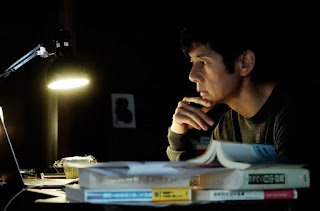
Yusuke Kafuku (Hidetoshi Nishijima) is a stage-actor who collaborates closely with his wife Oto (Reika Kirishima). One day, by complete accident, Yusaka discovers that Oto is cheating on him. He never confronts his wife about it, but the marital status quo is disrupted by her untimely passing. Two years later, Yusuke goes to Hiroshima in order to direct a multilingual adaptation of Chekhov’s play Uncle Vanya. However, the producers’ regulations prevent Yusuke from driving on his own. He gets assigned a special chauffeur called Misaki Watari (Toko Miura). While driving his car, Misaki learns about Yusuke’s ambiguous past.
A man without a woman
I have to be frank and say that my expectations for this film were enormous. Drive My Car gets praised time and time again across film festivals, it is an adaptation of Haruki Murakami’s short story, and on top of that the director of the film is Ryusuke Hamaguchi, the man who co-wrote Wife of a Spy (2020).
I have re-read the original short story before the screening, and the movie follows and greatly expands upon major plot points of Murakami’s work. I was all game during the prologue sequence, but when the opening credits hit at about the 40-minute mark, the storyline started going a bit downhill for me.
Please do not get me wrong, but I felt the prologue was meant to prepare the viewers for a massive catharsis, a grand journey in the course of which Yusuke will rediscover himself. Truth be told, I found the protagonist’s actions to be questionable. He goes to Hiroshima to do this super unconventional theatre play (which in itself adds tons of layers to the film’s storyline), but he hires an actor who slept with his wife (Masaki Okada). What was his motivation? To torment the guy? At least, that’s what Yusuke says in the short story, but it does not become transparent enough in the movie. Actually, Yusuke behaves like a depressed individual who enjoys being tormented by his wife’s lover.
Evidently, there is a big reconciliation scene between the two characters in the third act of the film, but this moment only made me realise how hard it is to adapt Murakami. The author frequently introduces exposition through conversation. In many of his short stories and even novels, we have two characters talking to each other, and in the course of this seemingly casual talk, the readers get to discover some major twist or a whole story. Hamaguchi’s Drive My Car lays out everything chronologically from beginning to the end, leaving little room for this Murakami-specific trope only towards the end of the film. Call me cruel, but I would have appreciated the movie more had the driving scenes looked more like this.
Well, this movie did not click with me, unfortunately. Nevertheless, I have to give justice to the cast and praise nuanced but powerful performances of Hidetoshi Nishijima, Toko Miura, and Masaki Okada. In addition, I have huge respect for production design and the titular car itself, which indeed felt like a separate character.
Recommendations
Out of all Murakami adaptations I have seen so far, I still like Burning (2018) best. Drive My Car deserves your attention in terms of how neatly it manages to handle performance art (a stage play, which makes the characters confront each other). All in all, it’s a film about lost love and an attempt to drive away from traumas of the past. I understand the growing popularity of this adaptation, but it is not a movie for everybody. It certainly was not for me.
Overall score: 6/10 
«Enjoyed this post? Never miss out on future posts by following us»