Showing posts with label girls with guns. Show all posts

The Burden of Suffering: Comparing La Femme Nikita (1990) and The Villainess (2017) [Editorial]

Disclaimer: The following editorial is filled with spoilers of both movies. Read it only if you have seen the films.

     Don’t forget… There are two things that have no limit: femininity and the means of taking advantage of it.~ La Femme Nikita

     Let me show you… what you made me into.~ The Villainess

Every self-respecting moviegoer is most probably aware of the fact that strong heroines have been present on the silver screen for decades, not several years. The 1970s as well as the 1980s gave us a whole slew of tough and badass female characters, from the West as well as from the East. Interestingly, European Cinema never quite engaged into “Girls with Guns” craze, and perhaps its only worthwhile interjection into the matter is Luc Besson’s La Femme Nikita from 1990.
     The young and confident director was at the top of his game in the 1980s, effectively changing the face of French cinema which was suffused with art-house style and theatricality at that time. By emphasising the visuals and style rather than proper narrative (see Cinema du look movement), Besson created such modern classics as Subway (1985), The Big Blue (1988), and, of course, La Femme Nikita (1990).
     Somewhat forgotten today, the movie about a young woman turned spy became an important cultural phenomenon. If you ask anybody today about “Nikita”, they will most certainly associate the title with one of the American TV shows or even a John Badham movie. Indeed, Besson gave Europeans their own “girl with a gun” but she was immediately snatched by Hollywood and incorporated into the American mainstream. Nevertheless, the archetypal figure of a non-conforming woman forced to serve the state, and who tries to find happiness, proved to be pervasive in culture. While Hollywood was busy with the remakes, Hong Kong already made their own version of Nikita in 1991. Black Cat with Jade Leung ticks all the major plot points from the original film while also adding tropes of an exploitation flick and underlining the anti-authority message (Black Cat is actually controlled by the CIA via microchip).
     Yet, the incarnations of Nikita with Bridget Fonda, Jade Leung, Peta Wilson, and Maggie Q, do not mark the end of fascination with this character. A 2017 South Korean production The Villainess was openly advertised as a movie inspired by La Femme Nikita; however, I believe that the movie is not so much a remake but a companion piece to Nikita.
     The fans have spotted references to Kill Bill (2003), The Raid (2011), and Hardcore Henry (2015), but director Jung Byung-gil acknowledged that The Villainess is first and foremost an homage to La Femme Nikita. Having watched the two movies back-to-back, I was surprised by the fact that The Villainess does not simply retell the events of Nikita but also comments on them and builds on the character of the original heroine.
     Firstly, let’s take a closer look at La Femme Nikita: The movie starts with a bunch of hoodlums who rob a pharmacy. It turns out that our soon-to-be heroine is a drug addict who is on such an acid trip that she actually shots a police officer point blank in the head. Nikita is rightfully sentenced in the court of law, and two men approach her in a cell with an injection. Nikita breaks down because she is convinced that she is about to be euthanized. Actually, she’s only sedated and wakes up in a white room where she is greeted by a man called Bob. He explicitly tells her that the government fakes the deaths of worthless criminals and turns them into spies. Evidently, Nikita is very reluctant about the whole concept and tries to break away, but Bob eventually manages to mould her into a professional agent. Nikita is given a new identity and she is allowed to lead a normal life, on condition that she will always perform secret assignments.
     According to researcher Jeanne Deslandes, La Femme Nikita is a film about going back to the state of normality. We see the main heroine as a social wreck at the very beginning, but she is salvaged by Bob (a representative of the French secret police, we could say) who offers her a second chance in life. Ironically, Nikita gets more than she bargains for. That is to say, whenever something pleasant happens to her, bad things immediately strike as well. For instance, on her 23rd birthday, Bob takes Nikita to a restaurant only to give her a gun and target details. In addition, when Nikita spends a honeymoon with her beloved husband Marco, she is ordered to take down yet another target. In consequence, the heroine is unable to have a happy life because of the very same authorities who gave her a fresh start. When a mission concerning economic espionage goes terribly wrong (not out of Nikita’s fault), she is completely burnt out and, with the blessing of her husband, she runs away (hopefully, trying to regain her normality).
     Now proceeding to The Villainess: The movie has a similar structure and premise of Nikita, but the main character is quite different. Sook Hee is arrested and subsequently turned into a spy by the Korean secret police not because she is a lowlife, but because of her extraordinary abilities. At the very beginning, we see her slashing her way through hordes of expendable baddies and surviving the bombastic ordeal simply because she’s driven by the desire to avenge the death of her father. In a series of flashbacks, it is revealed that Sook Hee’s father was killed because of a stolen diamond. His friend betrayed him but the real killer remains unidentified. Sook Hee was sold to human traffickers, but she was unexpectedly saved by a professional hitman. Cue to present day, Sook Hee is trained by the authorities and given the identity of Chae Yeon Soo. Together with her little daughter, she moves into an apartment and eventually marries a goofy but kind neighbour, Jung Hyun Soo. In the course of her assignments, she comes face to face once again with the hitman who saved her years ago.
     I admit that it is a fool’s errand to correctly summarise The Villainess from beginning to the end because there are tons of subplots happening in this movie. Nevertheless, here are the interesting contextual parallels between the two films:
     For example, Nikita and Sook Hee (amazing Anne Parillaud and Kim Ok Bin, respectively) are so feisty and spirited that they unsuccessfully attempt to escape the containment facility. This is of course a mutual plot point, but each character also sheds their old identity in a unique way. On the one hand, Bob takes away Nikita’s hoodlum clothing as if to symbolically distance her from the old days of being reckless. On the other hand, Sook Hee undergoes a plastic surgery and receives the new name of Chae Yeon Soo and a vocation: an actress. Both tricks seem to work as the heroines proceed with their training.
     Additionally, the mentor figures are also quite interesting (brilliantly played by Tcheky Karyo and Kim Seo Hyung, respectively). Bob is very friendly towards Nikita and he even pretends to be an uncle in front of her husband. Nevertheless, the most appropriate way to describe Bob is to call him a demon, simply because he owns Nikita’s soul. After Nikita’s attempt to free herself from his grasp, Bob’s smile towards the end of the film is more than unnerving. In turn, Kwon Sook in The Villainess performs exactly the same function (Sook Hee/Chae Yeon Soo is an investment that needs to follow orders), though she never becomes a friend.
     Furthermore, it is also intriguing how the characters of husbands (wonderful Jean-Hugues Anglade and Sung Joon, respectively) were handled. Marco in Nikita is a perfect Mr Nice Guy (quiet, caring, understanding). Although he seems to be oblivious to Nikita’s activities, it is revealed at the end that he figured it all out. As for Jung Hyun Soo in The Villainess, he is a government officer who genuinely falls for Chae Yeon Soo. Even though Jung dies while protecting her daughter, I think that Marco’s character has a stronger impact on the story. He is an average guy on whom the viewers can fall back (the bathroom scene is so powerful just because of his presence), whereas the presence of Jung Hyun Soo serves to elicit a melodramatic effect (boosting Chae Yeon Soo’s need for vendetta).
     Speaking about melodrama, The Villainess attempts to emotionally invest the viewer into the story with the usage of overt plot twists and stunning action set pieces. The plot twists about a lover who turned out to be the killer of Hee’s father makes the film venture into the territory of Luc Besson's other popular film, Leon (1994), but does not quite manage to bring the story of an assassin good at heart together with that of a female spy.
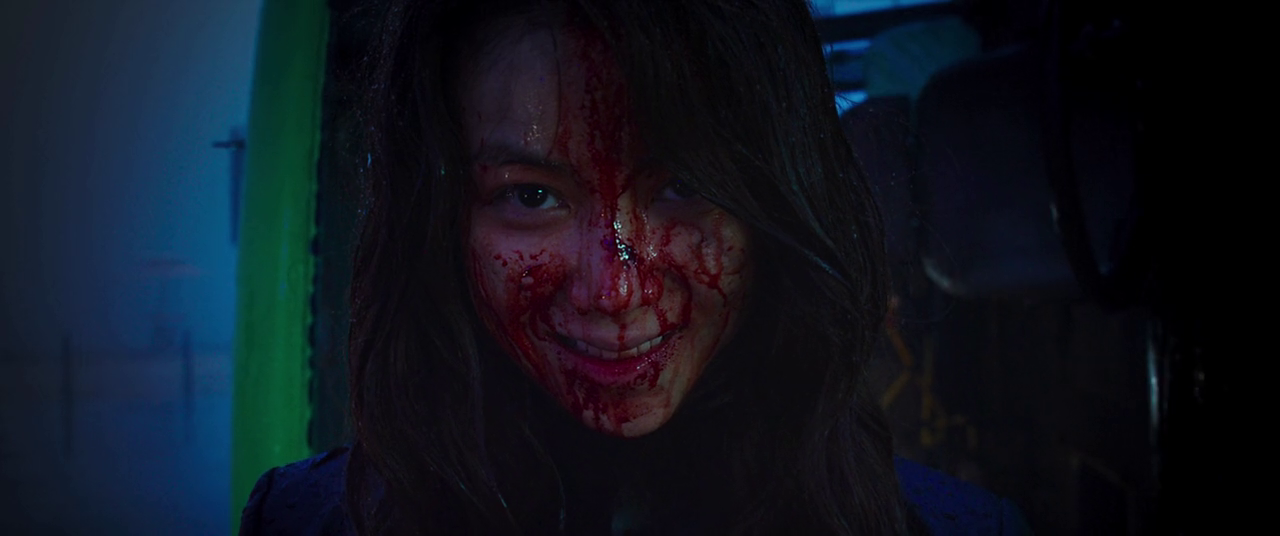
     Nevertheless, The Villainess is an extension of Nikita. What I mean by this is the fact that we get to know everything about Chae Yeon Soo through extensive flashbacks, whereas we know nothing about Nikita (apart from that she was named after a song). Nikita might as well have had exactly the same painful past as Chae Yeon Soo, but it did not haunt her afterwards. The most important bit about the two heroines are their attempts to regain normality. In the case of Nikita, she runs away because she has enough of killing (in fact, her last mission failed because another hitman wanted to solve everything with brute force). In the case of Chae Yeon Soo, she loses her husband and a child simply because she could not leave the past behind. As a result, she becomes an indestructible angel of vengeance (similar to the character played by Meiko Kaji in Lady Snowblood) in the epic finale. After killing the man who ruined her entire life, she turns into an antithesis of herself, she loses her normality (the state that Nikita wants to avoid). Chae Yeon Soo’s malevolent smile at the very end marks her transformation into the villainess…
     All things considered, The Villainess serves not so much as a remake but a companion piece to Nikita, showing what could happen to the archetypal lost woman if she had not run away. Evidently, both movies are about fallen heroines with guns who only wanted to lead a happy life. Actually, I am surprised that we have not been given proper sequels to these films. Perhaps it is best to leave the two heroines as they are.
     I very much recommend watching both movies. I personally like La Femme Nikita a tiny bit better, because it manages to achieve more with its subtlety. I hope that this extensive editorial was not an exhaustive read. I simply wanted to provide food for thought for viewers who also enjoy girls with guns flicks. Please share your thoughts in the comments. My thanks go to Seonsaeng from MyDramaList who kindly read the article and provided his feedback before the publication.
Sources: They Programmed Her to Kill: Black Cat, a Hong Kong remake of Nikita (2002) by Jeanne Deslandes * (Young) Sisters in Arms.Youthification and Femininization in Contemporary Action and Sci-Fi TV Series by Elisa Giomi * THE VILLAINESS Interview: Director Jung Byung-gil on the Stunts and Stars
«Enjoyed this post? Never miss out on future posts by following us»

Madam City Hunter (1993) [Film Review]

Madam City Hunter; or, This is not a sequel to Jackie Chan's film
      Don't be angry. This is for you. Tofu flower. Isn't it special?
While researching information on the original City Hunter (1993), I stumbled upon this inconspicuous film with a very informative title and my beloved Cynthia Khan in the leading role. Thinking that it’s a sort of rip-off/spin off flick I decided to give it a go and the movie turned out to be completely something else.
Release Info
Directed by: Johnnie Kong Starring: Cynthia Khan, Anthony Wong, Kara Hui, Sheila Chan
Language: Cantonese Original Title: 城市女獵人 Runtime: 98 min
 
Synopsis
Cynthia Khan (most notably known for Yes, Madam!/In the Line of Duty series) plays Officer Ching who accidentally disrupts a gun smuggling operation. Head of the deadly Five Fingers gang in turn frames Ching for killing a group of teenagers. As a result, her superior, Officer Kwong (Tommy Wong), suspends her for the time of the investigation. Ching with the help of a goofy private detective Charlie Chan (Anthony Wong) start the hunt for the gang and the very first lead they find is connected with Ching’s father (Wu Fung) who has recently married the mysterious Siu-Hung (Kara Hui).
Madam Strikes Again
As previously stated, Madam City Hunter has absolutely no connection with Jackie Chan’s City Hunter, however, it has a similar light-hearted tone. On the one hand it is very entertaining in terms of action, but on the other, it fails miserably at humour and plotline development.
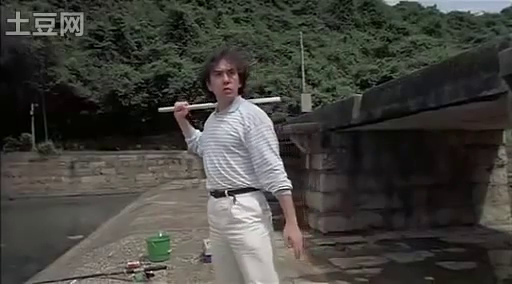
What is awesome is that the movie starts right off the bat with an explosive introduction in which Cynthia “scythes” down some random bad guys with guns and grenades. You’d expect the film to slow down after such a great prologue but it doesn’t. What we get is even more kung fu fighting and great action stunts. It is only when Ching gets suspended that the film loses its momentum and relentlessly drags throughout the middle section, only to go out with a bang with an epic final showdown at the bamboo scaffolding (similarity to an action set piece from Rush Hour 2 is purely coincidental).
With regard to the disadvantages, the filmmakers seemed not to have paid much attention to the story at all and treated breaks between action as an opportunity to try out some experimental shooting techniques (like a teenage shootout on acid or Kara Hui’s striptease with lots of rapid zoom-ins) or throw in a bit of comedic relief. In consequence, you have to really focus on the dialogue in order to know what is going on, because otherwise, things may get confusing towards the end. In addition, Sheila Chan (Anthony Wong's sidekick in the film) provides a test of endurance for the viewers with her highly irritable performance that was supposed to be funny. I have nothing against Sheila herself, but unfortunately, screaming like a maniac in front of a camera does not equal comedy by default.
Aside from these disadvantages, the movie is more than watchable. Anthony Wong deserves an honourable mention as a crazy private eye, because he is too cool for school in this role. Not only does he manage to deliver a few laughs, but also has a great deal of fighting scenes which are a pleasure to watch. Kara Hui sadly doesn’t do a lot of combat, but at least we can admire her sex appeal as a deadly femme fatale.
 
Recommendations
On the whole, I enjoyed this movie a little more than Jackie’s City Hunter. If the moments of embarrassing goofiness from the second act had been done away with, Madam City Hunter would have been a classic girls with guns flick. If you’re not patient enough to sit through the silliness to get to the proper stuff, then don’t watch it. Otherwise, I safely recommend this film to anyone who likes good old HK action. Plus, there’s Cynthia Khan and Anthony Wong at the height of their careers.
Overall score: 6/10