GTO Revival; or, A New Lesson Even if you don’t have these, you are you. You’re the cutest. I have to start this review with a big thank you to Rise from Phoenix Talks Pop Culture Japan because without her, I would have completely missed out on the info that FujiTV actually cooked up a GTO Revival special with Takashi Sorimachi returning to his legendary role(!) Indeed, we live in the age where heroes of the 80s and the 90s keep coming for one last hurrah, from Indiana Jones to Batman, but I have never imagined in my wildest dreams that this phenomenon would also impact the GTO franchise.
Language: JapaneseOriginal Title: GTOリバイバル Runtime: 91 min
Synopsis 26 years after the start of his unconventional career, and teaching the first class of high schoolers, Eikichi Onizuka works as a… food delivery man. However, he is soon called in by one of his former students who works for the Ministry of Education. Onizuka is asked to investigate a private school which is plagued by an influencer personality known as Judge-or-Laugh. Onizuka steps into action to free students and teachers from cyber-terror.
The Age of Cyberbullying Honestly, as soon as Takashi Sorimachi appeared together with obligatory cameos from original cast members of the drama, I had a big smile on my face. On top of that, when a remix of the Poison theme tune by Sorimachi and Blue Encount kicked in, it was pure icing on the cake.
That being said, this TV special is not a perfect revival of the drama that manages to capture the lighting in the bottle, and understandably so. It’s been a heck of a long time since we saw Sorimachi’s GTO on the screen, and this episode has a lot of catching up to do to reintroduce the character into modern age.
The main conflict of the story is very interesting because it concerns all the schools across the globe: cyberbullying. It’s very exhilarating and cathartic to see Onizuka’s take on the matter, but his approach is mostly recycled stuff you’ve already seen in the drama episodes and the theatrical movie: With his unconventional approach, Onizuka empowers the victims and makes baddies confront their inner trauma.
Unfortunately, getting to the gist of Onizuka’s modus operandi is repeatedly interrupted by the episodic and disjointed narrative of the TV special that throws lots of new characters and constant exposition at you within the span of 90 minutes. As a result, this episode feels like a pitch for a new GTO season crammed into a movie format. This, unfortunately, doesn’t work well.
With regard to performances, Takashi Sorimachi IS (and will always be) Great Teacher Onizuka. This man is literally “too cool for school”, even when he is 50 years old. I also enjoyed the performances by Rikako Yagi, Mei Hata, Kosuke Suzuki, and Yosuke Kubozuka. Apart from numerous easter-egg cameos, there’s one that particularly stole my heart at the very end of the special, but I refrain from any spoilers.
Recommendations All things considered, I enjoyed GTO Revival more than the theatrical movie from 1999, but still it doesn’t achieve the level of the classic drama. It’s an okay story for a one-time revisitation of GTO. However, I wouldn’t like FujiTV treat this as a backdoor pilot for a potential continuation of the drama next year. My thanks go to Skeweds Translations for translating this special.
Overall score: 7/10
«Enjoyed this post? Never miss out on future posts by following us»
We cannot go back to the past, no matter how hard we try. No matter how wonderful it was. The past is nothing but the past. ~ Eikichi Onizuka
Hello and welcome to my first blog post of 2024 after a long-ish, six week break. First of all, I feel that I need to explain my absence. Evidently, I wanted to continue writing right after Christmas but a set of personal circumstances forced me to adjust my schedule. In addition, I did not have time (and I was not in the mood) to watch absolutely anything. In fact, throughout January, I managed to see some random stuff on TV and only one(!) movie, which was Amadeus (1984). What is more, there is one more important factor responsible for my absence that is connected with the topic of today’s editorial. That is to say, I have made a New Year’s Resolution to become a better teacher for my students. Yes, some of the readers may already know this from the context of my previous reviews and articles. I have been working as a high school teacher for two years now (previously I worked at a university), and it is a very challenging profession at times. Of course, everybody has a different perception of it, depending on their place of birth, but where I live, it is not a line of employment held in high esteem by society (but more on that later).
The beginning of the current school year was particularly challenging for me. Apart from regular teaching, I got an increase in work hours, I became a homeroom teacher to a class of first graders, and I also had to oversee a team of new teachers in terms of bureaucratic paperwork. The period between September and November was very exhausting for me, and I didn’t feel like a teacher at all, but more like an administrative official who had to mediate his way between students, teachers, and principals. Thankfully, things did calm down towards the end of December and I had some time to recharge my batteries and think clearly. It was at that time when I made a firm decision to limit the overbearing paperwork to an absolute minimum and focus primarily on regaining that teaching spark. I even began to re-educate myself, looking for the latest information on classroom management techniques and learning/acquisition strategies other than traditional textbook cramming.
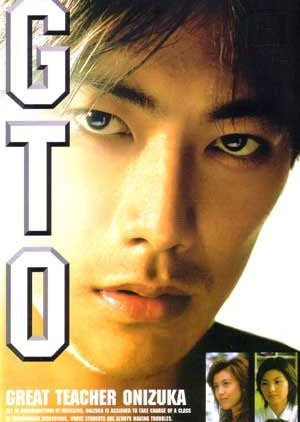
This is where GTO comes in. For those of you who do not know, Great Teacher Onizuka is a popular Japanese franchise created by manga artist Tooru Fujisawa in 1997. It initially started with a 25-volume manga series that received subsequent continuations and iterations in other media. In 1998, it was turned into a J-Drama. In 1999, there was a theatrical movie as well as a 43-episode anime series. In 2012, GTO was remade again as a J-Drama by Fuji TV. The series tells the story of an ex-bosozoku gang member Eikichi Onizuka who barely finishes studies allowing him to become a teacher. He finds a job at a private middle school in Tokyo, and he is assigned to the most troublesome class. Nevertheless, Onizuka’s unconventional techniques quickly lead to changes in the mentalities of unruly students. To be honest, I am a fan of the whole franchise, but the 1998 series with Takashi Sorimachi stole my heart, and to date remains my favourite interpretation of GTO. I have been meaning to write about this drama on the blog for years, but I never felt I had anything innovative to say about this all-time classic. However, in this article, I would like to put it in perspective with regard to my work.
Consequently, when I was scavenging the abyss of the internet in search of information that might help me on my teaching journey, I stumbled upon a reddit discussion about the validity of techniques used by Onizuka-sensei. This discussion really got me thinking. Evidently, Onizuka is this larger-than-life, too-cool-for-school character with a deep sense of morality overshadowed by typical manga wackiness. However, it is difficult to see him do any actual teaching in the series(!) Yes, sometimes in the drama we see him holding a coursebook for social sciences, so at least we know what subject he is supposed to teach, but that is it! Ultimately, Onizuka’s teaching purpose is about conveying life wisdom to his students. He is not teaching them hard theory, but how to live a life. In this manner, Onizuka is yet another fictional teacher in the pantheon of mentor characters like John Keating, Mark Thackeray, and William Hundert who always strived to inspire their students and often treated them like adults. Perhaps this is the most uplifting takeaway from GTO for any struggling teacher: Onizuka persistently broke the stale teacher/student power dynamic, going out of his way to show his students that he does not look down on them.
Still again, “educational” techniques used by Onizuka to achieve his goal leave a lot to be desired. If I were to repeat them, I would certainly end up in jail for jeopardising the health and safety of my students by jumping off a roof, getting into a fight with bikers, busting into a student’s home with a sledgehammer, or playing chicken with a speeding truck. However, I wouldn’t mind wrecking the vice-principal's Toyota Cresta every week. Point of the matter is that you will not learn anything about classroom management techniques from GTO (you are better off watching Dragon Zakura instead); however, GTO teaches you about employing a different approach towards your students. Onizuka, in contrast to fellow peers in the teacher’s lounge, understands that teaching is actually a relationship game. Hating your students will not get you anywhere. You should make an effort and familiarise yourself with them, even when they are troublemakers. Remember their names, ask them about their interests. greet them at the beginning of every lesson, and say goodbye when they leave.
Kindness doesn't cost much, but for many teachers in my country it is an impossible feat. I know from experience that many (not all) teachers here are just in it for the money. They often lack necessary knowledge to conduct a subject, let alone conduct a proper class with beginning, middle, and end. This situation only fuels students’ unwillingness to learn. I know I can’t change the world, but at least I can work on bettering myself. All things considered, the past six weeks of teaching were extremely rewarding for me. This is not the time and not the place to get into personal specifics, but my adjusted approach resulted in many unexpected, kind-hearted situations with my students, and I feel really proud because of that. My thanks go to my dear friend @penel from MDL who was willing to patiently hear my stories.
So, coming back to the question of this editorial: Was Great Teacher Onizuka right? Well, he was definitely right about changing your perspective and attitude to your students. And this made me like the character even more. Thank you for sticking by, I did not think this editorial would be so long. Next week, I will try to write something related to Cowboy Bebop (hopefully)!
«Enjoyed this post? Never miss out on future posts by following us»
GTO: The Movie; or, Canada Village I am a teacher with a mission! A few days ago the school year ended where I live, so (as a teacher) I was in the mood for educational vibes. As a result, I grabbed the TokyoShock DVD of Great Teacher Onizuka: The Movie (1999), the concluding chapter of the popular FujiTV drama of the same name that was based on a manga by Tooru Fujisawa.
Language: JapaneseOriginal Title: グレート・ティーチャー・オニヅカ , Runtime:108 min
Synopsis Eikichi Onizuka (Takashi Sorimachi) arrives in the city of Horobai in the Hokkaido region. The city used to be prosperous in the 1980s, but it was economically driven to the ground by the local businessman Katsuragi (Isao Natsuyagi). Onizuka teaches a class in which a boy, Seiji (Zen Kajihara), is in love with Katsuragi’s daughter Ayano (Rena Tanaka). The problem is that Ayano is hated by other students for her father’s actions. Onizuka, while being on the run from the police and a local journalist (Norika Fujiwara), steps into action.
GTO on the Road Allow to me clarify at first that if you haven’t seen anything from the franchise of Great Teacher Onizuka, then this movie is not a good place to start. The best place to begin your journey is the 12-episode drama + special episode. This was my introduction into the realm of GTO and I couldn’t be a better one. Even though the drama is 25(!) years old, it can still grab you by the heart with its engaging storylines, amazing acting, and kick-ass music score.
This brings me right to the disadvantages of GTO: The Movie because it lacks all of the aforementioned assets of the drama that came before it. What is more, it is not a cinematic experience at all. Well, it is at least in terms of technical aspects because it was shot on film and in widescreen format with the neat aspect ratio of 1.85:1. However, in terms of screenplay, the movie feels like yet another rehashed special episode.
For all intents and purposes, GTO: The Movie is a directionless picture that plays things safe so as to grab the cash from fans of the drama. There is not enough character growth to make me care for stone-cold students with whom Onizuka interacts, let alone Onizuka himself who does crazy stuff just because he is cool, not because he has motivation to be the best teacher he can be for his students (as he demonstrated in the series).
That being said, I did enjoy the banter sequences between Onizuka and a local journalist. The action stuff okay, but the lack of Poison theme until the end credits made everything feel stale. In addition, I appreciate the fact that the crewmembers shot the living crap out of this film on actual location.
With regard to performances, no matter what, I will always regard Takashi Sorimachi as the definitive incarnation of GTO. The man was born to play this part. Norika Fujiwara is fine as a comic-relief character, but thankfully she is not a love-interest replacement for Nanako Matsushima. Also, the leads are backed by FujiTV’s finest veterans of the 1990s, such as Masahiro Komoto, Masahiko Nishimura, Ito Toshihito, Kazue Tsunogae, and Keiko Toda.
The DVD version I have also contains 15 minutes of bonus features, including trailers and interviews with the cast and crew. Interestingly, Takashi Sorimachi stated that he was very calm while shooting the picture, even though he was very stressed when making the drama. Norika Fujiwara complained about the amount of running she had to do in the film, and also explained that this was her second feature as Cat’s Eye (1997). Surprisingly, Rena Tanaka spoke very seriously about her role, which makes me wonder whether or not she is a method actress.
Recommendations All things considered, GTO: The Movie is not a decent film, but it is a so-so conclusion of the drama. You can watch it only if you want to pass the time somehow and you got tired of rewatching your batch of favourite Dragon Zakura episodes. That is it from me at the moment. Stay great like Great Teacher Onizuka.
Overall score: 6/10
«Enjoyed this post? Never miss out on future posts by following us»