Showing posts with label 1999. Show all posts

After the Rain (1999) [Film Review]

After the Rain; or, Purification
     With this current… even if the rain stops, the river will remain insuperable.
If I understand correctly, After the Rain is one of the few Akira Kurosawa’s projects that were made after his passing in 1998. I believe these were mentioned in a documentary devoted to the filmmaker called A Message from Akira Kurosawa: For Beautiful Movies (2000), but I am uncertain if the movies were made posthumously because Kurosawa wanted them completed or if his friends decided to honour the director in such a way. Either way, I would like to talk about one of the movies from this 2000-ish lineup; that is, After the Rain directed by Takashi Koizumi.
Release Info
Directed by: Takashi Koizumi Starring: Akira Terao, Yoshiko Miyazaki, Shiro Mifune
Language: Japanese Original Title: 雨あがる Runtime: 91 min
Synopsis
Ihei Misawa (Akira Terao) is a ronin who roams through princely states in search of a new master. He is accompanied by his loyal wife Tayo (Yoshiko Miyazaki). They shelter themselves in an inn waiting for the rain to stop in order to cross the mountain. The Misawas help out the poor who also try to avoid heavy rainfall. When the sky clears, Ihei stops a fight between youngsters in the woods. This mature act draws the attention of a local master Lord Nagai Izuminokami Shigeaki (Shiro Mifune) who invites Ihei to his castle.
S
pectres in the Woods
Evidently, After the Rain was only based on Akira Kurosawa’s screenplay, but you can tell from the get-go that a great care was undertaken to replicate the feel of the master’s auteur cinematic style. Takashi Koizumi himself served as an assistant director on Kurosawa’s movies raging from Kagemusha to Madadayo. In addition, legendary composer Masaru Sato was brought on board to provide a film score. In addition, Kurosawa’s frequent performers also appear in the film.
What truly grabbed my heart was the sense of tranquillity oozing from this movie. Amazing cinematography wonderfully captures vivid images of nature, forests, and rivers. Indeed, the film could have been made back in the 1960s, but I really appreciate the fact that it took 30 years to make because we can appreciate all the sequences in colour.
The story itself cannot go unnoticed as well. The main character is a different type of regular on-screen samurai. Ihei Misawa is a man known for his kindness and generosity. Paradoxically, these are the personality traits that frequently get him in trouble and render him unemployed. With its narrative structure (memories and flashbacks), After the Rain feels like a classic fairy tale.
Some viewers on letterboxd expressed disappointment with regard to the ending of the film, but I think it could not have been more perfect. It is touching and at the same time witty conclusion of the misunderstanding between Misawa and the local master.
With regard to performances, Akira Terao (who already appeared in Ran, Dreams, and Madadayo) really shines as the main hero. The same can be said about Yoshiko Miyazaki who plays the graceful wife. Shiro Mifune is very convincing as the hot-headed Lord Shigeaki, but he also gives his character a touch of comedy. The legendary Tatsuya Nakadai appears in a cameo role as the mentor figure of the main character.
I did manage to see the film by complete accident because I spotted a DVD at a book exchange point in my local shopping centre. The disc was issued in 2004 by Tantra distribution label and it is a widescreen version placed within 4:3 aspect ratio, so to get out the original resolution of the film, I had to scale the film via VLC software. There are no bonus features on the disc, but at least the translation seems okay and you have the option to choose between Polish subtitles and Polish voiceover. Interestingly, the distribution label was issued the film on VHS, but I don’t know if it was a 4:3 pan-and-scan version or the widescreen release as on the DVD.
Recommendations
All in all, I extremely enjoyed this film and I wholeheartedly recommend it to not only Akira Kurosawa’s fans but also to viewers who look for peaceful movies to pass their free time. After the Rain is undoubtedly for keeps.
Overall score: 10/10
«Enjoyed this post? Never miss out on future posts by following us»

Audition (1999) [Film Review]

Audition; or, Love, Unconditionally
     Only pain and suffering will make you realise who you are.
Takashi Miike’s Audition is one of those rare J-Horror films which I never thought would be discussed on this blog. As some of the readers already know, I am not a fan of the horror genre in general, but I decided to give this film a chance in view of my recent reinvigoration of interest in the works of Ryu Murakami. In view of the fact that Audition remains to date the most popular adaptation of Murakami’s famous novel, I finally caved in and I am sharing my thoughts on it.
Release Info
Directed by: Takashi Miike Starring: Ryo Ishibashi, Eihi Shiina, Jun Kunimura
Language: Japanese Original Title: オーディション Runtime: 115 min
Synopsis
Shigeharu Aoyama (Ryo Ishibashi) is a TV producer who lost his wife seven years ago. His teenage son encourages Aoyama to get married again. The problem is that Aoyama has trouble finding the new other half. His colleague at work comes up with an idea to set up an audition call for a new movie. Out of the many women who compete to get the leading role, Aoyama choses a lady whom he finds the most intriguing, Asami Yamazaki (Eihi Shiina).
Too Many Secrets
Like Hideo Nakata’s Ring (1998) or Kinji Fukasaku’s Battle Royale (2000), Audition is yet another classic instance of Japanese Horror that is continuously talked about and discussed among the academics. Personally, I regard this movie not so much as a horror (albeit it has a substantial amount of explicit content), but as a psychological thriller that throws shade at romance movies.
If anything, the first half of Audition feels like a parody of popular rom-coms penned by Richard Curtis. Such types of shugary sweet storylines about an honest guy and a fair lady finding true love through comedy-charged shenanigans only condition the viewers to repeat such patterns in real life, but the truth is that these do not work at all. In the case of Audition, they do not work either because the movie is not about happy-go-lucky cheerfulness, but about suffering: how traumatic events mess up our personalities.
Director Takashi Miike and cinematographer Hideo Yamamoto really brought to life this claustrophobic feeling of nihilism tainted by nostalgia for the Showa era that accompanies Ryu Murakami’s novels. Warm lighting in indoor locations and especially the usage of red colour really enhance the aspect of Aoyama’s depravation (the whole audition gig), but also of his victimhood whenever he interacts with Asami.
I apologise because I can’t help but cross over into the territory of deconstructing the film, but allow me to say that I regard the third act as pretty clear and straightforward. Asami was the childhood victim of her relatives, which subsequently turned her into a monster. Aoyama, on the other hand, never quite knew what he wanted as a man because he was essentially woman-less for a long time. The whole torture sequence is, in my opinion, Miike’s manifesto against pornography. What leads me to such an assumption are the positions of the characters in the scene, and specific POV shots that are very reminiscent of JAV productions. In consequence, what seems to be every man’s dream (being overpowered by a beautiful woman) turns out to be Aoyama’s worst nightmare.
With regard to performances, Ryo Ishibashi gives a compelling and sincere portrayal of Aoyama. I mainly know the actor from dramas, but he really carried the picture with his performance. As for Eihi Shiina as Asami, she was truly menacing as the love interest. The legendary Jun Kunimura deserves a mention because he plays a supporting role of a good guy in the film, and his character actually does not get killed off for a change.
Recommendations
All things considered, Audition is not a movie for the faint-hearted, but if you enjoy the filmography of Takashi Miike, the J-Horror genre in general, or at the very least the bizarre mind of Ryu Murakami, then you should watch this film. Where I live, it was issued on DVD by GutekFilm distribution label.
Overall score: 7/10
«Enjoyed this post? Never miss out on future posts by following us»

GTO: The Movie (1999) [Film Review]

GTO: The Movie; or, Canada Village
     I am a teacher with a mission!
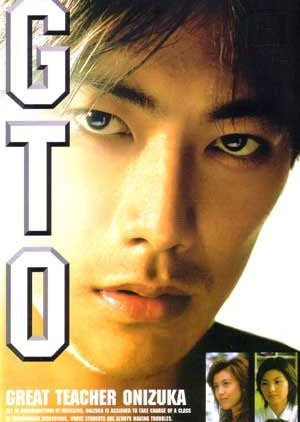
A few days ago the school year ended where I live, so (as a teacher) I was in the mood for educational vibes. As a result, I grabbed the TokyoShock DVD of Great Teacher Onizuka: The Movie (1999), the concluding chapter of the popular FujiTV drama of the same name that was based on a manga by Tooru Fujisawa.
Release Info
Directed by: Masayuki Suzuki Starring: Takashi Sorimachi, Norika Fujiwara, Rena Tanaka
Language: Japanese Original Title:  グレート・ティーチャー・オニヅカ ,  Runtime:108 min
Synopsis
Eikichi Onizuka (Takashi Sorimachi) arrives in the city of Horobai in the Hokkaido region. The city used to be prosperous in the 1980s, but it was economically driven to the ground by the local businessman Katsuragi (Isao Natsuyagi). Onizuka teaches a class in which a boy, Seiji (Zen Kajihara), is in love with Katsuragi’s daughter Ayano (Rena Tanaka). The problem is that Ayano is hated by other students for her father’s actions. Onizuka, while being on the run from the police and a local journalist (Norika Fujiwara), steps into action.
GTO on the Road
Allow to me clarify at first that if you haven’t seen anything from the franchise of Great Teacher Onizuka, then this movie is not a good place to start. The best place to begin your journey is the 12-episode drama + special episode. This was my introduction into the realm of GTO and I couldn’t be a better one. Even though the drama is 25(!) years old, it can still grab you by the heart with its engaging storylines, amazing acting, and kick-ass music score.
This brings me right to the disadvantages of GTO: The Movie because it lacks all of the aforementioned assets of the drama that came before it. What is more, it is not a cinematic experience at all. Well, it is at least in terms of technical aspects because it was shot on film and in widescreen format with the neat aspect ratio of 1.85:1. However, in terms of screenplay, the movie feels like yet another rehashed special episode.
For all intents and purposes, GTO: The Movie is a directionless picture that plays things safe so as to grab the cash from fans of the drama. There is not enough character growth to make me care for stone-cold students with whom Onizuka interacts, let alone Onizuka himself who does crazy stuff just because he is cool, not because he has motivation to be the best teacher he can be for his students (as he demonstrated in the series).
That being said, I did enjoy the banter sequences between Onizuka and a local journalist. The action stuff okay, but the lack of Poison theme until the end credits made everything feel stale. In addition, I appreciate the fact that the crewmembers shot the living crap out of this film on actual location.
With regard to performances, no matter what, I will always regard Takashi Sorimachi as the definitive incarnation of GTO. The man was born to play this part. Norika Fujiwara is fine as a comic-relief character, but thankfully she is not a love-interest replacement for Nanako Matsushima. Also, the leads are backed by FujiTV’s finest veterans of the 1990s, such as Masahiro Komoto, Masahiko Nishimura, Ito Toshihito, Kazue Tsunogae, and Keiko Toda.
The DVD version I have also contains 15 minutes of bonus features, including trailers and interviews with the cast and crew. Interestingly, Takashi Sorimachi stated that he was very calm while shooting the picture, even though he was very stressed when making the drama. Norika Fujiwara complained about the amount of running she had to do in the film, and also explained that this was her second feature as Cat’s Eye (1997). Surprisingly, Rena Tanaka spoke very seriously about her role, which makes me wonder whether or not she is a method actress.
Recommendations
All things considered, GTO: The Movie is not a decent film, but it is a so-so conclusion of the drama. You can watch it only if you want to pass the time somehow and you got tired of rewatching your batch of favourite Dragon Zakura episodes. That is it from me at the moment. Stay great like Great Teacher Onizuka.
Overall score: 6/10
«Enjoyed this post? Never miss out on future posts by following us»

Little Cheung (1999) [Film Review]

Little Cheung; or, The Age of Innocence
     I thought Little Cheung came to say goodbye. But he was chasing the ambulance. That was the end of your friendship and the end of our childhood. I will always remember my happy times with him in Hong Kong.
In the final movie of The Handover Trilogy, Little Cheung from 1999, Fruit Chan provides an autobiographical look at the life of a typical hardworking family. In the style similar to Edward Yang and Hirokazu Koreeda, he paints a portrait of children of Hong Kong.
Release Info
Directed by: Fruit Chan Starring: Yiu Yuet-Ming, Mak Wai-Fan, Yiu Yuet-Ming
Language: Cantonese Original Title: 細路祥 Runtime: 118 min
Synopsis

The story presents Little Cheung (Yiu Yuet-Ming) who leads an ordinary life with his working family in Hong Kong. Cheung’s grandmother (Chu Siu-Yau) enjoys watching the performances of a classic opera singer Brother Cheung, whereas the parents frequently clash with the neighbouring restaurant owners. Little Cheung soon befriends Fan (Mak Wai-Fan) who is an illegal immigrant. The girl starts helping Cheung in his food deliveries.
Hong Kong Citizens
Evidently, the protagonists are of the film are children. They may be poor, they may be working on the streets, but they remain unconcerned about grand historical events happening around them. One of the most interesting subplots of the film is Little Cheung and his grandmother’s obsessive fascination with a classic opera singer Brother Cheung. The Pilipino maid (Armi Andres) in the house accurately notices that the family would care more about the death of this singer rather than the death of Deng Xiaoping himself.
In this way, Fruit Chan communicates that being Chinese does not mean being an ideological communist by default. Communists do not understand ordinary life, which is reflected in yet another scene where Cheung together with his friends scream at Hong Kong downtown in the distance and say "Hong Kong is ours!"
Nevertheless, changes do take place in Little Cheung’s life. With the handover of power, Little Cheung’s childhood drastically comes to an end. He has to find his own voice in a new world. Ironically, in a twist similar to the conclusions of grand epics by Krzysztof Kieślowski, the protagonists of all three films encounter each other at the zebra crossing in the concluding scene of Little Cheung. After all, the citizens of Hong Kong constitute its future.
Recommendations
I highly recommend Little Cheung. It is a great conclusion of The Handover Trilogy. Unfortunately, as in the case of The Longest Summer, the movie to date has no Blu-ray release, so you need to fall back on DVD.
Overall score: 8/10
«Enjoyed this post? Never miss out on future posts by following us»

Gundress (1999) [Anime Review]

Gundress; or, Mecha Charlie’s Angels
     I lived according to your word. You were everything to me.Your eyes were like those of… a stray dog who had lost a fight. You were scared, and your isolation made you feel that no one loved you. I could understand how the world looked to those eyes. That’s why I was with you. But I misunderstood!
My exploration of good old cyberpunk anime goes on. This time I would like to discuss Gundress, an anime feature from 1999, to which Masamune Shirow contributed as character and mecha designer. Interestingly, the film generated a bit of controversy among anime fans. Well, let’s take a closer look at it.
Release Info
Directed by: Katsuyoshi Yatabe Voice actors: Masako Katsuki, Kumiko Watanabe, Akemi Okamura, Reiko Takagi, Rie Ishizuka, Tomoko Kawakami
Language: Japanese Original Title: ガンドレス Runtime: 85 min
Synopsis
Welcome to the future, it’s the year 2100 in a newly-built Bayside City, an international port. In order to fight off terrorism and smuggling operations, private military organisations step into action. The Angel Arms Company is one of them. It was founded by a former policewoman Takako (Masako Katsuki), and she leads the group composed of six former criminals who now enforce the law in special security suits. The team is ordered to protect an arms-dealer called Hassan (Minoru Inaba) because he might provide some vital information which will enable the authorities to bring down the big crime ring. However, crime lords try to strike back. They send Jean-Luc Skinner (Kenyuu Horiuchi) to kill Hassan. It turns out that the assassin is a former lover of Angel Arms pilot, Alissa (Rie Ishizuka).
At the Edge of Cybernet
I have to say that I checked out Gundress completely without having the knowledge of its troubled production. I think it was for the best. At first glance, Gundress seems to be a small-budget OVA from the late 1980s, similar in production value to Shirow’s other anime project, Black Magic M-66 (1987). However, it appears that Gundress had large financial resources and the backing of a major Japanese studio (Nikkatsu). What is more, it was intended to be a theatrical(!) release. As a result, when comparing Gundress to other sci-fi classics released in cinemas (Akira (1988), Ghost in the Shell (1995)), one can clearly see that something went horribly wrong in the making process.
It cannot confirm this rumour, but (allegedly) moviegoers were given leaflets on the premiere day saying that the film is unfinished and the studio will send them a home video copy later on… I could not find out more about behind-the-scenes drama of Gundress, but undeniably the animation studio could not handle this project properly.
Putting these revelations aside, I have to say that Gundress works well as an OVA played at home on your DVD player. It tries to be as wacky as Dominion Tank Police (1988) and as serious as Ghost in the Shell (1995). In addition, I enjoyed the concept of Charlie’s Angels fighting the bad guys in mechas. Masamune Shirow’s designs are always a pleasure to look at.
What is more, Gundress features an ensemble cast of legendary voice actresses: Masako Katsuki, Kumiko Watanabe, Akemi Okamura, Reiko Takagi, Rie Ishizuka, and the late Tomoko Kawakami. It is worth watching this anime feature, just to listen to their performances.
Recommendations
All things considered, Gundress is harmless fun, but not anything exceptional. If you happen to find it on a cheap DVD, then go ahead and grab it. Certainly, it is not worth the price of a cinema ticket. In my opinion, the storyline would have worked better in the form of a short series rather than a 90-minute picture.
Overall score: 6/10
«Enjoyed this post? Never miss out on future posts by following us»

Godzilla 2000: Millennium (1999) [Tokusatsu Review]

Godzilla 2000: Millennium; or, To the Future and Beyond
     Biologically, Godzilla is a very special existence. It's full of unimaginable mysteries. To study Godzilla will be the key to disclose the secrets of living beings on our planet.
Being fired up by my frenzy regarding Godzilla vs. Kong (2021), I decided to go back and revisit the good old Kaiju flicks with our favourite King of the Monsters. My first choice of revisitation became Godzilla 2000: Millennium, a movie that owes its existence to the abhorrent American remake from 1998.
Release Info
Directed by: Takao Okawara Starring: Takehiro Murata, Naomi Nishida, Shiro Sano, Hiroshi Abe
Language: Japanese Original Title: ゴジラ2000 ミレニアム Runtime: 108 min
Synopsis
Godzilla has become a permanent part of Japan’s geo-cultural landscape. Instead of fighting the monster, the authorities prefer to monitor his whereabouts. As a result, the scientist Yuji Shinoda (Takehiro Murata) and his daughter launch an independent organisation known as The Godzilla Prediction Network. During their observational stake-outs, they are accompanied by Yuki Ichinose (Naomi Nishida), a journalist who wants to get exclusive pictures of the King in action. In the meantime, Crisis Control Intelligence headed by Mitsuo Katagiri (Hiroshi Abe) examines an unidentified object which was found at the bottom of the ocean. Shinoda’s friend, Miyasaka (Shiro Sano), determines that the object is 65 million years old and remained dormant until it was exposed to sunlight. The object flies out of water and scans Godzilla, reaching a conclusion that he is the most powerful being on the planet. The UFO plans to invade Earth by replicating Godzilla’s DNA...

Predestination
After the emotional finale of the Heisei series, Godzilla vs. Destoroyah (1995), Toho wanted to retire the Big G and make way for a (supposed) string of American movies produced by TriStar Pictures. Godzilla producer and the president of Toho, Shogo Tomiyama, was convinced that the American Godzilla series will last up until the year 2005; however, after the disastrous release of the Emmerich’s movie, Toho wanted to protect the legacy of Godzilla, so they greenlit a new Japanese production almost immediately.
Godzilla 2000: Millennium was undoubtedly made in a rush and by a team behind the Heisei movies. Takao Okawara was brought back as the director, Shogo Tomiyama produced, and Hiroshi Kashiwabara (scriptwriter of Godzilla vs Spacegodzilla (1994)) and Wataru Mimura (scriptwriter of Godzilla vs. Mechogodzilla (1993)) wrote the screenplay. What is more, the main lead, Takehiro Murata already appeared in a supporting role in Godzilla vs. Mothra (1992).
This is not to say that the movie is an uneventful, tired leap of the King into the 21st century. The filmmakers clearly wanted to reintroduce as well as update the iconic character. Godzilla was given a new look and a remixed roar. To me, this is my favourite Goji-suit out of all movies. The film also marks the first appearance of the suitmation actor, Tsutomu Kitagawa, as Godzilla.
In terms of special effects, these were helmed by Kenji Suzuki who opted for the usage of digital compositing rather than traditional models. The result is kind of a mixed bag. Some of the sequences look absolutely great, but others are visibly outdated. Still, huge respect goes to the F/X team for trying to push the envelope so early on in the franchise.

As for the screenplay, we get a traditional monster rumble, but in contrast to previous entries of the series, the human drama is fairly enjoyable. I liked the chemistry between Shinoda, his daughter, and Yuki. There’s also the character of Miyasaka who seems to have a bromance attraction to Shinoda, but he restrains himself because he works for villainous Katagiri, a guy hellbent on annihilating Godzilla. Some of the technobabble in the story is barely understandable, but I liked the twist involving an alien race attempting to create their “own Godzilla”.
The music score was composed by Takayuki Hattori (who also scored Godzilla vs. Spacegodzilla). Like I said in my editorial series on Godzilla music, the OST for this particular movie is fine, but I prefer Hattori’s compositions for the anime trilogy.
With regard to performances, all of the main leads do a fine job, but the real show-stealer is the awesome Hiroshi Abe as the baddie. His “Godzilla!!!!!!” moment in the finale has engraved itself into the hall of fame of the most iconic Godzilla scenes. I’m also happy to see Naomi Nishida because she does not normally do tokusatsu flicks at all.

Interestingly, Godzilla 2000: Millennium was re-released in the U.S by Sony. Producer Mike Schlesinger and his team tried the best they could to re-cut and dub the film in a way that will not be disrespectful towards Toho and Godzilla fans. Consequently, the English version is indeed watchable, but I still prefer the original cut. Originally, the English movie ended with a cartoonish “The End?” card, but it was removed from subsequent releases. However, if you happen to own Godzilla 2000 on Spanish VHS, then you can enjoy this piece of lost cinematic trivia.
Recommendations
All things considered, this was my look at Godzilla 2000: Millennium. For many young fans in the early 2000s, this was their first introduction into the franchise (well, this and the Emmerich movie…). I personally have a soft spot for it. It is a decent monster flick that can be enjoyed even by non-kaiju viewers.
Overall score: 8/10
«Enjoyed this post? Never miss out on future posts by following us»

Ring: Saishushou [Ring: The Final Chapter] (1999) [Drama Review]

Ring Saishushou; or, Race Against Time
     Why must you hate mankind? Even till now, there’s someone who loves you with all his heart. You didn’t expect it?
Right after the premiere of Hideo Nakata’s Ringu in 1998, the Ring craze took Japan by the storm. In spite of a sequel (more about it soon) released by Toho simultaneously with the original, FujiTV commissioned a TV drama. Ring: Saishushou, also known as Ring: The Final Chapter, is a 12-episode-long adaptation of Koji Suzuki’s famous novel. If counting the preceding films, Ring: Kanzenban and Ringu, then Ring: Saishushou is actually the third re-telling of the novel since its publication in 1991.
Release Info
Directed by: Fukumoto Yoshito, Hidetomo Matsuda, Yoshihito Fukumoto Starring: Toshiro Yanagiba, Tomoya Nagase, Kotomi Kyono, Hitomi Kuroki
Language: Japanese Original Title: リング ~最終章~ No. of eps: 12
 
Synopsis
Kazuyuki Asakawa (Toshiro Yanagiba) is a newspaper reporter who investigates the case of teenagers who died simultaneously in various places due to myocardial infarction. He arrives at a cabin in the countryside and finds the VHS tape which was viewed by the teenagers. The tape turns out to be… a music video by a pop idol Nao Matsuzaki. With the help of a specialist in paranormal phenomena, Ryuji Takayama (Tomoya Nagase), Asakawa discovers that the video contains a hidden, subliminal curse which causes people to die 13 days after watching it. Together with a fellow reporter, Akiko Yoshino (Kotomi Kyono), and a scientist, Reiko Miyashita (Hitomi Kuroki), Asakawa sets out on a search to find a person behind the curse…
 
Sadako Ain’t Letting It Go
As some other blogger rightfully stated in his review of the drama, each entry in the Ring franchise is bound to be compared with Hideo Nakata’s acclaimed work. It is understandable, in my opinion; however, every Ring adaptation should also be set against its original source material, Koji Suzuki’s novel. The drama only seemingly resembles the literary work in its first few episodes. For example, Asakawa is, indeed, a male reporter, but he is also a widower in this version who single-handedly raises a son. The tape is at first turned into a joke, with its true contents only to be revealed later. In addition, the curse’s time span is stretched so as to accommodate new characters and their subplots.
 
I don now want to get into the spoiler territory, so just let me say that the liberties this drama takes to change the story are not outrageous or particularly bad. In fact, they actually seem to work. I love the new take on the VHS tape and the search for Sadako in this series. We do get to know a lot of details about her life this time, and even some relatives pop up for a moment. Sadako herself (played brilliantly by Tae Kimura) does not do her iconic “coming out of a TV” gig, but she has a whole set of other haunting tricks (for instance, telepathic communication or materialising through a sink).
 
Unfortunately, it is obvious that this drama was made on a tight budget, so do not expect any spellbinding special effects. The only disadvantage that really struck me was an underworked music score which was painfully overused in the key scenes.
 
What I appreciated the most in this adaptation is that it really focused on an aspect from the novel that was conveniently omitted by the movies. Namely, a scientific explanation is implied behind Sadako’s curse. The VHS is merely a stimulant which initiates a virus in bodies of poor people who watch it. By the way, I was surprised to find out that Nao Matsuzaki is a real J-singer. Way to go with promoting your brand via Ring!
 
With regard to performances, Toshiro Yanagiba at first seems to be ardently working on material that was not written for him, but with each consecutive episode he begins to own the part (best confrontation-in-the-well scene in the franchise!). Tomoya Nagase is a worthy addition; however, he gets sidelined halfway through the series. Kotomi Kyono and Akiko Yada are a-okay as an annoying reporter and a distressed sister, respectively. A wonderful icing on the cake is Hitomi Kuroki as a scientist who tries to find a cure for the Ring Virus.
 
Recommendations
If you are as equally obsessed as me about checking out Ring adaptations, then Ring: Saishushou is the stuff for you. You can easily check it out on Youtube. I would not label the drama as scary, but it undoubtedly has the right atmosphere and a few very creepy moments. I’m really keen on watching FujiTV’s follow up to this series, which is Rasen (1999), the adaptation of Suzuki’s second Ring novel.
Overall score: 8/10