Showing posts with label school. Show all posts

Was Great Teacher Onizuka Right? [A Personal Perspective]

 
We cannot go back to the past, no matter how hard we try. No matter how wonderful it was. The past is nothing but the past. ~ Eikichi Onizuka
 
Hello and welcome to my first blog post of 2024 after a long-ish, six week break. First of all, I feel that I need to explain my absence. Evidently, I wanted to continue writing right after Christmas but a set of personal circumstances forced me to adjust my schedule. In addition, I did not have time (and I was not in the mood) to watch absolutely anything. In fact, throughout January, I managed to see some random stuff on TV and only one(!) movie, which was Amadeus (1984).
     What is more, there is one more important factor responsible for my absence that is connected with the topic of today’s editorial. That is to say, I have made a New Year’s Resolution to become a better teacher for my students. Yes, some of the readers may already know this from the context of my previous reviews and articles. I have been working as a high school teacher for two years now (previously I worked at a university), and it is a very challenging profession at times. Of course, everybody has a different perception of it, depending on their place of birth, but where I live, it is not a line of employment held in high esteem by society (but more on that later).
     The beginning of the current school year was particularly challenging for me. Apart from regular teaching, I got an increase in work hours, I became a homeroom teacher to a class of first graders, and I also had to oversee a team of new teachers in terms of bureaucratic paperwork. The period between September and November was very exhausting for me, and I didn’t feel like a teacher at all, but more like an administrative official who had to mediate his way between students, teachers, and principals.
     Thankfully, things did calm down towards the end of December and I had some time to recharge my batteries and think clearly. It was at that time when I made a firm decision to limit the overbearing paperwork to an absolute minimum and focus primarily on regaining that teaching spark. I even began to re-educate myself, looking for the latest information on classroom management techniques and learning/acquisition strategies other than traditional textbook cramming.
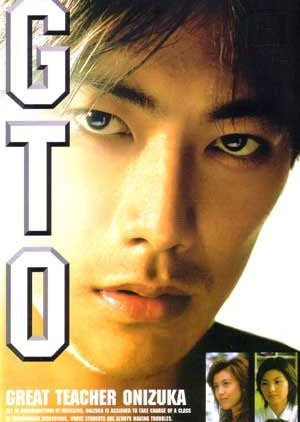
     This is where GTO comes in. For those of you who do not know, Great Teacher Onizuka is a popular Japanese franchise created by manga artist Tooru Fujisawa in 1997. It initially started with a 25-volume manga series that received subsequent continuations and iterations in other media. In 1998, it was turned into a J-Drama. In 1999, there was a theatrical movie as well as a 43-episode anime series. In 2012, GTO was remade again as a J-Drama by Fuji TV. The series tells the story of an ex-bosozoku gang member Eikichi Onizuka who barely finishes studies allowing him to become a teacher. He finds a job at a private middle school in Tokyo, and he is assigned to the most troublesome class. Nevertheless, Onizuka’s unconventional techniques quickly lead to changes in the mentalities of unruly students.
     To be honest, I am a fan of the whole franchise, but the 1998 series with Takashi Sorimachi stole my heart, and to date remains my favourite interpretation of GTO. I have been meaning to write about this drama on the blog for years, but I never felt I had anything innovative to say about this all-time classic. However, in this article, I would like to put it in perspective with regard to my work.
     Consequently, when I was scavenging the abyss of the internet in search of information that might help me on my teaching journey, I stumbled upon a reddit discussion about the validity of techniques used by Onizuka-sensei. This discussion really got me thinking. Evidently, Onizuka is this larger-than-life, too-cool-for-school character with a deep sense of morality overshadowed by typical manga wackiness. However, it is difficult to see him do any actual teaching in the series(!) Yes, sometimes in the drama we see him holding a coursebook for social sciences, so at least we know what subject he is supposed to teach, but that is it!
     Ultimately, Onizuka’s teaching purpose is about conveying life wisdom to his students. He is not teaching them hard theory, but how to live a life. In this manner, Onizuka is yet another fictional teacher in the pantheon of mentor characters like John Keating, Mark Thackeray, and William Hundert who always strived to inspire their students and often treated them like adults. Perhaps this is the most uplifting takeaway from GTO for any struggling teacher: Onizuka persistently broke the stale teacher/student power dynamic, going out of his way to show his students that he does not look down on them.
 
    Still again, “educational” techniques used by Onizuka to achieve his goal leave a lot to be desired. If I were to repeat them, I would certainly end up in jail for jeopardising the health and safety of my students by jumping off a roof, getting into a fight with bikers, busting into a student’s home with a sledgehammer, or playing chicken with a speeding truck. However, I wouldn’t mind wrecking the vice-principal's Toyota Cresta every week.
     Point of the matter is that you will not learn anything about classroom management techniques from GTO (you are better off watching Dragon Zakura instead); however, GTO teaches you about employing a different approach towards your students. Onizuka, in contrast to fellow peers in the teacher’s lounge, understands that teaching is actually a relationship game. Hating your students will not get you anywhere. You should make an effort and familiarise yourself with them, even when they are troublemakers. Remember their names, ask them about their interests. greet them at the beginning of every lesson, and say goodbye when they leave.
     Kindness doesn't cost much, but for many teachers in my country it is an impossible feat. I know from experience that many (not all) teachers here are just in it for the money. They often lack necessary knowledge to conduct a subject, let alone conduct a proper class with beginning, middle, and end. This situation only fuels students’ unwillingness to learn. I know I can’t change the world, but at least I can work on bettering myself.
     All things considered, the past six weeks of teaching were extremely rewarding for me. This is not the time and not the place to get into personal specifics, but my adjusted approach resulted in many unexpected, kind-hearted situations with my students, and I feel really proud because of that. My thanks go to my dear friend @penel from MDL who was willing to patiently hear my stories.
 
    So, coming back to the question of this editorial: Was Great Teacher Onizuka right? Well, he was definitely right about changing your perspective and attitude to your students. And this made me like the character even more. Thank you for sticking by, I did not think this editorial would be so long. Next week, I will try to write something related to Cowboy Bebop (hopefully)!
«Enjoyed this post? Never miss out on future posts by following us»

GTO: The Movie (1999) [Film Review]

GTO: The Movie; or, Canada Village
     I am a teacher with a mission!
A few days ago the school year ended where I live, so (as a teacher) I was in the mood for educational vibes. As a result, I grabbed the TokyoShock DVD of Great Teacher Onizuka: The Movie (1999), the concluding chapter of the popular FujiTV drama of the same name that was based on a manga by Tooru Fujisawa.
Release Info
Directed by: Masayuki Suzuki Starring: Takashi Sorimachi, Norika Fujiwara, Rena Tanaka
Language: Japanese Original Title:  グレート・ティーチャー・オニヅカ ,  Runtime:108 min
Synopsis
Eikichi Onizuka (Takashi Sorimachi) arrives in the city of Horobai in the Hokkaido region. The city used to be prosperous in the 1980s, but it was economically driven to the ground by the local businessman Katsuragi (Isao Natsuyagi). Onizuka teaches a class in which a boy, Seiji (Zen Kajihara), is in love with Katsuragi’s daughter Ayano (Rena Tanaka). The problem is that Ayano is hated by other students for her father’s actions. Onizuka, while being on the run from the police and a local journalist (Norika Fujiwara), steps into action.
GTO on the Road
Allow to me clarify at first that if you haven’t seen anything from the franchise of Great Teacher Onizuka, then this movie is not a good place to start. The best place to begin your journey is the 12-episode drama + special episode. This was my introduction into the realm of GTO and I couldn’t be a better one. Even though the drama is 25(!) years old, it can still grab you by the heart with its engaging storylines, amazing acting, and kick-ass music score.
This brings me right to the disadvantages of GTO: The Movie because it lacks all of the aforementioned assets of the drama that came before it. What is more, it is not a cinematic experience at all. Well, it is at least in terms of technical aspects because it was shot on film and in widescreen format with the neat aspect ratio of 1.85:1. However, in terms of screenplay, the movie feels like yet another rehashed special episode.
For all intents and purposes, GTO: The Movie is a directionless picture that plays things safe so as to grab the cash from fans of the drama. There is not enough character growth to make me care for stone-cold students with whom Onizuka interacts, let alone Onizuka himself who does crazy stuff just because he is cool, not because he has motivation to be the best teacher he can be for his students (as he demonstrated in the series).
That being said, I did enjoy the banter sequences between Onizuka and a local journalist. The action stuff okay, but the lack of Poison theme until the end credits made everything feel stale. In addition, I appreciate the fact that the crewmembers shot the living crap out of this film on actual location.
With regard to performances, no matter what, I will always regard Takashi Sorimachi as the definitive incarnation of GTO. The man was born to play this part. Norika Fujiwara is fine as a comic-relief character, but thankfully she is not a love-interest replacement for Nanako Matsushima. Also, the leads are backed by FujiTV’s finest veterans of the 1990s, such as Masahiro Komoto, Masahiko Nishimura, Ito Toshihito, Kazue Tsunogae, and Keiko Toda.
The DVD version I have also contains 15 minutes of bonus features, including trailers and interviews with the cast and crew. Interestingly, Takashi Sorimachi stated that he was very calm while shooting the picture, even though he was very stressed when making the drama. Norika Fujiwara complained about the amount of running she had to do in the film, and also explained that this was her second feature as Cat’s Eye (1997). Surprisingly, Rena Tanaka spoke very seriously about her role, which makes me wonder whether or not she is a method actress.
Recommendations
All things considered, GTO: The Movie is not a decent film, but it is a so-so conclusion of the drama. You can watch it only if you want to pass the time somehow and you got tired of rewatching your batch of favourite Dragon Zakura episodes. That is it from me at the moment. Stay great like Great Teacher Onizuka.
Overall score: 6/10
«Enjoyed this post? Never miss out on future posts by following us»
School in the Crosshairs (1981) [Film Review]

School in the Crosshairs; or, All of Us Are Aliens
     Stars...you can see so many stars in this universe.
Welcome to the concluding part of my journey through Nobuhiko Obayashi’s Kadokawa productions, which were recently released by Third Window Films. I realise that School in the Crosshairs is chronologically the first movie which Obayashi made for the idol-centered studio, but I saved this review for the last course because it is my least favourite one of the bunch. Without further ado, let’s jump into the discussion.
Release Info
Directed by: Nobuhiko Obayashi Starring: Hiroko Yakushimaru, Masami Hasegawa, Toru Minegishi
Language: Japanese Original Title: ねらわれた学園 Runtime: 90 min
Synopsis
Yuka Mitamura (Hiroko Yakushimaru) is a middle school student who suddenly discovers that has psychic powers. Nevertheless, another girl called Takamizawa (Masami Hasegawa), obviously being under the influence of a mysterious intergalactic being, also displays psychic abilities, and uses them to impose a military regimen at school. Yuka stands in defence of oppressed students, and humanity on the whole. She has to face off against a villainous creature from Venus known as Kyogoku (Toru Minegishi).
The Psychic Club
Allow me to clarify right off the bat that I consider School in the Crosshairs to be my least favourite Obayashi movie made for Kadokawa, but it does not mean I dislike it. Given the circumstances, the budget, the idol cast, and the source material (a novel by Taku Mayumura), the director gave his best effort to make a fantasy movie, which touches upon some very important themes.
The problem with School in the Crosshairs is that the pacing is erratic and the themes in question are not entirely fleshed out. The alien invasion, which subsequently results in a radical change of school life, echoes Obayashi’s own childhood during World War II, when he was constantly indoctrinated by imperialist propaganda about the might of the Japanese Empire. Interestingly, Mitamura and her colleagues’ personal struggles at school can serve as a metaphor for the so-called “juken jikoku” phenomenon; that is, “exam hell” in Japan.
Needless to say, Obayashi deeply criticises in his story the herd mentality and favours independent action. This culminates in the bombastic finale filled with outstanding visual extravaganza, in the course of which Mitamura single-handedly fights off against an alien invader who turned her friends into mindless drones. The heroine manifests her objection against not only brainwashing, but also the modern conditioning of students to blindly follow authority and the educational system.
Consequently, I appreciate the messages which Obayashi tried to convey in this motion picture, but these are unfortunately hidden under layers of composite shots and rotoscope animation, which to date make an impression on the Western enthusiasts of Japanese Cinema, but also steal away that antiwar sentiment which Obayashi was so keen on putting in his movies since House (1977).
With regard to performances, School in the Crosshairs marks the first (and the last) time when Obayashi worked with the idol gem of Kadokawa studio: Hiroko Yakushimaru (before her big breakthrough with Sailor Suit and Machine Gun). Hiroko does a great job as the female lead, and I dare to say that she would have been a better fit to play the heroine in The Island Closest to Heaven than Tomoyo Harada. (Interestingly, Harada played Yakushimaru's part in FujiTV's drama adaptation of School in the Crosshairs). Ryoichi Takayanagi’s appearance as the love interest is a given because this is in a Kadokawa movie after all, and the actor is just there, nothing more, nothing less. However, my words of praise go to Masami Hasegawa for playing the villainous student, and the always-wonderful Toru Minegishi for appearing as the boss villain.
Recommendations
All things considered, if you want to experience a bizarre mash-up of teenage romance and fantasy, then I recommend School in the Crosshairs. The Third Window release has such bonus features as an original theatrical trailer, selected audio commentary by Aaron Gerrow, and translation notes by Owen Baron.
Overall score: 7/10
«Enjoyed this post? Never miss out on future posts by following us»

All of Us Are Dead (2022) [Drama Review]

All of Us Are Dead; or, Too Cruel for School
     Listen carefully. You know how to play tag, right? We're all hiding here to get away from someone. But now... you're it.
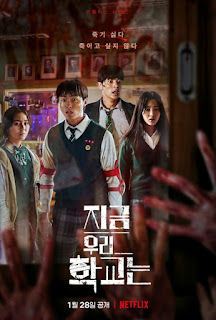
All of Us Are Dead is the latest South Korean zombie series which premiered on Netflix at the end of January, 2022. Based on a webtoon series created by Joo Dong Geun, the 12-episode drama delivers a high level of zombie insanity within the school setting. Yet, the viewing experience is not without flaws.
Release Info
Directed by: Lee Jae Gyoo, Kim Nam Su Starring: Park Ji Hoo, Yoon Chan Young, Jo Yi Hyun, Lomon
Language: Korean Original Title: 지금 우리 학교는 No. of eps.: 12
Synopsis

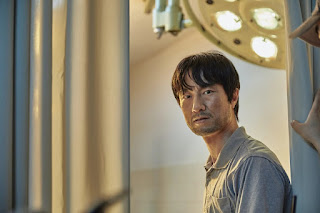
A former worker of a pharmaceutical company, Lee Byeong Chan (Kim Byung Chul) currently works as a life science teacher at Hyosan High School. In order to protect his son, the scientist has developed a deadly virus which basically takes control over its host and amplifies primal instincts. In other words, those infected are driven by the sole will to survive. Unfortunately, one of the students gets bitten by Lee Byeong Chan’s lab rat. This turns the Hyosan High School into ground zero for a zombie virus outbreak. Students in distress will have to fight their way through in order to stay alive.
The School Job
I have to say that I am fairly open to the zombie genre in general and I do not mind suspending my disbelief when clichéd situations kick in (*#Alive and Peninsula flashbacks*). However, All of us Are Dead, albeit extremely fast-paced and entertaining, did not click with me in a lot of places.
My major issue with this drama is its inconsequentiality. Zombie flicks are always driven by a set of specific rules and All of Us Are Dead is no exception from that. The problem arises when these rules are bent or done away with just to push the story further. For instance, the virus is transmitted by the act of an infected person biting a healthy person. It is said in the show that zombie transformation lasts approximately 10 minutes, but sometimes it is just 30 seconds and voilà! Some characters get to say a whole monologue in their last moments or they are able to sacrifice themselves in a glorious battle, others; unfortunately, catch one breath and become red-eyed monsters.
One more example (without giving away major spoilers): By logic, it is safe to assume that a character infected with a mutated strain of the virus would transmit that particular strain, but this does not always work out either. I understand that the screenwriters wanted to avoid getting cornered by these zombie rules, but some of these critical moments in the drama were so baffling that I was unable to suspend my disbelief. In addition, not giving the main heroes at least some nutrition plus water and expecting them to jump, kick, and fist fight all the time is unforgivable.
Still, there are many things I appreciate in All of Us Are Dead. The episodic form allowed to develop the mystery of the virus: what were its origins and how it mutated. This in turn had a great impact on the philosophical side of the story: nihilism vs. struggle to survive, school abuse vs. parental love, children distrusting adults, and the needs of the many vs. the needs of the few. All of it is present on the screen and it is awesome to see how these themes play out in the drama. What is more, All of Us Are Dead gives a thoughtful commentary on modern-day issues connected with the pandemic.
In terms of action, this show just does not let go. It takes many cues from Train to Busan (2016), and even references the movie, yet the drama does not go to extremes. That is to say, we will not see here zombies amassing on top of each other and creating huge living walls out of themselves. These zombies are more straightforward: they react to sound and relentlessly try to grab a bite.
With regard to heroes, there are so many of them that it is really hard to identify with and cheer for particular individuals. They just do not get fleshed out properly. Still, the main focus is on On Jo (Park Ji Hoo) and Cheong San (Yoon Chan Young). Personally, I think the love subplot works okay in the drama, but the characters which absolutely rock in this regard are Su Hyeok (Lomon) and Nam Ra (Jo Yi Hyun). Nam Ra in particular is awesome because of her story arc which is very similar to the trope of a misunderstood monster, like Frankenstein. Additionally, my fave characters are the supporting ones, like Ha Ri (Ha Seung Ri), Jun Sung (Yang Han Yeol), Mi Jin (Lee Eun Saem), and Min Jae (Jin Ho Eun) #ArcheryTeam4Life! I have also enjoyed a subplot centering on Eun Ji (Oh Hye Soo), but sadly it went completely nowhere.
As for the performances, the majority of young actors and actresses did awesome. I am sure that this drama will kick start acting careers for most of them. Park Ji Hoo obviously shines as she gets most of the screen time, but I also loved Jo Yi Hyun, Lim Jae Hyeok, Lee Eun Saem. They gave the most vibrant performances. With regard to veteran actors, Kim Byung Chul dominates the screen as the mad scientist, Jeon Bae Soo is heartbreaking as a father trying to save his daughter, whereas Bae Hae Seon delivers a reserved but memorable performance of a National Assembly Member. Forgive me if I have not mentioned your favourite artist, but the cast of this drama is so damn extensive!
Recommendations
In spite of obvious, script-driven shortcomings, All of Us Are Dead is a generally pleasing thrill ride. I give it a strong 7/10 because of the action, amazing performances, and the final episode which wraps things up in a heart-warming way. Many viewers complain that the series ends with a cliff-hanger, but I dare to say that, to me, it is a complete ending but with a possibility of continuation woven into it. In view of the fact that the series had a strong opening on Netflix, I am positive that the announcement of a second season is only a matter of time. Thank you for reading. Stay safe and avoid these manic lab rats!
Overall score: 7/10
«Enjoyed this post? Never miss out on future posts by following us»

The Family Game (1983) [Film Review]

The Family Game; or, Keeping Up with the Numatas
     Why do we have to sacrifice so much for the sake of our children?
Yoshimitsu Morita’s Kazuko Gemu movie from 1983 is widely hailed by Japanese critics as the truly postmodernist motion picture made in Japan. It is hard to disagree with this categorisation. The film presents a very quirky take on the family unit and its degradation within the “bubble era” reality of Japan of the 1980s.
Release Info
Directed by: Yoshimitsu Morita Starring: Yusaku Matsuda, Ichirota Miyakawa, Saori Yuki, Juzo Itami
Language: Japanese Original Title: 家族ゲーム Runtime: 106 min
Synopsis
Katsu Yoshimoto (Yusaku Matsuda) is hired as a private tutor to help Shigeyuki Numata (Ichirota Miyakawa) who has low grades at school. The two meet regularly at the Numata household and Yoshimoto quickly discovers that his student does not care about studying at all, in contrast to Shigeuki’s older brother, Shinichi (Junichi Tsujita). The mother, Chikako (Saori Yuki), is too subtle and soft when dealing with her children; whereas the father, Kosuke (Juzo Itami), is way too strict. Yoshimoto presses on and attempts to turn Shigeyuki into an exemplary student.
All in the Family
After looking at the filmography of Yoshimitsu Morita, it seems that the director was a specialist at slice-of-life dramas. The Family Game is no exception as it focuses on family members who are desperately focused on performing their social roles without really putting emotions into it. Everything that matters is to “keep up appearances” of being exemplary members of the society: a hardworking breadwinner, a devoted housewife, gifted children.
The theme of meaninglessness is introduced with the character of Shigeyuki who does not see any purpose in learning at all; however, he begins to improve at school not because of the guidance of his tutor, but because he treats it like a game that angers his bullies…
In addition, we can also observe some interesting sequences which would not be present in a regular school drama done in the style of GTO (1997) or A Class to Remember (1993): transitions between the rooms of Shigeyuki and Shinichi, Yoshimoto chasing Shigeyuki down the staircase, or having a dinner at super short table. Such moments add the factor of the unreal to the story which basically has no resolution.
I am not a huge fan of postmodernist tales, but I have to admit that The Family Game did manage to keep me interested from beginning to the end. I rooted for the mom and her difficult situation in the house, but I also wanted to see how Shigeyuki’s affairs at school will unfold. Yoshimitsu Morita skillfully dissects the emptiness of family relations, which is exposed in the final scene of the film.
With regard to performances, Yusaku Matsuda steals the movie with his performance as a tutor. It is mind-blowing to think that the last film he ever did before passing away was Ridley Scott’s Black Rain from 1989. Additionally, I loved the appearances of Saori Yuki and Juzo Itami (didn’t recognise him at first!) as the parents. Come to think of it, The Family Game is devoid of typical Itami humour, but it definitely has the satirical touch which is present in all of his movies.
Interestingly, the movie served as a source of inspiration for a 2013 drama of the same title. I have only seen the first episode of the show, and the overall tone of the story is radically different. The tutor character played by Sho Sakurai definitely seems to be the main protagonist.
Recommendations
If you want to experience early postmodernist vibes of Japanese culture, apart from Haruki Murakami novels, then I recommend The Family Game. It is quite an interesting film for what it is. Worth checking out just to see the 1980s aesthetics on the screen.
Overall score: 7/10
«Enjoyed this post? Never miss out on future posts by following us»

Battle Royale 2: Requiem (2003) [Film Review]

Battle Royale 2: Requiem; or, Extreme Measures
      You may be lonely, but it's time to stop being afraid. To all the abandoned children on earth, Let's rise up together and fight together!
Continuing my adventure with Battle Royale (2000), this week, I take a look at the controversial sequel called Battle Royale: Requiem. Arguably, this movie has just as many haters as admirers. The story was penned single-handedly by Kenta Fukasaku, without any reliance on Koshun Takami’s source material. The end result is, in my opinion, a movie that struggles to distance itself from the father picture while inevitably repeating the tropes which made the original so successful. This is my review of Battle Royale 2: Requiem.
Release Info
Directed by: Kenta Fukasaku, Kinji Fukasaku Starring: Tatsuya Fujiwara, Shugo Oshinari, Ai Maeda, Anna Sakai
Language: Japanese Original Title: バトル・ロワイアルII 鎮魂歌 Runtime: 133 min
Synopsis
Three years after the events from the previous film, we see Shuya Nanahara (Tatsuya Fujiwara) as the leader of the terrorist organisation called Wild Seven. The terrorists declared war against oppressive governments and adults in general. Teenagers from Shikanotoride Junior High School are abducted by Japanese authorities and their teacher (Riki Takeuchi) forces them to participate in a new Battle Royale game. This time, the ultimate goal is to hunt down and kill Nanahara Shuya. They are sent on a deserted island and, after suffering heavy losses, they eventually face the elusive survivor of the previous Battle Royale.
More Battle Less Royale
After the enormous success of Battle Royale in 2000, Toei commissioned a sequel with Kinji Fukasaku returning in the directorial chair. However, the director’s untimely passing at the beginning of the production resulted in Kenta Fukasaku, the director’s son and screenwriter of both Battle Royale films, taking over the project.
The primary disadvantage of Battle Royale 2 are overdone action set pieces. At times, it seems as the movie forgets that it is Battle Royale 2 and turns into Saving Private Ryan 2.
Way too much bombastic action and blood (obvious attempt at pleasing horror fans) really put you off from the viewing experience.
In an attempt to become a meaningful story, the script contains not only strong anti-American sentiments, but also hammers down leftist ideology. This is especially visible in the scene when Shuya enumerates with great respect all the communist-oriented governments across the globe, framing their “revolutions” as the paragon of change that should occur all over the world. This is the moment when the film completely lost my attention. The sequel throws out the window the message from the first film about suffering and oppression, and replaces it with the Marxist manifesto.
I also didn’t like how Shuya Nanahara was basically turned into a Peter Pan in this film. At the end of the previous picture, we see him running away with Noriko (her character appears only towards the end of the sequel) to start a new life. However, now we see him as a terrorist hell-bent on killing adults. Well, he and his comrades will eventually become adults as well, so… Let’s just say that Battle Royale 2 has a lot of plot holes.
This is not to say that there were not things that I liked. In particular, the new class was great. The students felt more vivid and better fleshed out than in the first Battle Royale. I genuinely rooted for them and felt sad when some of the principal characters died in agony. In addition, I loved the subplot involving Kitano’s daughter, Shiori (Ai Maeda). This should have been the main focus of the story, but instead, the filmmakers went with Shuya’s plan to conquer the world. Furthermore, the music score composed by Masamichi Amano was also magnificent.
Wonderful performances of the lead actors: Tatsuya Fujiwara, Ai Maeda, Shugo Oshinari, and Ayana Sakai deserve praise. Nevertheless, Riki Takuechi is a joke as the homeroom teacher. Maybe it is not entirely the actor’s fault. Maybe it is due to directorial instructions, but I could not take his overacting seriously. Sonny Chiba, on the other hand, (who appears in only one flashback scene) would have been better in this role.
Recommendations
The director’s intention was to make a controversial movie and, indeed, he achieved his goal. I recommend Battle Royale 2 only as a passing trivia from the history Japanese cinema. You can check it out for one time, but I doubt that you will find this sequel as a satisfactory conclusion of Battle Royale. Like I said in my previous review, the original movie is so perfect that a remake is unnecessary. Let me just add, that a sequel is unnecessary as well. With such a cult story, the follow-up will always end up being inferior. That does not mean, however, that Battle Royale 2 is riddled only with flaws. There are some positives, but they transpire just occasionally through a politically-charged script.
Overall score: 5/10
«Enjoyed this post? Never miss out on future posts by following us»