Woman in Witness Protection (1997) [Film Review]

Woman in Witness Protection; or, See no Evil, Hear no Evil
     It’s fine. It’s called acting.
The late director Juzo Itami always crafted his movies around the topical concerns which troubled society, and Woman in Witness Protection is no exception. This time, the main heroine (as always played by Itami’s wife, Nobuko Miyamoto) finds herself on the run from a vicious cult. As a matter of fact, Itami focused on the issue of religious cults as early as 1988 in A Taxing Woman’s Return, where an IRS agent investigates an insidious religious group that is suspected of tax evasion.
Release Info
Directed by: Juzo Itami Starring: Nobuko Miyamoto, Masahiko Nishimura, Takehiro Murata
Language: Japanese Original Title: マルタイの女 Runtime: 131 min
Synopsis

In Woman in Witness Protection, we follow Biwako Isono (Nobuko Miyamoto), a shallow and spoiled movie star. All of a sudden, she witnesses a gruesome murder of an anti-cult lawyer and his wife. In order to protect the actress from religious fanatics, the police provide her with specially trained witness protection officers until the trial. In the meantime, Biwako has to deal with various means of harassment and attempts to tarnish her public image.
All the World’s a Stage
To put it in simple terms, Woman in Witness Protection is Juzo Itami’s middle finger towards Aum Shinrikyo. By means of his usual black comedy style and brutal satire, the director exposes the fallacies of the cult and how it engages in domestic terrorism. The premise of the story is actually based on the real-life murder of Tsutsumi Sakamoto and his family. In addition, Itami can’t help himself but name Aum and Asahara in one of the interrogation scenes when police officers try to disprove the might of the glorious “Guru” by stating that he actually can’t levitate.
The movie is divided into appropriate sections (the murder, the investigation, the arrest, etc.) in order to present the sequence of events and how the law enforcement works. In the midst of all that we have Biwako Isono who is not entirely sure how she should behave as a witness, yet she has to maintain her acting profession while the cult is targeting her.
I believe that the closest equivalent of Woman in Witness Protection is Itami's Minbo (1992). That is, both films tackle controversial topics and have huge shifts in tone (comedic scenes are crosscut with dead serious sequences).
With regard to performances, Nobuko Miyamoto aces it once again by playing a highly energetic, outspoken, yet complex heroine. Words of appreciation also go to Masahiko Nishimura and Takehiro Murata as policemen protecting Nobuko’s character from numerous dangers. In addition, Masahiko Tsukgawa, another Itami’s regular, has a small but interesting role of Biwako’s love interest.
Recommendations
All in all, Woman in Witness Protection is a very clever comedy drama, but this is not to say that the film is free from ghastly sequences. In a Tarantino-like manner, Itami underlines the fact that nothing will stop religious fanatics from accomplishing their goals (even if it means threatening, bribery, or killing). It is quite a shame that this was the director's last movie before his untimely demise.
Overall score: 7/10
«Enjoyed this post? Never miss out on future posts by following us»

Crazy Thunder Road (1980) [Film Review]

Crazy Thunder Road; or, Falling Down
     I founded the Maboroshi group eight years ago. Now I'm one of its seniors. You should know I'm on your side. I'm right behind you guys who want to raise hell on your bikes. You beat the pseudo grown-ups any day. But listen, Jin... This way you'll end up wasting your energy.
When it comes to punk-charged aesthetics accompanied by outstanding cinematography and a strong critical comment on modern society, Gakuryu Ishii (also known as Sogo Ishii) is the go-to director. In this review, I am taking a look at his university “senior thesis” project called Crazy Thunder Road, a biker-gang classic that is about to be released for the first time in the West by Third Window Films
Release Info
Directed by: Gakuryu (Sogo) Ishii Starring: Tatsuyo Yamada, Koji Nanjo, Michiko Kitahara
Language: Japanese Original Title: 狂い咲きサンダーロード Runtime: 98 min
Synopsis
Ken (Koji Nanjo) is the leader of a Maboroshi biker group. He calls it quits because he wants to have a quiet life with his girlfriend Noriko (Michiko Kitahara). However, Jin (Tatsuyo Yamada) opposes the idea to merge the gang with another organisation, so he takes over the leadership. In order to preserve his individuality, Jin will have to fight against yakuza kingpins and ultra-nationalist militants.
Seize the Day and Set it on Fire
Even though Gakuryu Ishii was already known in Japan for the Panic High School (1978) movie he co-directed, Crazy Thunder Road got him into the showbiz of Japanese Cinema. The Toei executives were so impressed with the young filmmaker’s punk feature, which was made because, allegedly, he wanted to continue using university equipment, they have upscaled the original 16mm negative into a 35mm presentation and gave the movie a nationwide release.
In my opinion, Crazy Thunder Road has to be seen twice in order to be understood. You just don’t know what to expect from Gakuryu Ishii, the visionary who gave us The Crazy Family (1984), Angel Dust (1994), and August in the Water (1995). Crazy Thunder Road is a low-budget introduction into the cyberpunk genre made in Japan. That is to say, we have bosozoku characters but their manic attitude, especially Jin’s, is cranked up to the max. The nihilistic and industrialised atmosphere of the film gives off the feeling as if society is on the brink of destruction. Indeed, Jin himself is torn between chaos and order as we see him meandering between right-wing crazies and yakuza nutjobs. All in all, the only way out for the main hero is to oppose every kind of authority.
In many reviews, you can find Crazy Thunder Road being compared to Mad Max (1979) and The Warriors (1979). I believe that Midnight Eye team was spot on with their own analysis of the film when saying that Ishii’s feature, in terms of its basic yet efficient resourcefulness resembles Sam Raimi’s The Evil Dead (1981): “Both films are dazzling showcases of ostentatious film school experimentation coupled with an undeniably accomplished technical proficiency and razor-sharp editing” (source).
Personally, I would add that if it had not been for Crazy Thunder Road, there would not have been Akira (1988) in its present form. After watching Ishii’s bikes-and-guns epic, it becomes obvious that the film had an influence on Katsuhiro Otomo. The two even collaborated together on the adaptation of Otomo’s manga Run in 1981. What is more, the action-packed finale of Crazy Thunder Road predates the showdown between Deckard and Roy Batty in Blade Runner by two years!
In terms of disadvantages, the erratic pacing has to be addressed. Perhaps this is only my own reflection, but it seems as if a lot of the footage was, in fact, cut out in the editing process. At times, there is a strong prevalence that a certain scene is just missing as we see the characters jump from one location to another. Still, this uncanny feeling is compensated by the exhaustively dynamic performance of the late Tatsuyo Yamada as Jin.
Recommendations
If you seek for an unusual, anti-establishment motion picture from the hallmarks of film history, I recommend Gakuryu Ishii’s Crazy Thunder Road. It’s a 42-year-old university project that keeps on giving to this day. The Third Window Blu-ray release comes out on the 21st of February. Their edition includes a new master of the film approved by Gakuryu Ishii, new interview with the director, audio commentary by Tom Mes, and a video essay by Jasper Sharp on Jishu Eiga.
Overall score: 7/10
«Enjoyed this post? Never miss out on future posts by following us»

Too Hot to Handle- My Fave Tokusatsu Villainesses [Valentine's Day Special]

They are mean, they are bad to the bone, they want to rule the world, and they are ridiculously hot. Dear readers, in view of the fact that we have Valentine’s Day today, I decided to prepare something special for this occasion. That is to say, I invite you to go through a personal rundown of my favourite female villains from the vast realm of Tokusatsu.
 
7. Malshina
A few years ago, when I was at the beginning of my Tokusatsu adventure, I would have probably placed Malshina at no. 1 spot. Let’s face it, she is the ultimate parody of each and every villainess who came before her. Everything about her is over the top: the uniform, glasses, exposed thighs, and purple hairstyle. She works perfectly as a foe for the Hikonin Sentai Akibaranger team during the first season of the show. Unfortunately, the filmmakers realised that they struck gold with this character, so they just could not help themselves and brought her back for Season 2, just to keep on churning out less-than-ambiguous jokes. Still, I love Malshina for what she is, and my respect goes to former JAV actress Ai Shimomura for her performance. She and other cast members must have undoubtedly had lots of fun on the set of Akibaranger.
 
6. Beauty Zonette
At spot no. 6 we have Zonette from Gekisou Sentai Carranger. Technically, I would say that this villainess fits more into the category of cute rather hot. In addition, her character undergoes zero development throughout the series (she hangs out with baddies mainly because she is bored), but I do love the hilarious romance subplot between her and RedRacer. This was yet another aspect of Carranger which made me absolutely adore this particular season of Super Sentai. Unfortunately, I did not manage to find a lot of information on Rika Nanase, the actress who portrayed Zonette, apart from the fact that, similarly to Ai Shimomura, she was also in the JAV business and retired from acting in 1998.
 
5. Queen Hedrian
As actress Reiko Chiba (who played Mei in Kyoryu Sentai Zyuranger) stated, the late Machiko Soga brought the necessary style and spiciness to Super Sentai with her role of Queen Hedrian in Denshi Sentai Denjiman and Taiyo Sentai Sun Vulcan. This particular female villain is just so edgy and so… sci-fi. It’s a terrible loss that Machiko Soga is no longer with us. I am also giving a shout out to her wonderful portrayal of Witch Bandora in Zuyranger.
 
4. Mele
At number 4, we have a nemesis from the Juken Sentai Gekiranger. I admit that I still have yet to finish this particular show, but I can’t help but adore the character of Mele. Her Chinese design, especially the unconventional hairstyle is awesome. Just look at this YouTube clip. It’s a shame that actress Yuka Hirata did not do a lot of other Tokusatsu work outside of Gekiranger. At least you can admire her craft in terms of voice acting.
 
3. Lila
The third place goes to a baddie from one of my all-time fave Super Sentai seasons, Mirai Sentai Timeranger. Lila was part of the Londerz Family, a group of criminals who escaped from the confinement facility and jumped in time to the year 2000. I have to say that the general design of Lila is so kick-ass. I totally dig the white cape and massive, plastic shoulder pads. Unfortunately, we see very little of Lila in a regular, human form throughout the show, which is a shame because this season could benefit from a variety of crazy hairstyles of this character. Actress Asami Kuru currently works as a mental trainer. Apart from organising workshops, she is also incredibly active on social media.
 
2. Secret Scorpion Officer Lami
As for villainess number 2, there is no doubt about it, Lami takes the silver-medal prize! Although the wife of Grifforzer appeared nearly halfway through Kyoryu Sentai Zyuranger season, she managed to wipe the floor with the ranger team. Her scorpion-themed outfit is an epic win, but Lami is also a pro when it comes to disguises. I do really enjoy episodes when she appears in a human form. Last but not least, the character received a happy ending (of sorts) because she gave birth to a baby Grifforzer! Actress Ami Kawai fondly recalls her time on Zyuranger, citing that behind-the-scenes experience helped her overcome the fear of heights!
 
1. The Amazoness
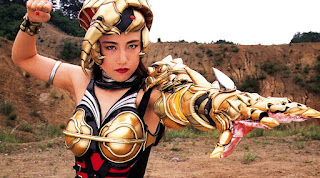
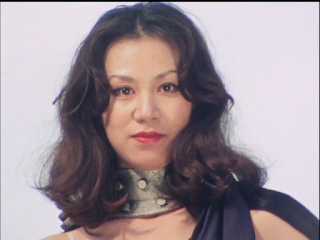
And the winner of the grand prize is… the one and only… Amazoness from Toei’s Spider-man (1978) show! The second-in-command of the Iron Cross Army has it all: Fabulous hair? Check. Eyeliner? Check? Black cape? Check. Iron-like necklace? Check. Beating stick? Double check! What I like best about this villainess though are her facial expressions which range from “WTF, Spider-man’s alive?” to “I’m going to end you!” Actress Yukie Kagawa nails it to the cross with her silent-film-like performance, which makes perfect sense in a show which relies on quick cuts and action rather than dialogue. In a 2017 interview, Kagawa recalled that she greatly enjoyed working on Spider-man; however, persevering though stunt work was a challenge, but still the cast members became great friends on the set. Oh, Amazoness. I pledge allegiance to the Iron Cross Army. We shan’t give up and we will crush the wallcrawler once and for all!
So this was my personal list of favourite Tokusatsu villainesses. I hope you enjoyed this rundown and feel free to name your fave female villains in the comments. If you enjoyed this post, then please stay tuned. Hopefully, I will publish a companion piece focusing on Tokusatsu heroines soon. Ebisuno over and out. Stay safe and take care!
«Enjoyed this post? Never miss out on future posts by following us»