Showing posts with label horror. Show all posts

300th Review: A Tale of Two Sisters (2003)

A Tale of Two Sisters; or, Rose Flower, Red Lotus
     As much as you hate It, I'm the only one in this world you can call mother, got it?
One of my recent visits at a thrift store resulted in obtaining a DVD release of Kim Jee Woon’s A Tale of Two Sisters. Actually, I remember reading about this particular horror film during seminar classes at my university, where a lecturer did a comparison between this film and its Hollywood remake: The Uninvited. So, needless to say, let’s discuss the movie in detail.
Release Info
Directed by: Kim Jee Woon Starring: Im Soo Jung, Moon Geun Young, Yum Jung Ah
Language: Korean Original Title: 장화, 홍련  Runtime:115 min
Synopsis
A teenage girl called Su Mi (Im Soo Jung) was being treated for psychosis in a mental institution. After being discharged, she returns home with her father (Kim Kap Soo), and younger sister Su Yeon (Moon Geun Young). The two sisters have a strong bond and always support each other. However, they refuse to acknowledge Eun Joo (Yum Jung Ah) as their step-mother, which causes friction among family members. Soon after, Su Mi and Su Yeon start seeing supernatural phenomena around the house, even witnessing the ghost of their late mother (Park Mi Hyun).
Past Trauma
I think it is safe to say that Kim Jee Woon is a jack of all trades when it comes to delivering a variety of different genres, from a wacky comedy to an exciting thriller. Evidently, A Tale of Two Sisters is no exception. Having been inspired by a folktale story Janghwa Hongryeon jeon, Kim Jee Woon crafts a dark, slow-paced horror with psychological undertones taken verbatim from the pictures of Kiyoshi Kurosawa.
At its core, A Tale of Two Sisters is the story about the breakdown of a nuclear family. Of course, there are many unexpected plot twists along the way, sprinkled with supernatural elements and jumpscares. Yet, the dramatic reveal in the film’s finale essentially brings the whole thing down to a conflict between a girl and a step-mother, which was set in motion by an ignorant father.
I am not a big fan of a disjointed style of narrative, but in the case of A Tale of Two Sisters, it actually works. There are many sequences throughout the film which make you think whether what you are seeing is real or unreal. In particular, I refer to a chilling scene in which the character of Eun Joo looks for the mother’s ghost under a sink.
With regard to performances, Im Soo Jung and Moon Geun Young did a great job as sisters caught up in a Shakespearean-like tragedy. Nevertheless, they can’t hold a candle to Yum Jung Ah as the devilish step-mom. She really ascended to the heights of Disney villainy in this movie. Kim Kap Soo does well as the emotionless and out-of-touch father.
Recommendations

All things considered, if you want to keep yourselves engaged and put together pieces of a fragmented mystery for two hours, then I recommend A Tale of Two Sisters. To me, it was definitely a more compelling film than The Uninvited remake. The DVD edition I have was issued by IDG company in 2007. Unfortunately, it has no bonus features, but there is a DTS audio track, which improves the viewing experience. Internationally, the film was also issued by Tartan Films in 2005 and by Arrow Video in 2021.
Overall score: 8/10
«Enjoyed this post? Never miss out on future posts by following us»

Noriko's Dinner Table (2006) [Film Review]

Noriko’s Dinner Table; or, Dirty Horrible Things
     You wanna put a memory in here?
Note: This review was originally written for an external site in April this year, but I decided against its publication in view of the sexual misconduct allegations involving Sion Sono. After over half a year, there are no recent news on the matter, so I am posting my text on the blog. The review appears in its unabridged form.
Let’s take a trip back to the past and explore Sion Sono during his pre-Love Exposure fame. Back in 2002, Siono made cult indie horror called Suicide Circle. This movie focused on the taboo topic of suicides and questionable morality of the Japanese youth in an extremely dark, brutal, and harrowing manner. The innovative (and undoubtedly postmodernist) project would not have gained so much popularity nowadays had it not been for its 2006 follow-up Noriko's Dinner Table.
Release Info
Directed by: Sion Sono Starring: Kazue Fukiishi, Tsugumi Otake, Ken Mitsuishi
Language: Japanese Original Title: 紀子の食卓 Runtime: 159 min
Synopsis
Meet Noriko (Kazue Fukiishi) who is a 17-year-old girl from a small town. She desires to enrol at a Tokyo university' however, her overprotective father (Ken Mitsuishi) objects to the idea. He is afraid that Noriko may meet some random stranger and become pregnant. Still, Noriko decides to run away from home. In Tokyo, she meets up with a friend whom she chatted with via an online website, Ueno Station 54 (Tsugumi Otake). Noriko changes her identity and joins her friend's business that rents out people to act as part of family members. After a few months, Noriko's younger sister Yuko (Yuriko Yoshitaka) joins her as well.
Depression Walk With Me
The film in question takes place before, during, and after the events presented in Suicide Circle. Some Sion Sono online fans claim that it is impossible to understand Suicide Circle without Noriko’s Dinner Table, but I dare to say this is not the case at all. Noriko’s Dinner Table is a strong enough movie to stand on its own and does not require the knowledge of Suicide Circle to be enjoyed.
Evidently, the story of the film presents us with the character of Noriko, an introverted girl who spends her free time chatting on a website haikyo[dot]com (literally ruins[dot]com). A friendship she forges there encourages Noriko (Kazue Fukiishi) to abandon her family and boring small-town lifestyle. She arrives in Tokyo and joins her friend, Kumiko (Tsugumi Otake), who goes by the moniker “Ueno Station 54”. Soon after, Noriko’s sister, Yuka (Yuriko Yoshitaka), joins them as well. Noriko’s father (Ken Mitsuishi), desperate to track down his missing daughters, also rushes to Tokyo. Will he be able to re-establish his family?
In terms of its narrative structure, Noriko’s Dinner Table feels more like a novel rather than a movie. This stems from the fact that the film was inspired by Sono’s original novel Suicide Circle: The Complete Edition in which the director outlines the events from the perspective of four major characters: Noriko, Yuka, Kumiko, and Tetsuzo. The movie expands on the themes of suicides and the fragility of life by adding the motif of the degradation of family unit. What seemed to be a perfect family in a photograph is not always like that, according to Sono. There is a generational gap which renders the parents unable to recognise the individuality and true worth of their children.
Another concerning matter is the meta-theatricality presented in the film. Almost every main character assumes an additional identity. Noriko becomes Mitsuko, Yuka becomes Yoko, whereas Kumiko introduces herself as Ueno Station 54. These are parentless people who pretend to be fake family members for money. This in turn allows them to confront their emotions and provide a much-needed catharsis, especially towards the bloody finale. In my opinion, Noriko’s Dinner Table does better in this performance-within-a-performance modus operandi than the recent Ryusuke Hamaguchi’s Drive My Car (2021).
Excellent cinematography cannot go unnoticed. I would not say that the controversial technique of “shaky cam” was utilised, but definitely the majority of scenes were shot in a handheld way, which really enhances the otherworldly perception of reality, as if what we are seeing is a dream. As for the flashback memories of Noriko, it was a surprise to see 8mm footage.
With regard to performances, Kazue Fukiishi definitely steals the movie as Noriko, but at times, it is Tsugumi Otake as Kumiko who feels as the story’s primary heroine. Yuriko Yoshitaka does well in a supporting role, especially in view of the fact that this was the actress’ onscreen debut. Last but not least, Ken Mitsuishi is unforgettable as the father.
Recommendations
All things considered, if you wish to avoid the overt creepiness of Suicide Circle and jump onto something more palpable, then I recommend Noriko’s Dinner Table. I think if you like postmodern horror vibes, you can’t go wrong with Sion Sono and his certainly larger-than-fiction idiosyncratic style when it comes to filmmaking.
Overall score: 7/10
«Enjoyed this post? Never miss out on future posts by following us»

Cube (2021) [Film Review]

Cube (2021); or, Running Scared
     I see a sin in your eyes.
My first encounter with the Cube franchise was not a positive one. Back in the early 2000s, while watching preview trailers on a rented VHS tape, I stumbled upon a teaser for Cube 2: Hypercube (2002). This advertising clip was so atrociously bad that it made me dislike the series before even seeing it. However, I caught the original Cube (1997) on TV years later and actually enjoyed it. It was simple, innovative, gripping, and had memorable characters. Therefore, I am all the more surprised that the Japanese decided to remake this horror classic almost 25 years later…
Release Info
Directed by: Yasuhiko Shimizu Starring: Masaki Suda, Anne Watanabe, Masaki Okada
Language: Japanese Original Title: CUBE Runtime: 108 min
Synopsis
Six strangers wake up in a cube-shaped room. They do not know how they got there or what is their purpose of being in the cube. Each wall of the room (including ceiling and floor) has doors, which lead to same cube-designed areas. The strangers try to get out of the endless, claustrophobic maze while avoiding deadly traps awaiting them en route.
Cube Your Enthusiasm
The 2021 remake directed by Yasuhiko Shimizu and produced by Vincenzo Natali (the director of the original film) faithfully repeats the basic points of the 1997 source material, but it also manages to muster up a few innovations on its own. Let’s take a look at production design, for instance. Evidently, this is a studio flick (Shochiku), so the crew actually had a budget to work with. The cubical rooms do not have the industrial, “used” look as in the original. Instead, they seem brighter, cleaner, and more spacious. The lighting of the sets is also pleasant for eyes.
In terms of the story's overall execution, Cube feels like a play on Japanese stereotypes. Whereas the original had clear anti-authority sentiment, the remake presents us with a critique of generational conflict, social politeness, honne/tatemae modes in daily interactions, and group mentality vs. individualism. Watching the 1997 and 2021 remake back to back reminded me about a passage from Haruki Murakami’s Underground: The Tokyo Gas Attack and the Japanese Psyche, in which a survivor of the 1995 subway events states that Americans would have certainly behaved differently from Japanese passengers during a terrorist attack and, consequently, there would have been less victims.
This is very much the vibe you get from Cube (2021). The characters behave in an erratic manner when it comes to action, and they seem to be afraid more of each other rather than of the actual maze… In the original, the protagonists hated each other’s guts but at least they consciously worked on getting out. In the remake, the hints as to how the cube operates are thrown into the characters' faces. They discover solutions to challenges they face by pure chance.
With regard to performances, Masaki Suda does well as the leading man, but he gets outshined most of the time but the supporting parts of Takumi Saitoh and Kotaro Yoshida. Hikaru Tashiro is unfortunately bland as the child who forms a bond with Suda’s character. Anne Watanbe looks adorable in prison rags, but her character is one-dimensional and just when you think this is an issue, the film surprises you with a plot twist (no spoilers). As for Masaki Okada, I am glad that his fame gets recognised internationally nowadays, but this movie does a disservice to him. He just goes full Jack Torrance towards the finale. You should never go full Jack Torrance.
Recommendations
All things considered, I do not regret watching the Cube remake. Undoubtedly, it is inferior to the original, but it is worth checking out just for the production design and top-notch sound editing, which really enhances the viewing experience. It is an okay horror flick for one viewing only.
Overall score: 7/10
«Enjoyed this post? Never miss out on future posts by following us»

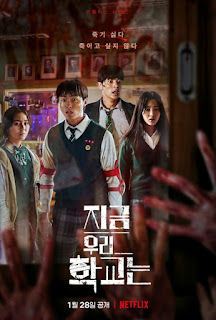
All of Us Are Dead (2022) [Drama Review]

All of Us Are Dead; or, Too Cruel for School
     Listen carefully. You know how to play tag, right? We're all hiding here to get away from someone. But now... you're it.
All of Us Are Dead is the latest South Korean zombie series which premiered on Netflix at the end of January, 2022. Based on a webtoon series created by Joo Dong Geun, the 12-episode drama delivers a high level of zombie insanity within the school setting. Yet, the viewing experience is not without flaws.
Release Info
Directed by: Lee Jae Gyoo, Kim Nam Su Starring: Park Ji Hoo, Yoon Chan Young, Jo Yi Hyun, Lomon
Language: Korean Original Title: 지금 우리 학교는 No. of eps.: 12
Synopsis

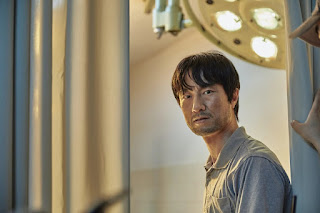
A former worker of a pharmaceutical company, Lee Byeong Chan (Kim Byung Chul) currently works as a life science teacher at Hyosan High School. In order to protect his son, the scientist has developed a deadly virus which basically takes control over its host and amplifies primal instincts. In other words, those infected are driven by the sole will to survive. Unfortunately, one of the students gets bitten by Lee Byeong Chan’s lab rat. This turns the Hyosan High School into ground zero for a zombie virus outbreak. Students in distress will have to fight their way through in order to stay alive.
The School Job
I have to say that I am fairly open to the zombie genre in general and I do not mind suspending my disbelief when clichéd situations kick in (*#Alive and Peninsula flashbacks*). However, All of us Are Dead, albeit extremely fast-paced and entertaining, did not click with me in a lot of places.
My major issue with this drama is its inconsequentiality. Zombie flicks are always driven by a set of specific rules and All of Us Are Dead is no exception from that. The problem arises when these rules are bent or done away with just to push the story further. For instance, the virus is transmitted by the act of an infected person biting a healthy person. It is said in the show that zombie transformation lasts approximately 10 minutes, but sometimes it is just 30 seconds and voilà! Some characters get to say a whole monologue in their last moments or they are able to sacrifice themselves in a glorious battle, others; unfortunately, catch one breath and become red-eyed monsters.
One more example (without giving away major spoilers): By logic, it is safe to assume that a character infected with a mutated strain of the virus would transmit that particular strain, but this does not always work out either. I understand that the screenwriters wanted to avoid getting cornered by these zombie rules, but some of these critical moments in the drama were so baffling that I was unable to suspend my disbelief. In addition, not giving the main heroes at least some nutrition plus water and expecting them to jump, kick, and fist fight all the time is unforgivable.
Still, there are many things I appreciate in All of Us Are Dead. The episodic form allowed to develop the mystery of the virus: what were its origins and how it mutated. This in turn had a great impact on the philosophical side of the story: nihilism vs. struggle to survive, school abuse vs. parental love, children distrusting adults, and the needs of the many vs. the needs of the few. All of it is present on the screen and it is awesome to see how these themes play out in the drama. What is more, All of Us Are Dead gives a thoughtful commentary on modern-day issues connected with the pandemic.
In terms of action, this show just does not let go. It takes many cues from Train to Busan (2016), and even references the movie, yet the drama does not go to extremes. That is to say, we will not see here zombies amassing on top of each other and creating huge living walls out of themselves. These zombies are more straightforward: they react to sound and relentlessly try to grab a bite.
With regard to heroes, there are so many of them that it is really hard to identify with and cheer for particular individuals. They just do not get fleshed out properly. Still, the main focus is on On Jo (Park Ji Hoo) and Cheong San (Yoon Chan Young). Personally, I think the love subplot works okay in the drama, but the characters which absolutely rock in this regard are Su Hyeok (Lomon) and Nam Ra (Jo Yi Hyun). Nam Ra in particular is awesome because of her story arc which is very similar to the trope of a misunderstood monster, like Frankenstein. Additionally, my fave characters are the supporting ones, like Ha Ri (Ha Seung Ri), Jun Sung (Yang Han Yeol), Mi Jin (Lee Eun Saem), and Min Jae (Jin Ho Eun) #ArcheryTeam4Life! I have also enjoyed a subplot centering on Eun Ji (Oh Hye Soo), but sadly it went completely nowhere.
As for the performances, the majority of young actors and actresses did awesome. I am sure that this drama will kick start acting careers for most of them. Park Ji Hoo obviously shines as she gets most of the screen time, but I also loved Jo Yi Hyun, Lim Jae Hyeok, Lee Eun Saem. They gave the most vibrant performances. With regard to veteran actors, Kim Byung Chul dominates the screen as the mad scientist, Jeon Bae Soo is heartbreaking as a father trying to save his daughter, whereas Bae Hae Seon delivers a reserved but memorable performance of a National Assembly Member. Forgive me if I have not mentioned your favourite artist, but the cast of this drama is so damn extensive!
Recommendations
In spite of obvious, script-driven shortcomings, All of Us Are Dead is a generally pleasing thrill ride. I give it a strong 7/10 because of the action, amazing performances, and the final episode which wraps things up in a heart-warming way. Many viewers complain that the series ends with a cliff-hanger, but I dare to say that, to me, it is a complete ending but with a possibility of continuation woven into it. In view of the fact that the series had a strong opening on Netflix, I am positive that the announcement of a second season is only a matter of time. Thank you for reading. Stay safe and avoid these manic lab rats!
Overall score: 7/10
«Enjoyed this post? Never miss out on future posts by following us»

Cure (1997) [Film Review]

Cure; or, The Ultimate Treatment
     Doctor, can I tell you something? All the things that used to be inside me… now they’re all outside. So, I can see all of the things inside of you, Doctor. But the inside of me is empty.
When thinking about the revival of the J-Horror genre, people often mention such movies as Ring (1998), Audition (1999), and Battle Royale (2000) as responsible for reigniting the interest in scary tales made in Japan. However, I believe that Kiyoshi Kurosawa should not be excluded from receiving the credit. Apart from giving us a ghostly Pulse (2001), he also directed a mystery horror called Cure (1997) with Koji Yakusho in the leading role.
Release Info
Directed by: Kiyoshi Kurosawa Starring: Koji Yakusho, Masato Higawara, Anne Nakagawa
Language: Japanese Original Title: キュア Runtime: 111 min
Synopsis
Detective Takabe (Koji Yaskusho) is investigating a series of strange murders. The culprits are caught after the act and they claim not to know what pushed them to kill a person that was close to them. Every case has one thing in common, the victims died from blood loss resulting from a wound made in the shape of X mark. Suddenly, the police detain a man called Mamiya (Masato Hagiwara) who suffers from memory loss. Takabe is convinced that Mamiya is responsible for the killings because he possesses an extraordinary hypnotic power...
The Beast Within
I have seen Cure while I was on my binge trip through the hallmarks of Japanese Cinema a few good years ago. I went in completely cold without having read anything about the storyline, and I was absolutely amazed by how gripping Kiyoshi Kurosawa’s picture actually is.
First of all, the screenplay is fantastic. From the first few scenes you think that the film is going to play out like an ordinary police procedural, but all of a sudden, things make a U-turn, and we get a morbid tale as if cooked up by Stephen King himself. After the movie ends, you just can’t help but think about all the plot twists! The whole affair is told in a slow, sparing manner, so the viewer really needs to bring all the pieces together.
The cinematography is another interesting aspect. Most of the shots are very static and encompass more than one character in a frame. It reminded me greatly about Memories of Murder (2003) and, after doing some reading, I was surprised to discover that director Boon Joon Ho cites Cure (1997) as one of major inspirations that made him pursue filmmaking.
What is more, I like that Kurosawa does not rely in his movies on overt gore or jumpscares. The unsettling feeling of Cure lies within its mood and themes. The movie provides a brilliant mix of psychoanalysis and hypnosis grounded very neatly within the Japanese convention. In a society that thrives on hierarchy and team work, it is disheartening to see the main protagonist looking after his mentally-ill wife.
With regard to performances, Koji Yakusho evidently dominates the screen with his presence of a righteous cop, but Masato Higawara as the illusive Mamiya is just as awesome. The late Anne Nakagawa is also memorable as Takabe’s wife. I also give a shout out to Tsuyoshi Ujiki as Sakuma, the psychiatrist. His character may be there for exposition purposes only, but he also has a super crazy dream sequence.
Recommendations
If you are in the mood for a psychological examination of the Japanese collective psyche, then I recommend Kiyoshi Kurosawa’s Cure. Three years ago, the movie was released in Europe on DVD as well as Blu-Ray. When it comes to deep dives into the dark corners of the subconscious, then Cure will not let you down.
Overall score: 9/10
«Enjoyed this post? Never miss out on future posts by following us»

Noroi: The Curse (2005) [Film Review]

Noroi: The Curse: or, Into the Twilight Zone
     I want the truth. No matter how terrifying. I want the truth. ~ Masafumi Kobayashi
When I think about the genre of mockumentaries, the first image that comes to my mind is that of Trailer Park Boys (2001-2018) doing crazy stuff while drinking lots of alcohol. Little did I know, director Koji Shiraishi utilised the exceptional style documentary/found footage convention to make some juicy J-Horror flicks. Without hesitation, I checked out the most praised Shiraishi’s movie, Noroi: The Curse from 2005.
Release Info
Directed by: Koji Shiraishi Starring: Jin Muraki, Tomoko Kuga, Satoru Jitsunashi
Language: Japanese Original Title: ノロイ Runtime: 115 min
Synopsis
Masafumi Kobayashi (Jin Muraki) is an enthusiast of paranormal phenomena. He researches the domain of the supernatural and frequently records his investigations on camera. Called by concerned neighbours, he tries to interview a certain Junko Ishii (Tomono Kuga) and her young son due to paranormal stuff which is supposedly going on in the house. Kobayashi is chased away together with his cameraman, but he keeps digging. He discovers that Ishii used to be a daughter of a respected exorcist from the now non-existing village Shimokage. It turns out that an ancient demon known as Kagutaba is on the loose, possessing souls of innocent victims. Kobayashi joins forces with a crazy psychic Hori (Satoru Jitsunashi) and actress Marika Matsumoto (herself) to solve the mystery.
Pigeons, Babies, and Folklore
I have to say that I found it hard to treat this film seriously at the very beginning. The opening credits literally throw a major spoiler at you, and Masafumi Kobayashi is such a one-dimensional character that it’s best to describe him as a lost member of the Ghostbusters team who chases after Scooby-Doo cases. Nevertheless, this is where my criticism ends.
After a shaky encounter with Junko Ishii, the movie really picks up in terms of quality and pacing. I found myself totally engrossed in a mysterious tale, really wanting to find out how all the things are connected. What is more, apart from the misadventures of Masafumi, the viewers are presented with clips from variety shows, newsflash, and family recordings. As a result, the documentary style does not downplay but actually enhances the aesthetic tone of this horror story. 
What is more, I have to praise Koji Shiraishi for not relying on jumpscares (*Ring PTSD flashbacks*), and instead trying to provide the scares in a more unique manner (video distortions, weird visions of the characters, etc.) The whole concept of Kagutaba and the demon’s backstory are excellent. A lot of this information is provided via exposition, but it really triggers the viewers’ imagination and provides a huge pay-off at the end. In addition, maybe it’s just me, but I think that the music score was inspired by Ennio Morricone’s theme for The Thing (1982).
With regard to performances, a lot of unknown faces appear in this movie, but you can still spot such recognisable actors as Yosuke Asari, Sarina Suzuki, and Dankan in very small parts. Marika Matsumoto, Satoru Jitsunashi, and Tomono Kuga really gave their best on the screen. Jin Muraki is okay as Masafumi. Noroi remains Muraki’s most recognisable picture as the actor did not do much acting work after this movie.
Recommendations
If you look for some proper thrills and not-to-shabby J-Horror, then Noroi: The Curse is the choice for you. Being encouraged by this mockumentary, I will try to check out other films by Koji Shiraishi.
Overall score: 8/10
«Enjoyed this post? Never miss out on future posts by following us»

Pulse (2001) [Film Review]

Pulse: or, Nowhere to Run
     In 10 years, or at least while we're still alive, they'll invent a drug that prevents death. Then, we could live forever and ever. Of course, you might think I'm crazy to say that, but... I'd rather bet on that. 
Having been inspired by the J-Horror discussion club last Spring, I grabbed Kiyoshi Kurosawa’s Pulse movie from 2001. Although not as famous as Cure (1997), the movie is an interesting take on the apocalypse scenario triggered by internet connection.
Release Info
Directed by: Kiyoshi Kurosawa Starring: Kimiko Aso, Haruhiko Kato, Koyuki
Language: Japanese Original Title: 回路 Runtime: 118 min
Synopsis
Kudo Michi (Kumiko Aso) works at a plant shop in Tokyo. One day, her co-worker, who was working on a computer disc, went missing. Michi goes to his apartment and the man in question hangs himself in her presence. Fellow friends inspect the contents of the disc and discover that it contains an image of Taguchi staring at his own computer monitor. In the meantime, Ryousuke (Haruhiko Kato), an economics student, tries to set up an internet connection in his apartment. Nevertheless, his computer accesses a website on its own, showing him disturbing images of people alone in dark rooms, exhibiting strange behavior. Ryosuke consults Harue (Koyuki), a computer expert at his university about the problem. They discover that ghosts are slipping into our reality...
Portal to Another World 
Evidently, Pulse came out at the heyday of J-Horror when the market was flooded with numerous titles after the successful release of Ring in 1998. Kurosawa’s movie has a very gripping storyline, and thankfully does not rely on jumpscares. Come to think of it, the movie does not even contain explicit graphic content. As a result, I would classify it more as a mystery thriller rather than a proper horror.
The depressing mood of the picture is evidently its greatest advantage. Why are the main characters so afraid of loneliness? Why are they visited by ghosts? The viewers eventually get all the answers in this slow-burn story, and the overall explanation is really a downer. Pulse is yet another Japanese film which ponders upon an existentialist worldview. In a society where one individual can easily suffer from isolation, is there any hope for happiness at all?
In terms of disadvantages, it has to be pointed out that Pulse actually has a few CGI sequences, but these did not age well. However, considering the fact that it was the year 2001 and Japanese Cinema was at the beginning of utilising digital effects, this aspect is forgivable. However, completely unforgivable is a cheap screenwriting trick in the course of which a completely random guy provides clueless Ryousuke with a much-needed exposition halfway through the film. 
Still, I greatly enjoyed the production design. The empty streets of Tokyo looked amazing and close encounters in “forbidden rooms” are classic. The sound editing also has to be praised, especially in the scenes involving ghosts “communicating” with our heroes. 
With regard to performances, I think that Kumiko Aso, Haruhiko Kato, and Koyuki did a great job. They were not that recognisable back in 2001 as they are today, but their performances are indeed memorable. Interestingly, Koji Yakusho has a small appearance as well.
Recommendations
If you look for an old J-Horror that strives to depress you rather than scare you, then Pulse is the perfect choice. It is a unique endeavour from director Kiyoshi Kurosawa which definitely has creepy moments and an uncanny atmosphere. I guess the best way to avoid the plight of the characters is to refrain from using Internet Explorer as the main browser. By the way, I would like to use this opportunity to give a shout out to Phoenix Talks Pop Culture Japan and her awesome analysis of Pulse. Go check it out if you can.
Overall score: 8/10
«Enjoyed this post? Never miss out on future posts by following us»

#Alive (2020) [Film Review]

#Alive; or, An Ode to Self-isolation
     I should have gone shopping, just like you told me, mom!
Korean cinema is on the roll with zombie movies. After Train to Busan movies and Kingdom drama, we now get #Alive, a survival thriller directed by Cho Il Hyung and starring Yoo Ah In and Park Shin Hye in the leading roles.
Release Info
Directed by: Cho Il Hyung Starring: Yoo Ah In, Park Shin Hye
Language: Korean Original Title: #살아있다 Runtime: 98 min
Synopsis
Oh Joon Woo (Yoo Ah In) is a typical Korean gamer with high-tech stuff and too much time on his hands. He lives with his parents and sister. One day, he wakes up and finds a note left by his mother. When he turns on the TV, news anchors are talking about the outbreak of an unknown virus. All of a sudden, Oh Joon Woo’s apartment complex turns into chaos as other inhabitants transform into vicious monsters and start attacking each other. Stranded in an apartment, Oh Joon Woo gradually loses hope for rescue. Suddenly, he discovers that he is not the only survivor...
Running Out of Time
I have heard about #Alive movie a couple of months ago, when reading the box office statistics from the Asian market. On top of that, many users on MDL eagerly shared their thoughts on the film. Needless to say, I had to check this one out, especially in view of the fact that Peninsula (2020) came out just recently.
To be honest, I was surprised at how good this movie is. It starts in a low-key way, but the suspense build up just kept me glued to the TV screen. One could argue that zombie flicks are too clichéd and cheesy, but #Alive provides a much needed breath of fresh air, harking back to such classics about lone survivors as The Last Man on Earth (1964) and The Omega Man (1971).
All the more I cannot understand the bad rap this movie gets. People write in their reviews that it is boring, unrealistic, and too short. What? Have we seen the same movie? Of course, the beauty is in the eye of the beholder and I totally understand that people have their own preferences and attention spans, but the movie (with its clever screenplay and nicely done effects) certainly got my blood pumping.
The things I definitely have to praise are the following: great zombie design (way more vivid than in Train to Busan), catchy synthwave music score, out of the blue jump scares, and great performances of the main leads. Yoo Ah In and Park Shin Hye, who totally nailed it as people trying to escape from the zombie hellhole.
However, there were about two moments in the entire film which seemed a bit too hokey to me. Not getting into the spoilers area, allow me to say that at times the hero is protected by nothing more than plot armour. In my opinion, this is the only disadvantage of #Alive.
Recommendations
If you like zombie horrors, and (most importantly), if you like Yoo Ah In, then I recommend the film. Watching it has been an invigorating experience. I strongly hope that director Cho Il-hyung and writer Matt Naylor will come up with more exciting stuff in the future.
Overall score: 8/10
«Enjoyed this post? Never miss out on future posts by following us»