Audition (1999) [Film Review]

Audition; or, Love, Unconditionally
     Only pain and suffering will make you realise who you are.
Takashi Miike’s Audition is one of those rare J-Horror films which I never thought would be discussed on this blog. As some of the readers already know, I am not a fan of the horror genre in general, but I decided to give this film a chance in view of my recent reinvigoration of interest in the works of Ryu Murakami. In view of the fact that Audition remains to date the most popular adaptation of Murakami’s famous novel, I finally caved in and I am sharing my thoughts on it.
Release Info
Directed by: Takashi Miike Starring: Ryo Ishibashi, Eihi Shiina, Jun Kunimura
Language: Japanese Original Title: オーディション Runtime: 115 min
Synopsis
Shigeharu Aoyama (Ryo Ishibashi) is a TV producer who lost his wife seven years ago. His teenage son encourages Aoyama to get married again. The problem is that Aoyama has trouble finding the new other half. His colleague at work comes up with an idea to set up an audition call for a new movie. Out of the many women who compete to get the leading role, Aoyama choses a lady whom he finds the most intriguing, Asami Yamazaki (Eihi Shiina).
Too Many Secrets
Like Hideo Nakata’s Ring (1998) or Kinji Fukasaku’s Battle Royale (2000), Audition is yet another classic instance of Japanese Horror that is continuously talked about and discussed among the academics. Personally, I regard this movie not so much as a horror (albeit it has a substantial amount of explicit content), but as a psychological thriller that throws shade at romance movies.
If anything, the first half of Audition feels like a parody of popular rom-coms penned by Richard Curtis. Such types of shugary sweet storylines about an honest guy and a fair lady finding true love through comedy-charged shenanigans only condition the viewers to repeat such patterns in real life, but the truth is that these do not work at all. In the case of Audition, they do not work either because the movie is not about happy-go-lucky cheerfulness, but about suffering: how traumatic events mess up our personalities.
Director Takashi Miike and cinematographer Hideo Yamamoto really brought to life this claustrophobic feeling of nihilism tainted by nostalgia for the Showa era that accompanies Ryu Murakami’s novels. Warm lighting in indoor locations and especially the usage of red colour really enhance the aspect of Aoyama’s depravation (the whole audition gig), but also of his victimhood whenever he interacts with Asami.
I apologise because I can’t help but cross over into the territory of deconstructing the film, but allow me to say that I regard the third act as pretty clear and straightforward. Asami was the childhood victim of her relatives, which subsequently turned her into a monster. Aoyama, on the other hand, never quite knew what he wanted as a man because he was essentially woman-less for a long time. The whole torture sequence is, in my opinion, Miike’s manifesto against pornography. What leads me to such an assumption are the positions of the characters in the scene, and specific POV shots that are very reminiscent of JAV productions. In consequence, what seems to be every man’s dream (being overpowered by a beautiful woman) turns out to be Aoyama’s worst nightmare.
With regard to performances, Ryo Ishibashi gives a compelling and sincere portrayal of Aoyama. I mainly know the actor from dramas, but he really carried the picture with his performance. As for Eihi Shiina as Asami, she was truly menacing as the love interest. The legendary Jun Kunimura deserves a mention because he plays a supporting role of a good guy in the film, and his character actually does not get killed off for a change.
Recommendations
All things considered, Audition is not a movie for the faint-hearted, but if you enjoy the filmography of Takashi Miike, the J-Horror genre in general, or at the very least the bizarre mind of Ryu Murakami, then you should watch this film. Where I live, it was issued on DVD by GutekFilm distribution label.
Overall score: 7/10
«Enjoyed this post? Never miss out on future posts by following us»

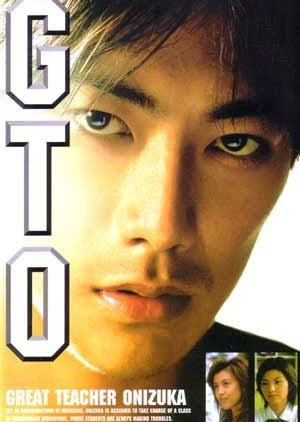
GTO: The Movie (1999) [Film Review]

GTO: The Movie; or, Canada Village
     I am a teacher with a mission!
A few days ago the school year ended where I live, so (as a teacher) I was in the mood for educational vibes. As a result, I grabbed the TokyoShock DVD of Great Teacher Onizuka: The Movie (1999), the concluding chapter of the popular FujiTV drama of the same name that was based on a manga by Tooru Fujisawa.
Release Info
Directed by: Masayuki Suzuki Starring: Takashi Sorimachi, Norika Fujiwara, Rena Tanaka
Language: Japanese Original Title:  グレート・ティーチャー・オニヅカ ,  Runtime:108 min
Synopsis
Eikichi Onizuka (Takashi Sorimachi) arrives in the city of Horobai in the Hokkaido region. The city used to be prosperous in the 1980s, but it was economically driven to the ground by the local businessman Katsuragi (Isao Natsuyagi). Onizuka teaches a class in which a boy, Seiji (Zen Kajihara), is in love with Katsuragi’s daughter Ayano (Rena Tanaka). The problem is that Ayano is hated by other students for her father’s actions. Onizuka, while being on the run from the police and a local journalist (Norika Fujiwara), steps into action.
GTO on the Road
Allow to me clarify at first that if you haven’t seen anything from the franchise of Great Teacher Onizuka, then this movie is not a good place to start. The best place to begin your journey is the 12-episode drama + special episode. This was my introduction into the realm of GTO and I couldn’t be a better one. Even though the drama is 25(!) years old, it can still grab you by the heart with its engaging storylines, amazing acting, and kick-ass music score.
This brings me right to the disadvantages of GTO: The Movie because it lacks all of the aforementioned assets of the drama that came before it. What is more, it is not a cinematic experience at all. Well, it is at least in terms of technical aspects because it was shot on film and in widescreen format with the neat aspect ratio of 1.85:1. However, in terms of screenplay, the movie feels like yet another rehashed special episode.
For all intents and purposes, GTO: The Movie is a directionless picture that plays things safe so as to grab the cash from fans of the drama. There is not enough character growth to make me care for stone-cold students with whom Onizuka interacts, let alone Onizuka himself who does crazy stuff just because he is cool, not because he has motivation to be the best teacher he can be for his students (as he demonstrated in the series).
That being said, I did enjoy the banter sequences between Onizuka and a local journalist. The action stuff okay, but the lack of Poison theme until the end credits made everything feel stale. In addition, I appreciate the fact that the crewmembers shot the living crap out of this film on actual location.
With regard to performances, no matter what, I will always regard Takashi Sorimachi as the definitive incarnation of GTO. The man was born to play this part. Norika Fujiwara is fine as a comic-relief character, but thankfully she is not a love-interest replacement for Nanako Matsushima. Also, the leads are backed by FujiTV’s finest veterans of the 1990s, such as Masahiro Komoto, Masahiko Nishimura, Ito Toshihito, Kazue Tsunogae, and Keiko Toda.
The DVD version I have also contains 15 minutes of bonus features, including trailers and interviews with the cast and crew. Interestingly, Takashi Sorimachi stated that he was very calm while shooting the picture, even though he was very stressed when making the drama. Norika Fujiwara complained about the amount of running she had to do in the film, and also explained that this was her second feature as Cat’s Eye (1997). Surprisingly, Rena Tanaka spoke very seriously about her role, which makes me wonder whether or not she is a method actress.
Recommendations
All things considered, GTO: The Movie is not a decent film, but it is a so-so conclusion of the drama. You can watch it only if you want to pass the time somehow and you got tired of rewatching your batch of favourite Dragon Zakura episodes. That is it from me at the moment. Stay great like Great Teacher Onizuka.
Overall score: 6/10
«Enjoyed this post? Never miss out on future posts by following us»
Godzilla MonsterVerse Movies: Memories from Cinema and Sofa [Editorial]

For a very long time, I was thinking if I should take up discussion on the MonsterVerse movies. Obviously, these are American productions, so I did not want to trash my blog with separate reviews of these, even though they are technically part of the Godzilla franchise. For a moment, I considered posting my thoughts on Letterboxd, but I think the best solution is to talk about the films and my memories of them in the form of a concise editorial.

     So here we are. The MonsterVerse movies. The frenzy that started back in 2014 with the release of Gareth Edwards’s Godzilla. However, the slow built-up for the film started already before the premiere of Godzilla: Final Wars. That is to say, the Godzilla vs. Hedorah (1971) director, the late Yoshimitsu Banno, secured the rights from Toho to make a Godzilla short film using 3D technology. Banno started assembling the creative team for the project in the United States, and the idea evolved into making a 3D feature. Ultimately, Legendary Studios teamed up with Banno, and after securing a licence from Toho, they geared up for an official Godzilla live-action remake.
     Being a Godzilla fan in the 2010s, I relentlessly followed the news about the upcoming movie. I still remember the excitement when I saw a 2012 conceptual teaser video, then a leaked 2014 teaser trailer with J. Robert Oppenheimer’s voiceover and a promo photo of Gareth Edwards and Akira Takadara (the actor had a cameo in the film, which unfortunately ended up on the cutting room floor).
     Come May 2014 and I was ready for action. After a whole day at a university, I went to cinema with a colleague who was also a Godzilla enthusiast. We got tickets for late afternoon screening and barely any people were in the audience. When the lights went dark and the opening credits by Kyle Cooper rolled in, I knew I was in for a special viewing experience.
     Needless to say, I greatly enjoyed the film. Nowadays, moviegoers complain that the film does not have enough of Godzilla in it and the monster fights are scarce, but I believe Edwards’ restrained approach compensated for that lack. Godzilla (2014) is more about Kaiju ambience than the King himself. It is a film about the looming, larger-than-life danger that is beyond human comprehension. To my mind, this is the first American monster movie that actually strived to show the psychological side of dealing with monster rumble in the same vein as Spielberg dealt with fear of the unknown in Close Encounters of the Third Kind (1977).
     When the movie ended, I was the only guy at a movie theatre that was clapping. To date, I remember that some parents with children looked at me like some sort of weirdo. My colleague, on the other hand, had teary eyes because he was so moved by the final shot of Godzilla roaring and disappearing in the sea depths. I said to him, “Now, I have to wait four years for a sequel!”
     Little did I know I had to wait five years instead of four. Godzilla: King of the Monsters was plagued by production delays. Even though Gareth Edwards was slated to return as a director, he was eventually replaced by Michael Dougherty who brought the whole project home. In the meantime, I was dealing with sickness on my own, so I was unable to see Kong: Skull Island (2017) on the big screen, which (in fact) is the film that ushered in the MonsterVerse concept; that is, giant monsters having crossovers and fighting each other. For Hollywood, it sounded like a novelty in view of Marvel movies, but Toho started doing this as early as the 1960s.
     I eventually caught a copy of Skull Island on DVD and greatly enjoyed it, although I’m not a massive King Kong fan. The action and bright colours were definitely a stand-out, but some of the sequences involving the military felt dragged out to me.
     By 2018, I managed to get better, so I was ready for the premiere of King of the Monsters in June 2019. To be honest, this movie was everything I wanted it to be. The action set pieces and the monster fights were outstanding, in my opinion. In addition, some of the sequences were just really beautiful like the release of King Ghidorah from his ice imprisonment, the airplane getaway from Rodan, or Mothra’s transformation. The last moment in particular made me cry at the cinema because it was so well done. The rearrangement of Yuji Koseki’s original theme gave me incredible chills.
     All the more, it is hard for me to comprehend the hate this film gets. Evidently, it had a lot of human characters, human drama, and cheesy one-liners, but on the whole it was light-hearted fun. The creative team knew what kind of film they wanted to make, and they delivered on that front. Still, it does not change the fact that the film basically failed at the box office, barely recouping its box-office and marketing costs.
 
    It comes as no surprise that Legendary took to heart the complaints of cinemagoers and, after many delays, they re-edited the living crap out of Godzilla vs. Kong before releasing it worldwide in Spring 2021. Back then, my country was still dealing with the pandemic, so I was unable to see it in the cinema, but I watched the film on streaming, and bought a disc later on.
     Well, Adam Wingard’s Godzilla vs. Kong certainly has a briskier pace than King of the Monsters and it is definitely more colourful. Basically, it is a movie in which a giant lizard and an ape go boom boom, so I can’t complain. However, in terms of overall tone, it stands out from the previous MonsterVerse entries. In fact, I believe it can be said that each MonsterVerse Godzilla flick is actually a love letter to Toho’s classic glory days of the franchise. Godzilla (2014) pays homage to the Heisei era by reusing the theme of an old warrior showing up for one more battle, King of the Monsters to the Showa era with the multiple monster/people shenagings, and Godzilla vs. Kong to the Millennium era with its neon aesthetics and bombastic inclusion of Mechagodzilla.
     All things considered, I like MonsterVerse movies for what they are, but it is nice to live in the fourth era of the Big G’s renaissance. The question remains: How long will it last? Legendary already develops the fourth film and a TV series, but Toho also works on their 70th anniversary film Godzilla Zero (2024), and they also churn out remakes of other popular properties: Shin Ultraman (2022), Shin Kamen Rider (2023), etc. It goes without saying that sooner or later Toho will reintroduce the King yet again for a new generation of cinemagoers.
«Enjoyed this post? Never miss out on future posts by following us»